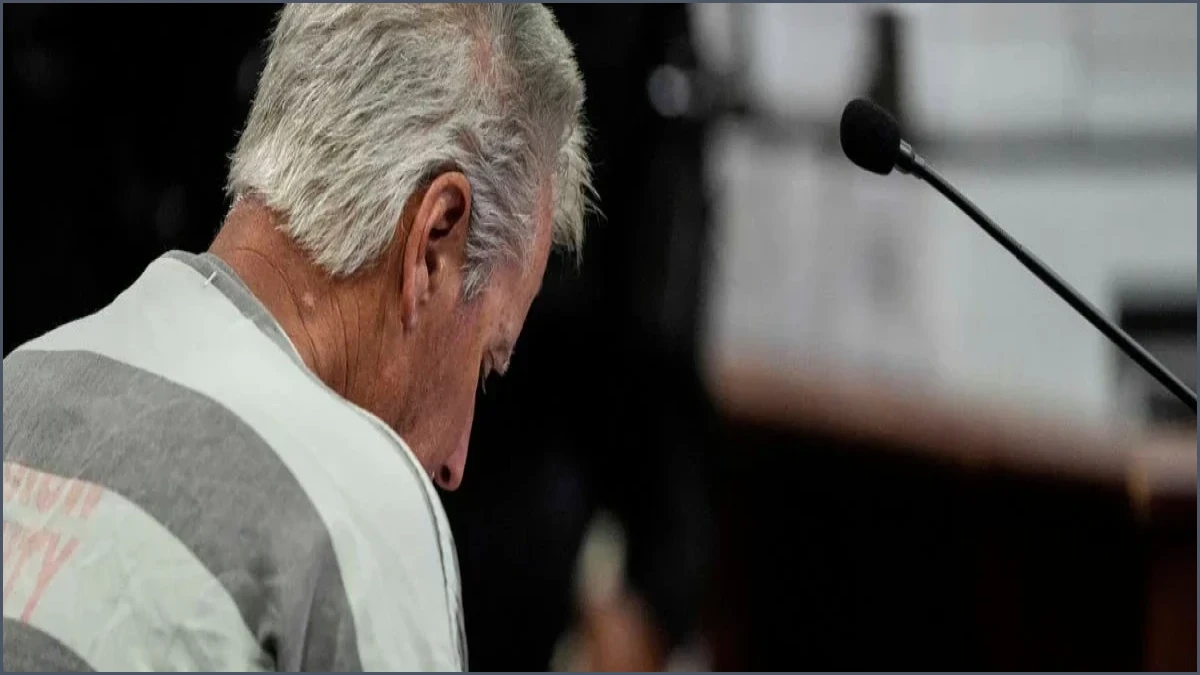
In a landmark legal outcome for the state of Georgia, 55-year-old Colin Gray has been sentenced to 15 years in prison for his role in the 2024 mass shooting at Apalachee High School. His sentencing follows the life imprisonment handed down to his 16-year-old son, Colt Gray, just days earlier for the killings of four people at the Winder, Georgia, campus. The shooting, which occurred on September 4, 2024, claimed the lives of students Mason Schermerhorn and Christian Angulo, both 14, as well as teachers Richard Aspinwall, 39, and Cristina Irimie, 53.
Following the tragedy, Colt Gray pleaded guilty to 55 charges, including felony murder, aggravated assault, and cruelty to children. Colin Gray was convicted in March on 27 counts, which included second-degree murder, involuntary manslaughter, reckless conduct, and cruelty to children, following less than two hours of jury deliberations. This case marked the first time in Georgia history that a parent of a school shooter was charged and convicted in connection with such an attack.
During the sentencing, Judge Nicholas Primm acknowledged the historic and "divisive nature of the case." Primm stated that Colin Gray "failed as a parent" and that it became "more and more obvious that something bad was going to happen" in the period leading up to the shooting. However, the judge also noted that it was important to recognize that Gray did not intentionally commit a crime and did not know what his son was planning. "It matters that you didn’t seek to harm anyone," Primm said. "It matters that you didn’t pull a trigger."
Prosecutors maintained throughout the roughly two-week-long trial that Colin Gray should have known the danger his son posed. Prosecutor Patricia Brooks told jurors in her closing arguments that the case was "about who armed Colt and who enabled him to do what he did." While Colin Gray is not the first parent in the United States to face charges related to a school shooting, the specific charges and the punishment he faced are considered more severe than in previous instances, largely due to a relatively new Georgia law. The most serious charge, second-degree murder, carries a potential penalty of up to 30 years in prison.
During his own trial, Colin Gray testified that he had given his son the rifle as a Christmas present, claiming he had no idea the teenager was capable of carrying out a mass shooting. "I struggle with it every day," he said during his emotional testimony. Defense attorney Brian Hobbs argued that Gray would have taken steps to secure or remove the weapons had he known the extent of his son's fascination with mass shooters, noting that Colt Gray and his mother had hidden this behavior. Hobbs had requested a 20-year sentence, arguing that it would be comparable to the 10 to 15-year sentences given to Jennifer and James Crumbley in Michigan, and warned against making Georgia an outlier.
Evidence presented during the proceedings highlighted a chaotic home life. Forensic psychologist Kevin Richards testified that as the family dealt with financial issues and drug use, the teenager grew increasingly isolated and joined online communities "obsessed" with school shooters. Candice Broce, head of the Georgia Division of Family and Children Services, stated that the parents had an "extensive history" with the agency, with substantiated allegations including inadequate supervision, domestic violence, and failure to secure a weapon. Months before the shooting, a sheriff's deputy had visited the home to discuss an online threat of a school shooting, urging Colin Gray to keep his guns locked up, though officials could not definitively confirm the threat was made by his son.
During the sentencing hearing, family members of the victims blamed Colin Gray for arming his son and requested the maximum sentence. Colin Gray declined to speak at the hearing, and his defense team called no witnesses on his behalf. Legal experts suggest that this conviction may encourage prosecutors nationwide to pursue similar cases in the future.
Hobbs said the minimum sentence is "not leniency," but rather "among the most severe sentences ever imposed on a parent in American history for the act of a child."