A Wisconsin appeals court issued a decision on Wednesday that effectively restores the state’s 2011 anti-union legislation, marking a significant development in a long-standing legal battle over public worker rights. The ruling reverses a December 2024 decision by Dane County Circuit Judge Jacob Frost, which had previously declared the law unconstitutional. Because that earlier ruling was put on hold pending appeal, the status quo remains unchanged; the law, widely known as Act 10, continues to be in effect as it has been for the past 15 years. Unions are expected to appeal the decision, sending the case to the Wisconsin Supreme Court, which is currently controlled by liberal justices.
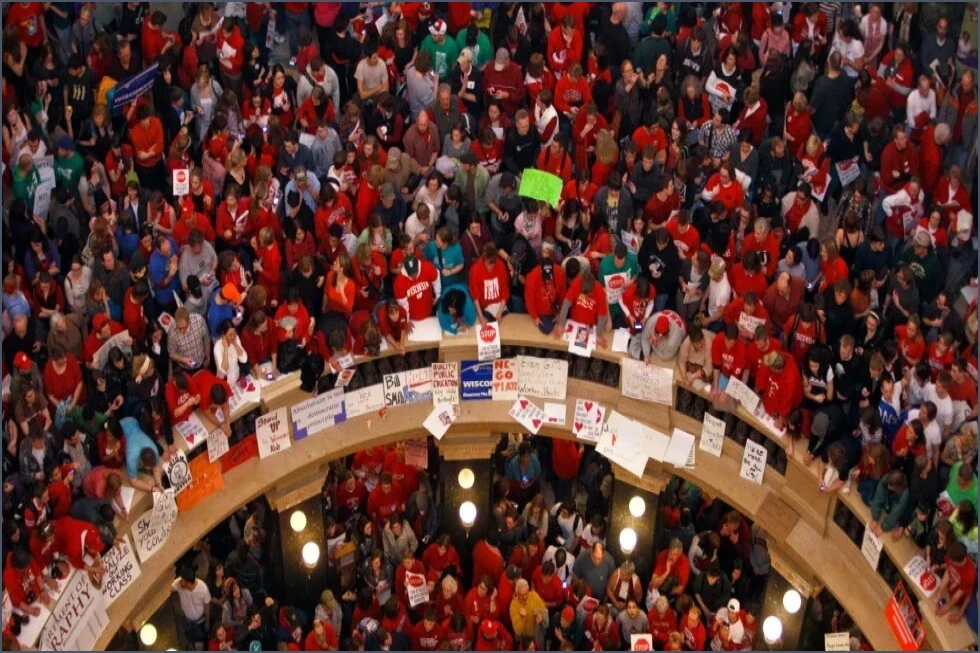
Act 10 was the signature legislative achievement of former Republican Governor Scott Walker. The law effectively stripped most public employees of their ability to collectively bargain for wage increases and other workplace issues, while also requiring them to contribute more toward their retirement benefits and health insurance. The legislation sparked massive protests in 2011 that drew up to 100,000 people to the state Capitol in Madison and eventually led to an unsuccessful recall effort against Walker. The former governor, who later launched a brief presidential campaign that concluded in 2015, praised Wednesday's decision as a victory for taxpayers and local elected officials. In a text message, Walker stated that the ruling is a major win for the hard-working taxpayers of Wisconsin and the people they elect to run schools, state, and local governments.
The three-judge appeals court panel ruled 2-1 to overturn the lower court’s decision, asserting that the challenged provisions of the law do not violate the equal protection guarantees of the Wisconsin Constitution. The court stated that the Legislature possessed a rational basis for including specific exemptions for public safety workers, such as firefighters. Furthermore, the panel held that the lower court lacked a legal basis to declare the law unconstitutional, noting that courts must respect precedent and defer to the Legislature regarding fiscal policy decisions. Supporters of the law argue that it provides local governments with the necessary control to cut costs and that repealing it would threaten the financial stability of schools and local government entities.
In a concurring opinion, Appeals Court Judge Shelley Grogan questioned the timing of the lawsuit, which was filed in November 2023, just three months after the Wisconsin Supreme Court transitioned to a liberal majority. Grogan emphasized that a law's constitutionality should not fluctuate based on the political composition of the bench, stating that renewed attempts to attack Act 10 on already-rejected bases must be rejected. Conversely, Appeals Court Judge Lisa Neubauer, who dissented, argued that the lower court was correct in its assessment that the law created arbitrary and irrational distinctions among public employees by stripping rights from some while exempting others.
Unions, which have challenged the law for over a decade, remain focused on the legal path forward. Christina Brey, a spokesperson for the unions involved in the suit, stated that they remain confident in the merits of their case and are considering all available options. She emphasized that public service workers intend to continue their efforts to regain full collective bargaining rights regarding job safety, hours, and classroom conditions, noting that Wisconsin is better when all employees have a say in their workplaces. Meanwhile, the political debate persists, as all five Democratic candidates for governor have pledged to repeal the law if elected, with the primary set for August 11.
Attorneys for the state Legislature and various agencies had argued that the current challenges were previously rejected by the state Supreme Court in 2014. They maintained that the only significant development since that time is the change in the court's membership. As the case moves forward, the legal dispute continues to highlight the deep divisions that have defined Wisconsin politics since the initial passage of Act 10, which has withstood numerous legal challenges over the years.