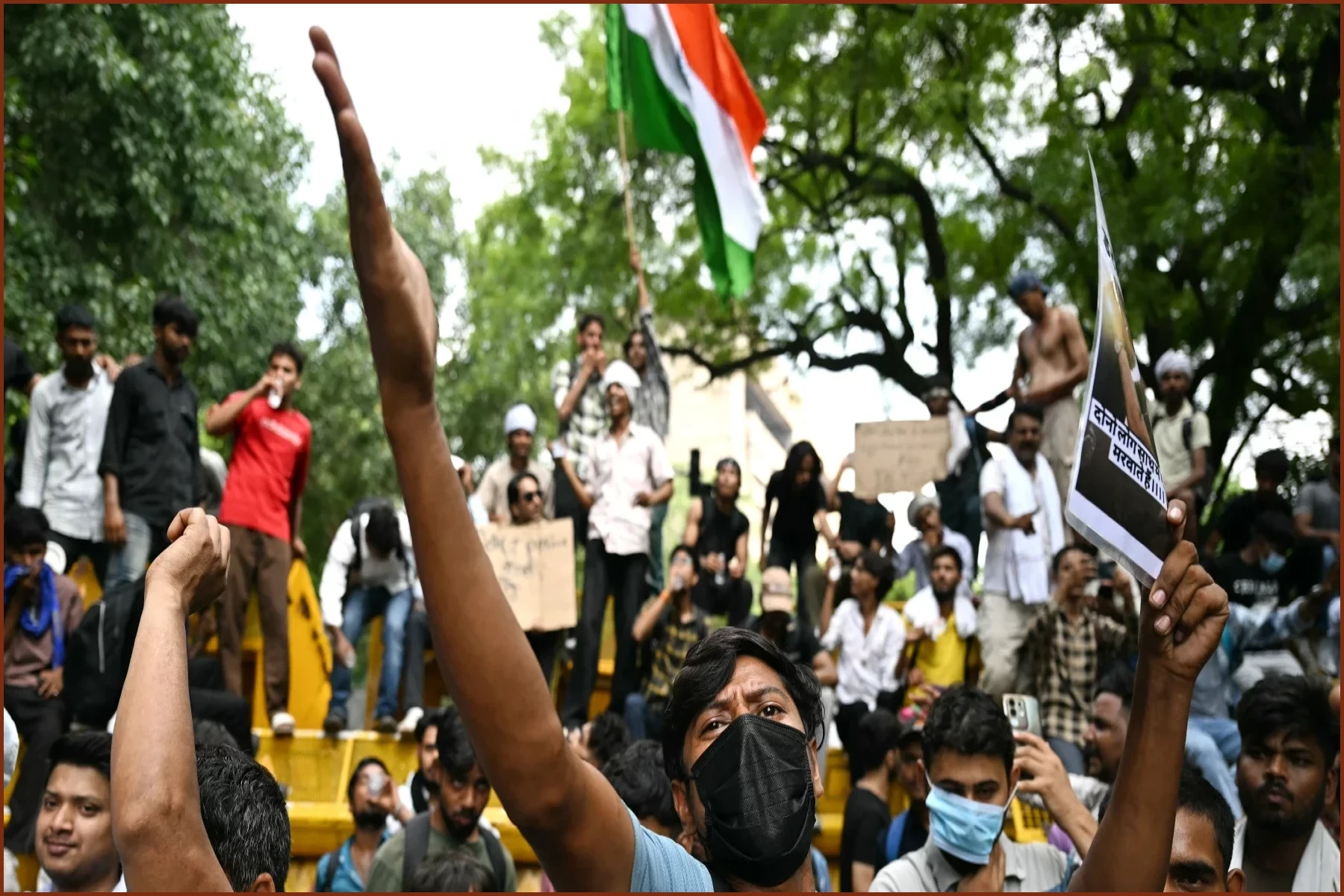
A rising tide of student-led activism is challenging the political status quo across South Asia, as younger generations demand accountability from their leaders. In India, the recent resignation of Education Minister Dharmendra Pradhan followed intense nationwide demonstrations sparked by widespread exam paper leaks. The movement gained significant momentum after a controversial comment by Chief Justice Surya Kant, who was widely perceived as comparing unemployed youth to "cockroaches." While the Chief Justice later stated his remarks were misinterpreted, the term became a rallying cry for protesters, who have organized under banners like the Cockroach Janta Party (CJP). Protesters were seen shouting slogans at Jantar Mantar in New Delhi, demanding the minister's resignation.
This regional trend mirrors events from August 2024, when student-led protests in Bangladesh successfully ousted longtime Prime Minister Sheikh Hasina. Those demonstrations were initially triggered by a High Court decision to uphold a 30% job quota for descendants of 1971 independence war veterans. In both cases, a specific incident served as the catalyst for broader grievances regarding elite privilege and the lack of opportunities for the youth. Šumit Ganguly, a senior fellow at the Hoover Institution at Stanford University and a distinguished professor of political science emeritus at Indiana University, Bloomington, notes that these uprisings highlight a common fault line where elite privilege endures even as youth opportunities stall.
Economic disparities remain a primary driver of this unrest. Despite regional economic growth, wealth remains highly concentrated; for instance, the Paris-based World Inequality Lab reports that the top 10% in Bangladesh own 58.4% of the nation's wealth, while the bottom half holds only 4.7%. Employment data further underscores the frustration of the "demographic dividend." A report from Azim Premji University indicates that nearly 40% of Indian graduates aged 15 to 25 are unemployed, a figure that remains at 20% for those aged 25 to 29. Similarly, in Nepal, where 56% of the population is under 30, approximately one in five individuals aged 15–24 were unemployed last year. Many of these young people are college-educated and face a prospectless future despite their high expectations.
Young South Asians increasingly feel that meritocracy has failed, citing systemic corruption ranging from preferential job access to compromised examination processes. Last week, one 23-year-old Indian protester told reporters that exam papers are being leaked and the rich are paying for their children to pass, while the poor are left behind. This disillusionment is amplified by the widespread availability of the internet, which has empowered youth to organize, share information, and bypass traditional barriers to collective action. While governments have attempted to suppress these movements—such as Nepal's efforts to restrict social media last year—such measures have frequently backfired, intensifying public anger and driving mass mobilization.
For now, student leaders in New Delhi have temporarily paused their demonstrations in "good faith" following Pradhan’s resignation over the weekend. However, the underlying resentments will not easily dissipate. Real stability relies on genuine efforts by the ruling class to address the systemic lack of opportunities facing the young population. Leaders across South Asia have long boasted about their demographic dividend, but they are now discovering its darker side: a demographic dividend can easily become a demographic reckoning.
Why is this pattern repeating across the world's most populous region? Three structural drivers may help explain why South Asia's Gen Zers have reached their breaking point.
And in Nepal, where 56% of the population is under 30, about 1 in 5 Nepalis ages 15–24 remained unemployed last year. Worse still, many of these young people are college-educated and have high expectations for their careers, only to confront a prospectless future.