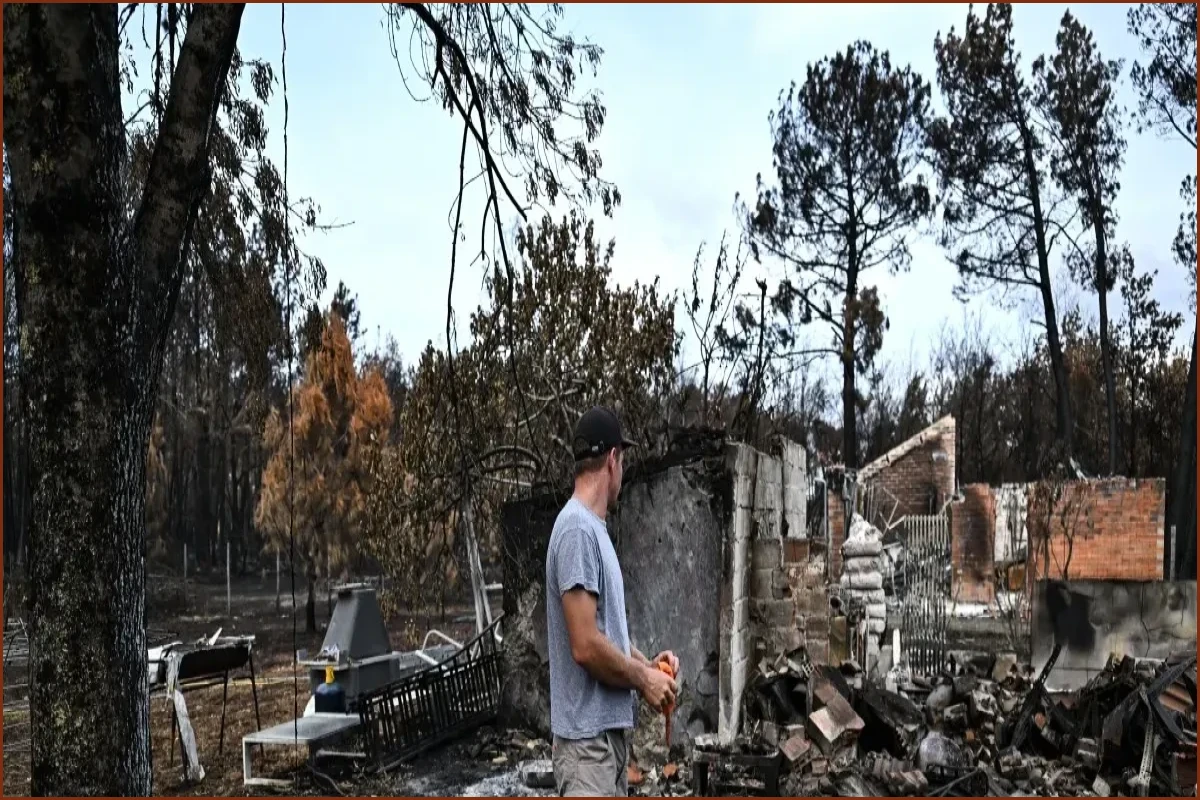
France’s most severe forest fires are finally beginning to subside, yet the national discourse surrounding the disaster remains as volatile as the flames themselves. The Gironde mega-fire, which scorched 42,000 hectares and destroyed 249 homes, has triggered a wave of finger-pointing that experts believe will persist until the presidential election next year. Amidst the chaos, various theories have emerged, ranging from the bizarre to the serious.
On social media, conspiracy theorists have suggested the fires were started by Muslims or orchestrated by the state to clear land for solar farms. Better to ignore these assertions from the conspiratorial and racist neck of the social-media forest, though other claims deserve to be considered and, if necessary, extinguished.
One major point of contention involves the village of Le Porge. On July 30th, some firefighters were diverted from the village to concentrate on a new blaze threatening Cap Ferret on the Arcachon peninsula. Some villagers argue this was a deliberate decision to save millionaires' holiday homes over their own, as Le Porge lost 180 homes, effectively the entire village.
Prime Minister Sébastien Lecornu has dismissed claims of a deliberate class-based decision as “irresponsible conspiratorial” rhetoric, asking who could really believe a fire-fighting headquarters would protect one commune over another based on wealth.
Gironde fire chief Marc Vermeulen denies that a decision was made to abandon Le Porge while residents were still inside, stating his teams were faced with impossible choices as fires exploded everywhere. A legal complaint has been filed by 1,000 people, and the state has promised a full explanation as part of a wider report on the Gironde fires.
Operational questions have also been raised regarding the early hours of the mega-fire on July 21st-22nd. A detailed report in Le Monde noted that local forest owners were rudely rebuffed by fire chiefs on July 22nd when they suggested using “counter-fires” or “controlled” fires to contain the original blaze.
When these measures were finally lit the following day, the conflagration was already raging out of control. Furthermore, the role of Sophie Brocas, the Préfet of Gironde, has come under intense scrutiny.
Some social media users have questioned her competence, with criticisms often tied to her gender. Brocas, a novelist and former journalist, serves as the chief officer of the state in the region. In the face of the worst wildfires in French history, she managed the largest civil evacuation in France since World War II without a single death or serious injury. While she likely made mistakes, she generally deserves credit for her management.
Perhaps the most significant political development is the attempt by the Right and Far Right to shift the narrative away from global warming and toward “ecological extremism.” An editorial in the center-right publication Le Figaro claimed that “green” policies—specifically the mandate to leave forest undergrowth undisturbed—exacerbated the fires.
This argument notably omits that the Gironde mega-fire actually started with a stray spark from a controlled fire in the undergrowth.
Green party leader Marine Tondelier has countered by labeling other political factions, from the Macronist center to the Far Right, as “pyromaniacs” for their persistent efforts to weaken climate legislation in France. The anti-Green editorial in Le Figaro is significant as it represents a political counter-fire being lit by the Right and Far Right before next year's presidential election.
Accusing the “greens” and the “elites” of causing the forest fires during the hottest July in recorded French history is a way of pandering to right-wing public opinion. As the succession of heatwaves and mega-fires this summer should make even the most climate-sceptic voters think again, many would rather not do so.
There is little political mileage for the center-right and far-right in admitting they were wrong and calling for painful policy changes.
Instead, blaming the powerless Greens for marginal changes in forest management serves as a convenient diversion, which will likely remain the main “climate debate” in the upcoming election campaign.
READ ALSO: In numbers: Yes, summers in France really are getting hotter
Much better to blame the powerless Greens and “les élites”, whoever they may be, for marginal changes in the management of forests.