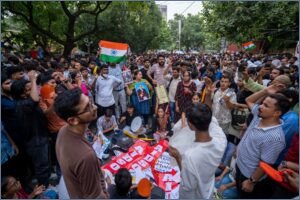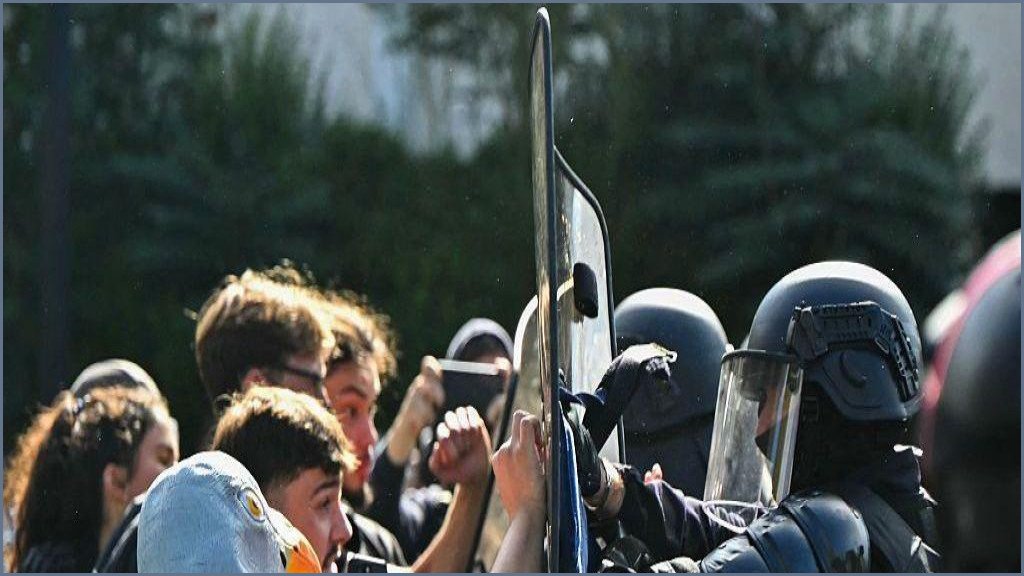
A wave of high school student protests has swept across France, forcing the closure of hundreds of schools and triggering political anxiety within the government of President Emmanuel Macron. The unrest, which began nearly two weeks ago in the low-income northern Paris suburb of Seine-Saint-Denis, has rapidly escalated into a nationwide movement that is now drawing in university students and sparking outbreaks of violence.
French leaders have historically harbored a deep-seated fear of youth demonstrations, a legacy dating back to the student protests of May 1968. Those historic events were famously branded by President Charles de Gaulle as "chienlit"—a term meaning bed defecation, or utter chaos. Since then, successive administrations have dreaded angry youth movements due to their unpredictable, leaderless structures, their tendency to attract other dissatisfied groups, and the high level of public sympathy they command.
Furthermore, any police missteps resulting in serious injuries can carry catastrophic political consequences, especially with crucial presidential elections scheduled just months away.
The current mobilization reached a peak on Thursday, when blockades disrupted hundreds of lycées, the institutions where French teenagers aged 15 to 18 complete their secondary education. By Friday, the situation had stabilized slightly, but approximately 400 lycées remained closed to ensure the safety of students and staff.
The protests have been accompanied by significant property damage, including a fire that completely destroyed the main hall of a lycée in Nantes, alongside numerous smaller blazes lit at school entrance gates nationwide, causing millions of euros in damage.
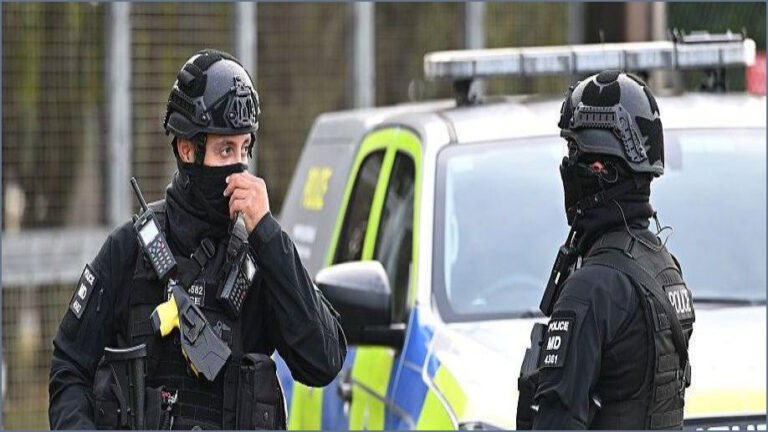
According to Education Minister Édouard Geffray, 65 teaching staff, including 40 school heads, have been injured in the unrest. Geffray noted that most of the injured staff reported that the individuals they confronted were not pupils from their own schools. The government also reported that around 300 police officers and firefighters have required treatment for injuries, and approximately 2,000 people, the majority of whom are minors, have been taken into custody.
Conversely, student organizations have compiled a lengthy list of injuries allegedly inflicted by police, highlighting the cases of two teenagers who suffered severe eye injuries and another who lost multiple teeth.
While the students' demands remain somewhat vague, they are fundamentally rooted in funding shortages. Protesters are calling for more teachers, smaller class sizes, and better school infrastructure. While these demands resonate with many French citizens who acknowledge that the education system is deteriorating due to tight budgets, the government is in no position to offer financial concessions.
This week, Prime Minister Sébastien Lecornu unveiled a draft budget for the upcoming year with a clear message of severe austerity, promising to slash €54 billion (£46 billion) from state spending.
This looming fiscal reality suggests that the era of using public funds to pacify social unrest is drawing to a close, leaving students demanding resources like extra school nurses or dining-hall insulation highly unlikely to receive them.
Beyond the financial disputes, the government's primary concern is the potential exploitation of the protests by the hard-left political opposition. Officials fear the recent violence is a precursor to deeper instability in a highly polarized country ahead of next year's elections. An internal intelligence report prepared for the Paris police department, which was leaked to the media, analyzed the origins of the movement in Seine-Saint-Denis.
The document concluded that high schoolers were being encouraged by far-left student unions and political organizations, specifically pointing to La France Insoumise (LFI).
The report warned that the tensions could be part of a deliberate "flame-kindling strategy" designed to promote hard-left ideologies before the national vote. To support this claim, police cited the active participation of non-students, the lack of precise demands, the display of Palestinian and Algerian flags, and the adoption of radical tactics, such as organizing secondary demonstrations outside police stations.
LFI leaders have openly aligned themselves with the protesting youth. In the Paris suburb of Saint-Denis, local mayor Bally Bagayoko faced intense criticism after publicly stating that "violence can sometimes be legitimate." However, LFI strongly rejects allegations of manipulation, insisting they are merely offering natural solidarity to a justified movement.
Jean-Luc Mélenchon, the 75-year-old veteran politician and LFI presidential candidate, has urged students to avoid violence, stating it "only serves our enemies' interests."
Political analysts believe Mélenchon, who is a strong contender to reach the second round of the presidential election in May against hard-right leader Marine Le Pen, is executing a calculated electoral strategy. Opinion polls indicate that Mélenchon enjoys a massive 40 percent support rate among young voters aged 18 to 24, with his popularity heavily concentrated in diverse, working-class suburban areas.
In these communities, his vision of a "new France" and "creolisation"—a concept reflecting the country's evolving language and demographics—resonates strongly. Because young people are historically the most likely to abstain from voting, LFI's visible presence at the barricades serves as a continuous reminder that the party champions their interests, aiming to mobilize them for the upcoming ballot.
Whether this mobilization will translate into a presidential victory remains uncertain, as current run-off polls consistently predict a heavy defeat for Mélenchon in a head-to-head matchup against Le Pen. If those projections hold, the volatile student protests of today may prove to be a precursor to even greater social instability ahead.