The Royal Swedish Academy of Sciences announced on Tuesday that Francis Halzen has been awarded the Nobel Prize in physics. The honor recognizes his foundational contributions to the IceCube Neutrino Observatory and his discovery of high-energy neutrinos of astrophysical origin.
Speaking to the Nobel Committee by phone from Italy, the 82-year-old scientist admitted the news came as a surprise. While he noted that his name had been mentioned in previous predictions for the award, he described the official announcement as a "strange" experience.
Mark Pearce, chair of the Nobel Committee for Physics, praised the laureate in a news release, highlighting the international effort behind the discovery. "Francis Halzen has led an international team of researchers and engineers who have provided us with a fantastic instrument. His tenacity and scientific vision has paved the way for a new kind of astronomy," Pearce stated.
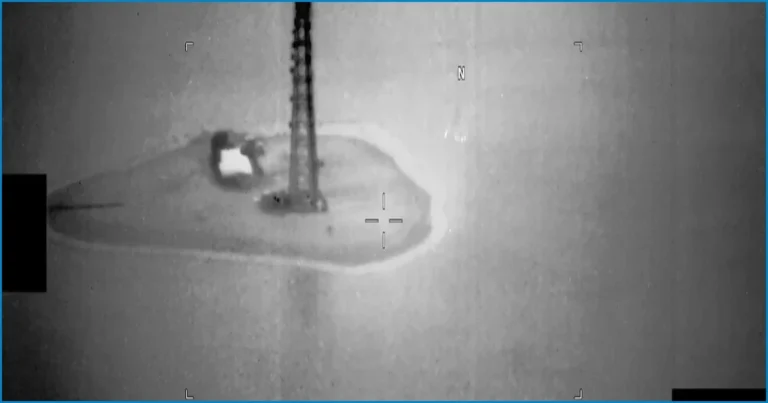
Born in Belgium, Halzen is affiliated with the University of Wisconsin–Madison, which serves as the lead institution for the IceCube Neutrino Observatory. The research facility is situated at the South Pole in Antarctica, where Halzen’s work to capture neutrinos began in the 1980s. Neutrinos are described as tiny cosmic particles with an incredibly small mass that are ubiquitous, streaming from stars like the sun and passing through human bodies by the trillions every second. Because these particles cannot be observed directly, scientists measure the flashes of light or charged particles generated when they collide with matter. Halzen focused his research on a rare group of neutrinos that act as messengers from the cosmos, providing scientists with clues regarding the evolution of the universe.
The Nobel Prize in physics includes a cash award of 12 million Swedish kronor, or approximately $1.2 million. This year's Nobel announcements commenced on Monday with the medicine prize, which was awarded to three scientists for their work on a tool that uses light to study brain function. The schedule continues with the chemistry and literature prizes later in the week, followed by the peace prize on Friday and the Nobel Memorial Prize in Economic Sciences on the following Monday.
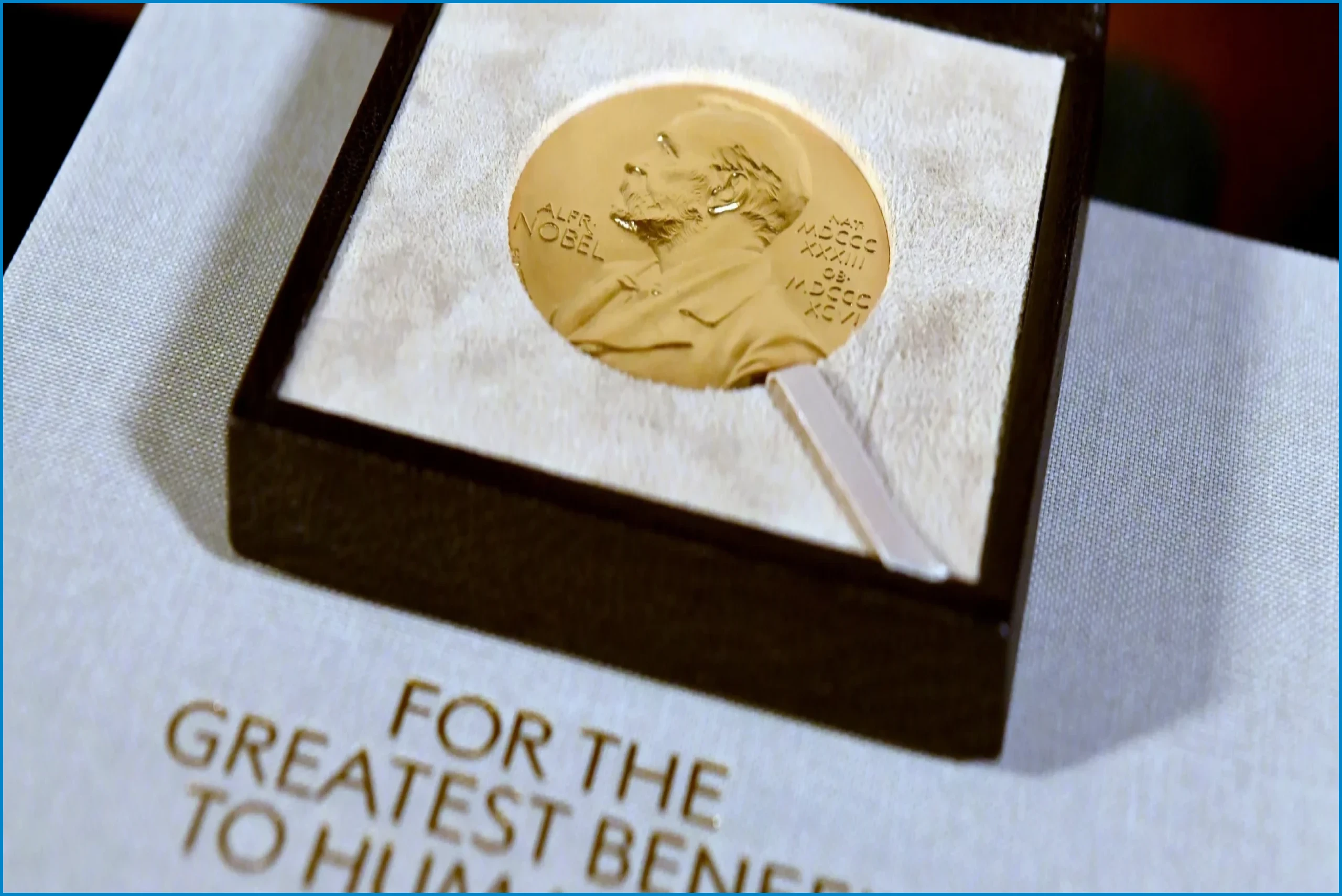
FILE – A Nobel diploma and medal are displayed, Dec. 8, 2020, during a ceremony in New York. Angela Weiss/Pool AFP via AP hide caption
Last year, three scientists won the Nobel Prize in physics for research on the strange behavior of subatomic particles called quantum tunneling that enabled the ultra-sensitive measurements achieved by MRI machines and laid the groundwork for better cellphones and faster computers.