France has strongly rejected a new proposal from Reform UK to deploy the Royal Navy to intercept migrant boats in the English Channel and return them to French ports, calling the plan a direct violation of its national sovereignty and international maritime law. The proposal, unveiled by Nigel Farage’s party, outlines a strategy to actively turn back migrant vessels even if French authorities refuse to cooperate.
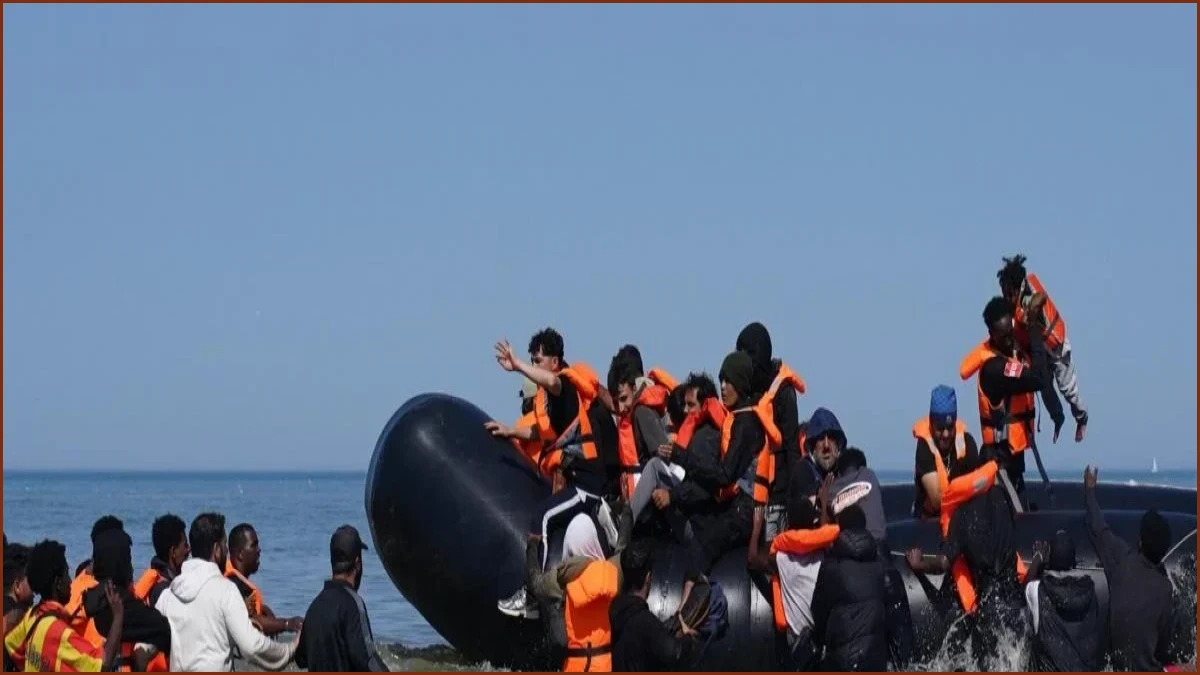
Under the proposed policy, which Reform UK says it would implement if it wins power in a future election, the operation would involve military-crewed inflatable boats operating from 10 Royal Navy patrol vessels. These smaller boats would come alongside migrant vessels crossing the Channel. Border Force officers and police stationed on the Navy vessels would arrest the individuals onboard, who would then be transported back to France or Belgium by Navy personnel or Royal Marines. To facilitate the operation, a Bay Class landing ship would be deployed to provide detention capacity at sea for up to 700 people.
Speaking at a press conference, Reform UK's home affairs spokesman Zia Yusuf explained that the party would initially seek an agreement to disembark the arrested migrants at French ports. However, he warned of unilateral action if cooperation was not forthcoming. Yusuf stated that if the Elysee Palace refuses, His Majesty's Royal Marines will disembark them safely on the very shore they left that morning. Beside him, party leader Nigel Farage dismissed concerns of a diplomatic crisis, asserting that French attitudes toward such measures were softening and that he was entirely confident the plan could be legally justified under international maritime law.
The French government quickly disputed these assertions. But in a statement issued later on Monday, the French interior ministry said: "This would constitute a violation of French sovereignty, as well as a violation of the law of the sea and international law." A spokesperson for the ministry added that joint measures already agreed upon with the UK, alongside localized enforcement operations, have successfully contributed to a significant reduction in Channel crossings this year compared to the same period in 2025.
Domestic critics also condemned the proposals. Energy Secretary Miatta Fahnbulleh, representing the Labour government, described the plan as gimmicky and reminiscent of unworkable ideas floated by the previous Conservative administration. "You'd spend a lot of time arguing with France, and not enough time actually getting to grips with the problem," she added, defending the government's current strategy of targeting smuggling networks as a model that is working.
From the opposition benches, Conservative shadow home secretary Chris Philp also dismissed the plan's credibility. Philp remarked that Reform cannot answer the question of how they would disembark immigrants back in France if the French do not agree, adding: "Reform's policy I am afraid as usual is on the back of a fag packet".
Legal and maritime experts have cast serious doubt on the legal foundations of Reform UK's policy. Andrew Serdy, an expert on the public international law of the sea at the University of Southampton, pointed out that the plan would require the agreement of France, which he described as a bold assumption to make, as there is no reason to expect it to agree. James Turner KC, a maritime law expert at Quadrant Chambers, explained that while the United Nations Convention on the Law of the Sea (UNCLOS) permits states to prevent the infringement of immigration laws within a contiguous zone extending up to 24 nautical miles from their coast, this does not grant the right to collect asylum seekers in a contiguous zone or anywhere else and take them back to the state they set off from.
Reform UK argued in its policy document that the plan is legally sound because its primary objective is to safeguard the lives of migrants traveling in hazardous vessels. The party pointed to UNCLOS provisions regarding the duty of states to render assistance to any person found at sea in danger of being lost. Farage reiterated his belief that securely picking people up and safely taking them back to France would align with international legal conventions, while Yusuf acknowledged the potential for a diplomatic argument but claimed France has a commitment under international law to process the migrants.
The debate comes amid shifting migration figures. Between January 1 and August 1, 2026, a total of 14,526 people crossed the English Channel in small boats from France, representing a 43% decrease compared to the same period in 2025. Since 2020, these crossings have been the primary method for individuals detected entering the UK illegally. Nearly all small boat arrivals claim asylum, allowing them to remain in the country while their applications are processed under international law. Between April 2025 and March 2026, small boat arrivals accounted for 42% of all UK asylum applications.
However, the physical danger of these crossings has escalated. From August 2, 2025, to August 1, 2026, the average number of people aboard each intercepted boat was 67, a figure that has more than doubled since 2021. Experts warn that this extreme overcrowding has made the journeys far more perilous. According to the United Nations, at least 84 people lost their lives attempting to cross the Channel in 2024. Despite the high profile of these crossings, they represented only about 5% of total immigration into the UK between January 2025 and December 2025.
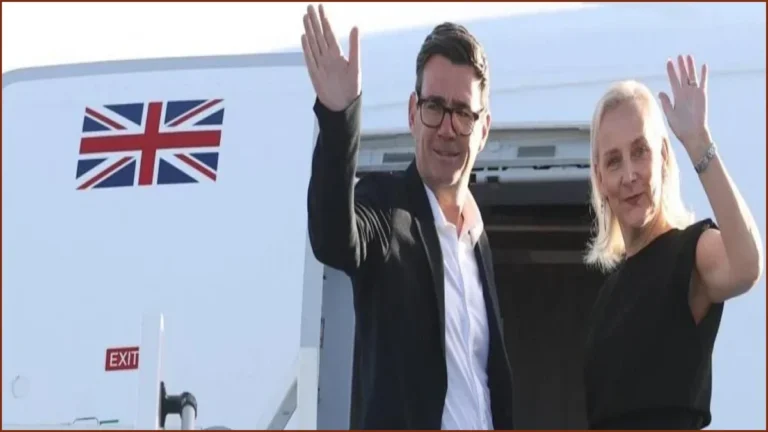
The newly appointed Labour government, led by Prime Minister Andy Burnham—who took office two weeks ago—has vowed to smash the gangs responsible for organizing the dangerous crossings. Since Burnham took office, more than 2,000 migrants have arrived on small boats, including 326 who crossed on Saturday alone. The government has focused on doubling enforcement personnel, with the number of National Crime Agency (NCA) officers targeting people-smuggling operations rising to nearly 800, up from 376 at the start of 2025.
Official figures also show that people from Eritrea made up 18% of all small boat arrivals between April 2025 and March 2026. During that same period, 4,535 individuals were detected entering the UK without permission through other means, such as hiding in vehicles, ferries, or traveling through airports—a 22% decline from the previous year. Additionally, an unknown number of individuals enter the UK legally on work or study visas and subsequently overstay their permitted limits.