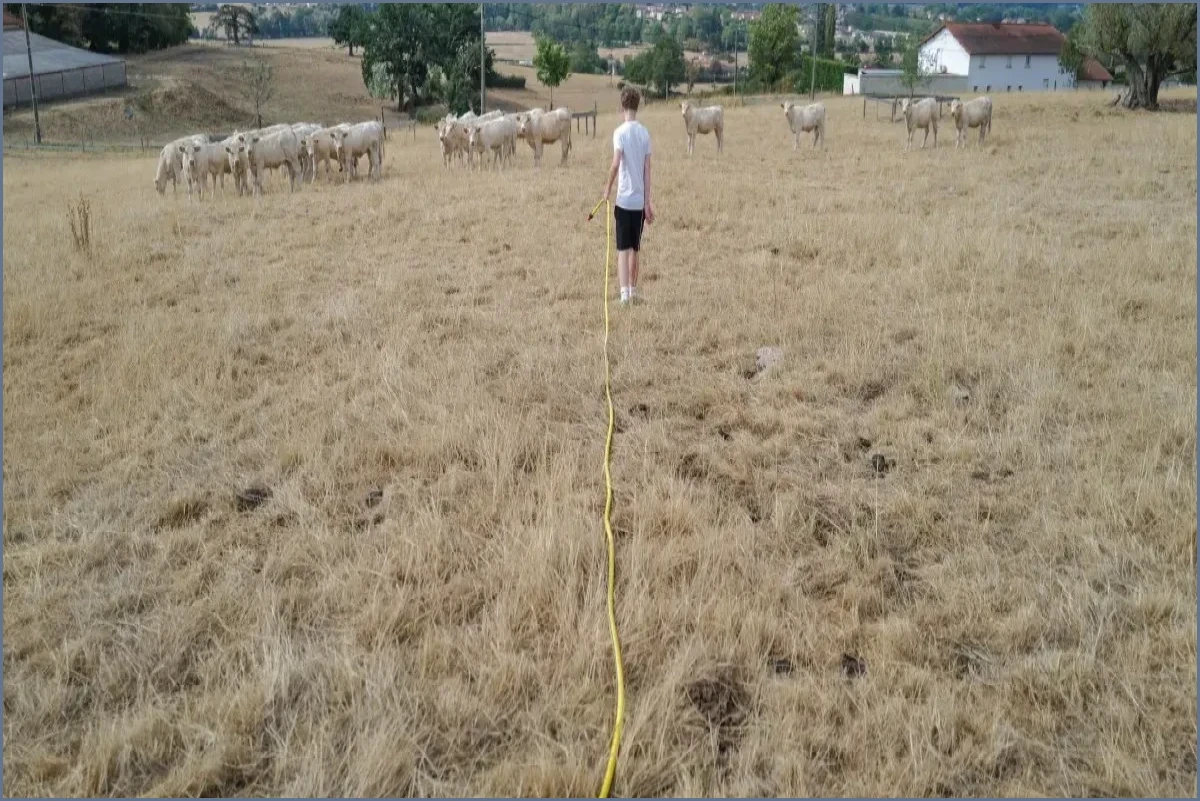
The devastating drought of 2026 is sweeping across France and wider Europe, threatening to trigger a severe agricultural and food price crisis. According to writer John Lichfield, observing from his garden in the Norman hills, a corner of a Europe-wide catastrophe is unfolding, leaving his village resembling the Oklahoma dust bowl of 1936.
Normandy is typically celebrated for its rain, camembert, and calvados, but the countryside has been transformed this summer. Fields have turned from green to dusty yellow and grey. The localized impact of this weather catastrophe is already visible on individual farms. Lichfield's neighbor, a dairy farmer named Yves, was forced to harvest his maize crops two months ahead of schedule. With summer meadows shriveled to dry stubble, livestock had to be moved indoors to feed on the newly harvested maize. This early consumption means that by November, winter feed reserves will be entirely depleted. Farmers across Normandy, France, and Europe face the grim prospect of trying to purchase expensive winter fodder from a severely depleted market.
This crisis is driven by the extreme heatwaves of 2026, which have brought temperatures in the high 30Cs alongside an almost total lack of precipitation. According to Météo-France, the country experienced a 67 percent rain deficit in July alone, marking the third-highest July deficit since record-keeping began in 1959, surpassed only by the droughts of 2020 and 2022. Unlike typical years when drought is localized to specific regions, this year's extreme heat and dry conditions are nearly universal across the continent, sparing only Ireland, Scotland, and Scandinavia.
Major European waterways are drying up under the strain. Normandy's River Orne, the region's second-largest river after the Seine, has been reduced to a muddy ditch. The Rhine has also fallen to unprecedented lows, forcing cargo barges carrying chemicals, oil, and other essential goods to Rotterdam to operate at just 30 percent capacity to avoid running aground. Experts warn that even an exceptionally wet winter may fail to restore normal groundwater and river levels before next spring, raising the distinct possibility of another dry, hot summer in 2027 and beyond.
A permanent shortage of water will not just be an agricultural problem. Quite apart from water needed for human consumption, nuclear power stations in France and elsewhere need river water for cooling. Some are operating at reduced capacity this summer. Furthermore, the rapid expansion of data-storage facilities required for artificial intelligence is placing a massive new demand on water resources for equipment cooling, prompting warnings of impending conflicts over water access.
In the immediate term, the financial pain is hitting farmers and consumers first. The French wheat and barley harvests occurred unusually early, wrapping up in Normandy in late June instead of late July, but resulted in poor quantity and quality. Crops normally reserved for winter silage are being consumed immediately by hungry animals in the fields. Meanwhile, French vegetable production has collapsed dramatically: courgette yields are down 25 percent, lettuce by 35 percent, peas by 40 percent, broccoli by 60 percent, and artichoke yields have plummeted by 50 to 100 percent.
Farmers, who recently received a delayed state aid package, are already warning that a multi-billion Euro subsidy program will be necessary to survive the coming winter. The extreme weather has also scorched French economic growth and tax revenues, complicating an already fragile political environment where three governments have fallen in two years over state budget disputes. Work on the crucial 2027 budget is scheduled to begin in two weeks.
The price of fresh food is already climbing and will soon begin to rocket. A state aid package for consumers? Forget it. This economic strain coincides with what is expected to be the most significant presidential election campaign in France’s post-war history. Historically, electorates blame the sitting government for their economic suffering rather than the opposition. Although the summer's calamities—including stifling heatwaves, the worst forest fires in French history, and the third major drought in six years—should elevate climate change to a central campaign issue, the political debate is expected to focus on symptoms rather than causes.
Marine Le Pen, the far right, and elements of the traditional right may benefit politically from public anger over high food prices and budget cuts, despite their history of minimizing or denying global warming. The Left and Greens should in theory benefit from their strong positions on climate issues. They may, at the margins, but not enough to sway the outcome. This reflects a broader, conflicted attitude among voters who acknowledge that climate action is necessary but remain reluctant to make personal sacrifices.
Even home gardens have felt the full force of the weather. Lichfield noted that his own precious garden was fried by late June, with the lawn turning to sand and his crop of potatoes and onions cut by two-thirds. While his salads fainted, only his tomatoes and cucumbers thrived in the greenhouse-like heat. Seeking a brief respite from the political and environmental dustbowl, Lichfield planned to travel to Brittany, where rain was finally forecast.