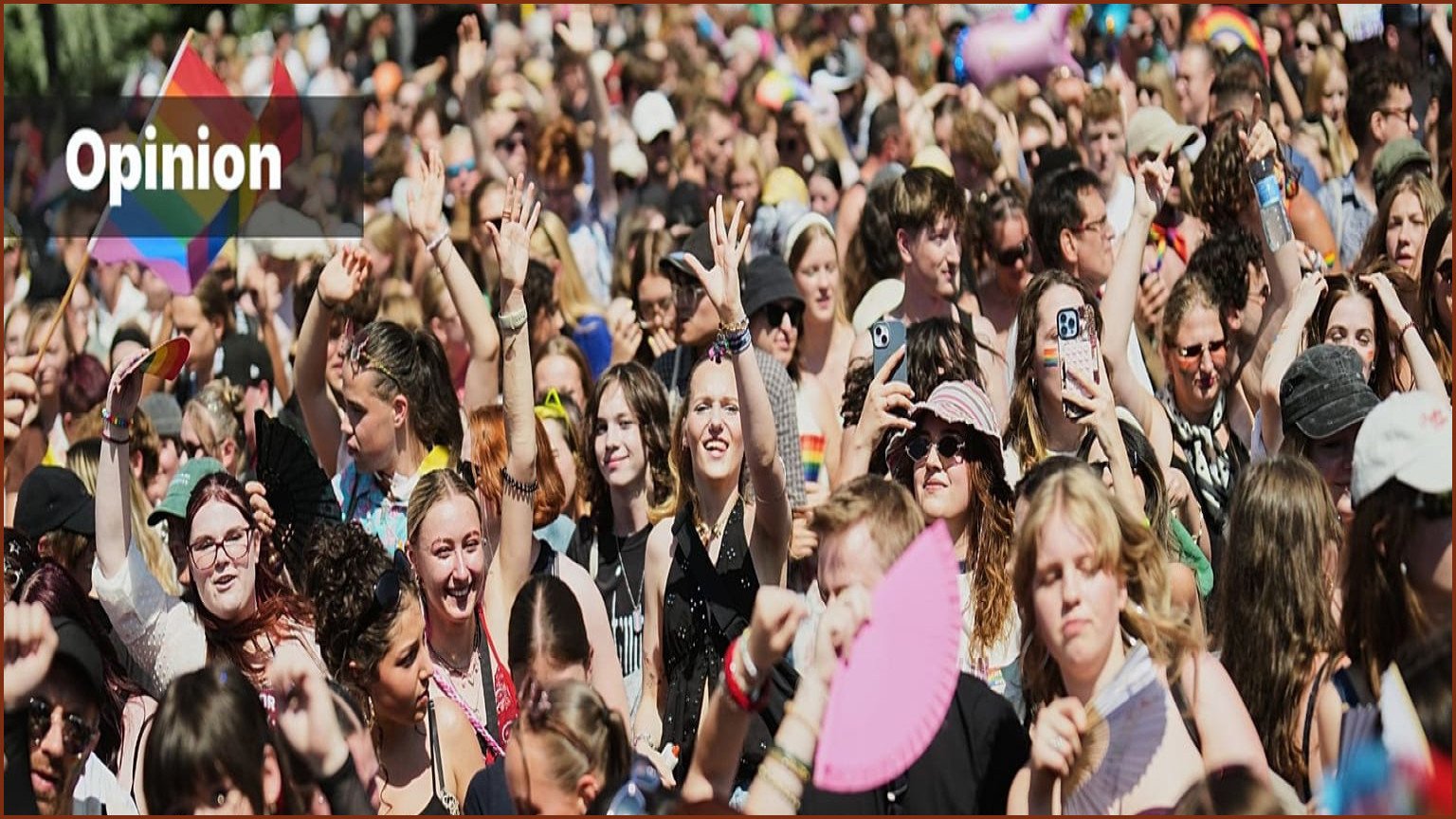
A recent terrorist attack in Berlin, which resulted in one death and several critical injuries, has sparked a sharp response from FDP leader Wolfgang Kubicki. The victims were targeted while attending a Christopher Street Day (CSD) event, a pattern that mirrors previous acts of violence against sexual minorities. Kubicki explicitly identified the motive behind the attack as Islamism, arguing that such violence is directed not just at a specific group, but at the core values of liberal democracy and the Western way of life.
Kubicki drew parallels between the Berlin tragedy and other historical incidents of terror. Almost exactly ten years ago, on 12 June 2016, the Pulse nightclub in Orlando, Florida, was the scene of the deadliest terrorist attack in the United States since 11 September 2001, where a gunman killed 49 people and injured 58 others. Nearly six years ago, on 4 October 2020, a terrorist attacked two men with a knife in Dresden, Germany, killing one and critically injuring the other. In each instance, the victims were targeted due to their sexual orientation. According to Kubicki, these attacks highlight a deteriorating sense of security for sexual minorities in Germany. Data from the Federal Criminal Police Office (BKA) supports this concern, recording 284 violent offences motivated by sexual orientation last year, a significant increase from the 54 incidents reported in 2015.
Reflecting on Germany’s history, Kubicki acknowledged the nation's past persecution of gay men, which reached its tragic peak during the Nazi regime. He noted that while Germany has successfully transitioned toward equal rights and the decriminalization of same-sex relationships, current threats to freedom are re-emerging. He pointed out that this danger extends beyond sexual minorities to include Jewish communities, who now require heightened security for schools and nurseries, as well as women and the general public, who increasingly feel unsafe in public spaces like Christmas markets or festivals.
The FDP leader criticized what he described as a refusal in some political circles to name Islamism as the primary threat to an open society. He specifically cited the far-left organization "TurboKlimaKampfGruppe Kiel" (TKKG), which disrupted a CSD event in Kiel by chanting anti-police slogans such as "No Cops" and "All Cops Are Bastards." The group claimed it was protesting because the police as an institution were supporting authoritarian developments and allowing racist violence to expand. Kubicki argued that even within moderate left-wing circles, there is a misguided understanding of tolerance that leads to a failure to confront those who fundamentally reject liberal values. He noted that Islamists culturally share more with the darkest chapters of German history than with modern liberal society.
Kubicki emphasized that the attack in Berlin was an assault on the freedom to choose one's faith, the freedom to love, and the freedom to participate in public life without fear. He argued that Islamism is no longer a distant threat but one that is taking root in local neighborhoods. He attributed this partly to a failure in integration policy and the tolerance of parallel societies, as well as a long-standing leniency toward Islamist hate preachers and their organizations. He also noted that the erosion of everyday freedoms has been ignored in public debate for fear of being accused of doing the far right's bidding.
The FDP leader pointed to a pattern of attacks, including the Dresden incident, the attack on the music festival in Ansbach, the 2025 attack at the Holocaust memorial, and the attack on the Nazi Documentation Centre in Munich. Moving forward, Kubicki called for an honest assessment of these challenges. He stated that the future of the country depends on the courage to name these problems and take decisive action, including stricter control over migration and a rejection of the tendency to label those who address these issues as being aligned with the far-right. For Kubicki, the fight against Islamism is essential to preserving the achievements of German democracy.
Those who returned were condemned to shameful silence, because the reason for their martyrdom remained a criminal offence and socially despised. We have overcome that state of affairs, although it was a long and arduous journey. Decriminalisation and, ultimately, equal rights for same-sex couples were a victory of humanist reason over crude prejudice in our laws.
Today, in 2026, the threat to gay and bisexual people no longer comes from the state. And yet freedom in this country is currently dying. Not only for this group, but also for Jews, whose schools and nurseries require ever tighter security to protect children and who are increasingly targeted in violent attacks.