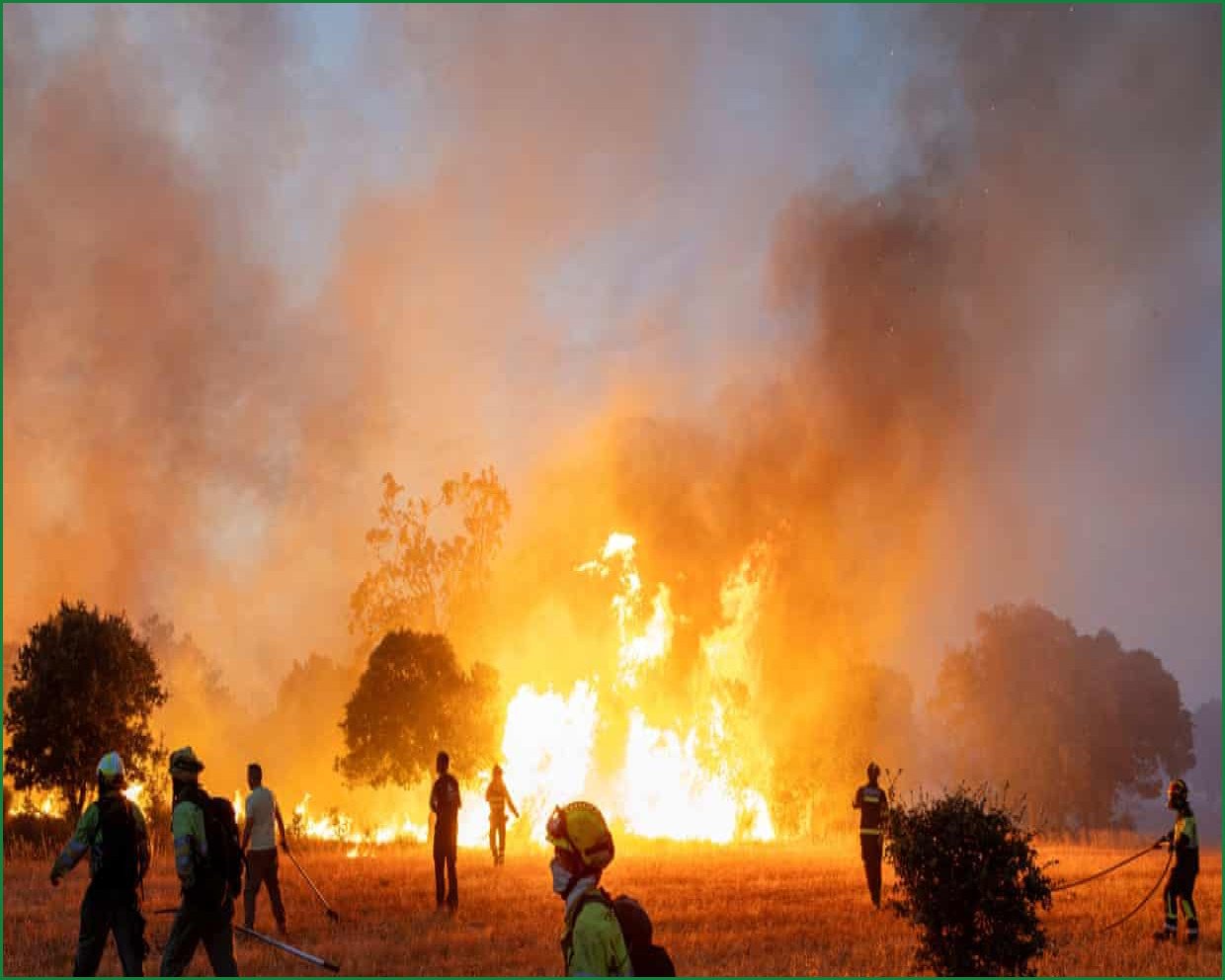
Data released by the European Forest Fire Information Service (Effis) indicates that fire weather conditions across the European Union have reached record-breaking levels of severity for this time of year. Driven by carbon pollution, the hot, dry, and windy conditions observed since the start of 2026 have been 43% more severe than the average for the end of July over the previous two decades. So far this year, approximately 435,000 hectares have been consumed by 1,400 fires, a figure roughly triple the recent historical average and more than double the typical number of incidents.
Fire weather in the EU has broken records for severity for this time of year, new data shows, as firefighters race to extinguish blazes across the Mediterranean. Tragedy struck in Greece this week, where officials confirmed the deaths of three firefighters—two on the island of Crete and one in the southern mainland. While Greece had previously experienced a relatively calm fire season with lower-than-average burn areas, the situation remains precarious. Meanwhile, France and Spain have faced monumental blazes that have forced more than 300,000 people from their homes and tourist accommodations this month. In France, 91,000 hectares have burned, setting a new annual record with an entire month of summer remaining. A massive fire near Bordeaux was so intense it generated a rare thunderstorm, though regional authorities in Gironde noted the fire was under control following a quiet night, allowing 84,000 people to return home on Thursday.
Spain has seen 207,000 hectares burned, nearly five times the average for this time of year. Although Prime Minister Pedro Sánchez announced the end of the national emergency in the regions of Madrid and Ávila, seven housing estates remain evacuated. A new fire near the Portuguese border has prompted the evacuation of another 600 people, as the state meteorological agency Aemet warned of temperatures reaching 42C in some inland regions. Both France and Spain have requested EU assistance, including water-dropping aircraft and additional personnel.
European Commission President Ursula von der Leyen praised the solidarity of member states, noting that crews from Romania and Greece have extended their deployments. Despite these efforts, officials at the EU’s crisis management centre warn of difficult weeks ahead as conditions deteriorate in Italy and Portugal, both of which have seen near-record fire activity. One firefighter died in Italy last week while battling blazes in Sicily.
A new study published in the journal Scientific Reports suggests that while fire management improved significantly between the 1980s and 2018, that trend has reversed. Summer days conducive to wildfire development have more than doubled since 1981 in many parts of the continent. Meteorologist José Miguel Viñas noted that extreme heat and dryness are causing fires to spread with uncontrollable speed. Prime Minister Sánchez has called for a national pact to address the climate emergency, highlighting that while some fires may have human origins, their intensity is exponentially magnified by climate-driven heat and low humidity. The increase in temperatures from fossil fuel pollution has come as rural regions in southern Europe have hollowed out, with farms being abandoned as populations age and young people move to cities. The resultant overgrowth in vegetation has troubled firefighters and wildfire researchers across the Mediterranean, resulting in significant loss of life and an estimated €2bn in damage to grain crops.
Sánchez, the Spanish prime minister, repeated calls to create a “national pact” to address the climate emergency during a visit to a command post on Wednesday.
“Increasingly extreme conditions of heat, dryness, and wind are fuelling large forest fires,” he said. “Once started, they spread rapidly and become uncontrollable, overwhelming the firefighting efforts.”