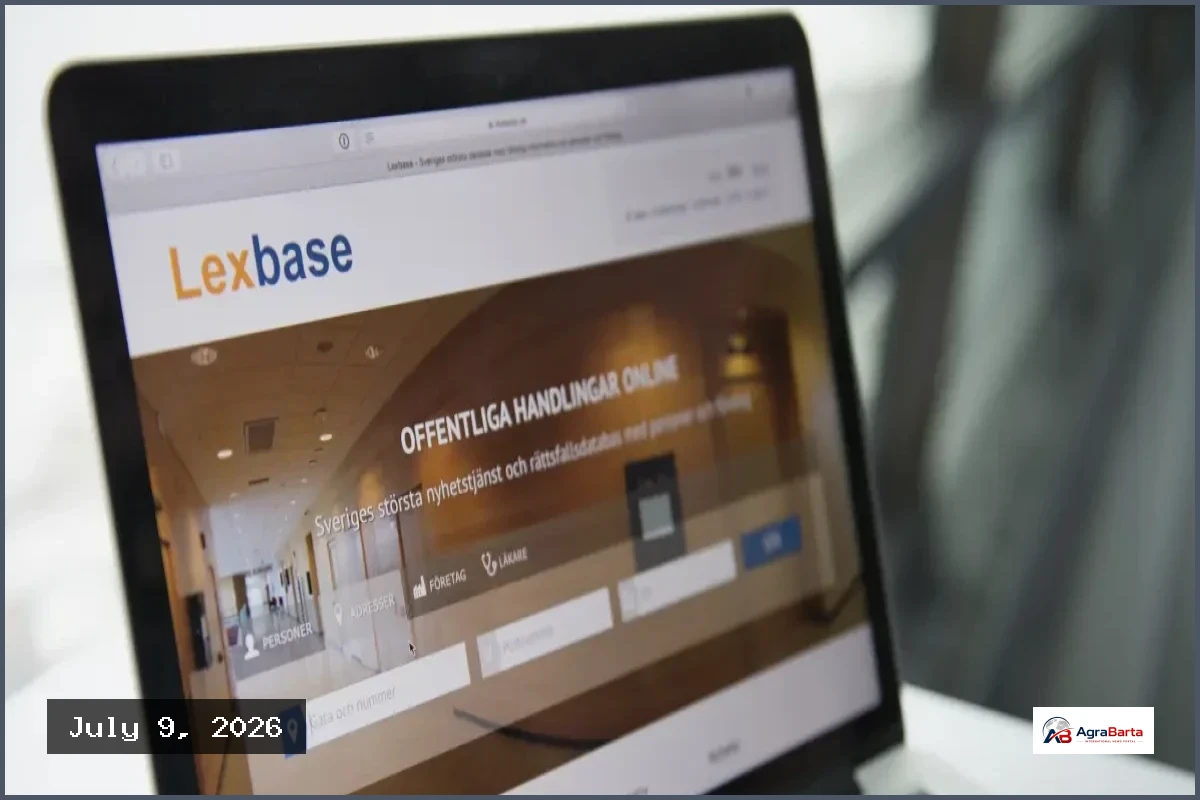
The Court of Justice of the European Union (CJEU) has issued a significant ruling on July 9th. The EU’s top tribunal said that putting criminal records online for payment does not constitute journalism and violates data protection rights, after a Swedish court asked for guidance regarding the operations of Lexbase, a database that allowed users to search for and access the criminal conviction history of individuals for a fee.
The legal challenge originated from a man convicted in 2011 who sought to have his personal data removed from the Lexbase platform. Although the company eventually removed the information, it was done as part of their internal data storage policy rather than in response to his initial request. The man subsequently initiated a lawsuit in a Swedish court, claiming that his rights under the European Union’s General Data Protection Regulation (GDPR) had been breached.
In its defense, the company argued that as a publisher, its operations were shielded by Sweden’s constitutional protections regarding freedom of expression. The EU court acknowledged that under current Swedish law, such constitutional protections often preclude the application of the GDPR, leaving individuals with few avenues for recourse other than filing defamation lawsuits. However, the court emphasized that the GDPR requires member states to balance the protection of personal data with the freedom of expression and information, including for journalistic purposes.
The tribunal clarified that for data processing to qualify as “journalistic,” the content must be prepared in accordance with ethical rules or codes of conduct and must be edited or adapted in line with an editorial policy to inform the public or disclose opinions. The court concluded that merely hosting criminal convictions online in exchange for money does not meet these criteria. According to the public broadcaster SVT, while several similar services have appeared in Sweden and three parliamentary inquiries have investigated potential restrictions, no new legislation has been enacted to date.
The ruling came after a Swedish district court in 2024 asked for guidance in a case involving a company that operated Lexbase, a database which allowed searches to see if anyone was the subject of any criminal convictions and then access them.