The European Union's new digital border system has nearly tripled the time it takes for British travelers to clear passport control, according to airport officials, raising concerns of widespread delays as the peak summer travel season approaches.
At Rome's primary airport, Fiumicino, the implementation of the Entry Exit System (EES) has pushed average border processing times for UK nationals from seven minutes up to 20 minutes. This substantial increase persists despite recent operational adjustments designed to streamline the process.
Ivan Bassato, the Chief Aviation Officer at Fiumicino, stated that while integrating biometric registration into existing e-gates has significantly improved flow, the complexity of the new system means passenger processing has not yet returned to its previous quality.
Bassato expressed frustration with passport queues lasting one to two hours, calling such delays unacceptable for an airport that prides itself on technological readiness, and urged authorities to immediately resolve system inefficiencies.
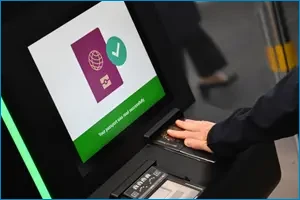
Fiumicino Airport invested approximately €12 million ($13.7 million or £10.2 million) in standalone self-service kiosks. However, airport management found it impractical to direct large volumes of travelers to these machines. Consequently, British citizens and other non-EU nationals are now permitted to register their facial images and fingerprints directly at passport e-gates rather than using the standalone kiosks.
Children under the age of 12 are excluded from using these automated gates and must still have their biometrics processed by a border officer.
Budget airline Ryanair has issued warnings to passengers heading to continental Europe, advising them to prepare for extended queues at passport control. The carrier criticized the implementation, labeling it a failed rollout that is creating unnecessary delays, and advised UK travelers to allocate extra time for their airport journeys.
The impact of the new regulations is being felt directly by holidaymakers across various European hubs. Carl, a traveler from Yorkshire who recently flew to Rome with his family, recounted waiting in a queue for two hours with his young children from the moment they left the aircraft.
Another passenger, David, who was visiting from the United States with his wife Marlo, reported a one-hour wait that caused them to miss their pre-arranged driver.
Delays have also been reported at other major tourist destinations. Barry, a traveler from Bracknell, experienced a 45-to-50-minute wait at Barcelona airport because several biometric machines were out of service. His friend Sarah, who flew into Barcelona on a separate flight, reported that her passport control queue lasted nearly an hour, describing the wait as almost as long as the flight itself.
In Portugal, similar challenges have emerged at Faro Airport. Superintendent Pedro Oliveira, who oversees border control at the airport, acknowledged that queues that previously took 10 minutes now regularly exceed 30 minutes.
While he urged passengers not to worry, noting that waits of over an hour are rare unless multiple flights land simultaneously, he admitted that the new EU information technology system has been plagued by technical bugs.
According to Oliveira, the system's heavy reliance on centralized servers means that an issue in one location, such as Warsaw, can trigger disruptions across the network, occasionally causing simultaneous system crashes across multiple EU member states that require several minutes to reboot.
He noted, however, that these server complications are now occurring less frequently, and the airport has recruited additional border staff to manage the transition. In Portugal, children under the age of 16 are directed to border police officers rather than automated machines to have their biometrics recorded.
The digital EES framework requires all non-EU citizens entering the 29-country Schengen area to register their biometric data, including fingerprints and photos, upon arrival, which is then verified when they exit. To mitigate delays, Bassato has suggested removing redundant steps from the process and has called for wider adoption of the EU's official pre-registration mobile application, which is currently only utilized by Sweden and Portugal.
Although member states hold the authority to temporarily suspend the EES under exceptional circumstances, the European Commission has resisted broader changes. Airlines and airport operators recently lobbied the Commission to allow proactive suspensions of the biometric checks during anticipated peak travel periods, but a meeting held earlier this month concluded without any policy adjustments.
The European Commission maintained that disruption remains limited at the majority of European airports and pledged to continue providing maximum support to member states during the system's rollout.
It's often done using standalone, automated machines known as "kiosks" and sometimes with border officers – for example, for children under 12. The new process and machines have been phased in since October.