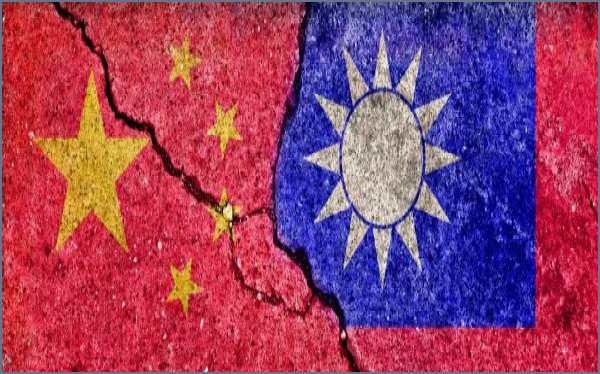
On September 12, the University of Hong Kong’s Beijing Center hosted a symposium where more than 20 Chinese scholars convened to deliberate on the institutional design and governance frameworks that would follow a potential unification with Taiwan. The participants reached a 12-point consensus on the implementation of the “One Country, Two Systems” principle, a concept originally designed with Taiwan in mind by Deng Xiaoping in 1982, following a nine-point proposal by Ye Jianying in 1981.
The consensus asserts that all power in Taiwan would derive from authorization by Beijing. Under this vision, Taiwan’s existing armed forces would be disbanded, with all weaponry collected and surrendered to the central government. Defense responsibilities would shift entirely to Beijing, which would station People’s Liberation Army (PLA) troops on the island, mirroring the garrison arrangements in Hong Kong and Macao. The plan also allows for Taiwanese individuals to voluntarily enlist in the PLA, an organization that operates under the principle that the “party commands the gun.” This contrasts with the current Constitution of the Republic of China, which requires Taiwan’s military to remain independent of party affiliation.
While the central government maintains a policy of “peaceful reunification,” the scholars’ blueprint explicitly addresses the scenario of “reunification through non-peaceful means.” In such an event, they propose a transition period of “quasi-military governance” lasting three to five years. During this time, the central government would focus on suppressing “Taiwan independence elements,” a term Beijing uses to describe those who advocate for the island’s de jure independence.
The symposium’s focus on the use of force and the subsequent governance structure represents a departure from the official discursive approach, which typically reserves force as a last resort against external interference and a small number of separatists, as outlined in the 2022 white paper, “The Taiwan Question and China’s Reunification in the New Era.” Unlike the 2022 white paper, which remained silent on the future of Taiwan’s military and political parties, the scholars’ 12-point plan calls for a “de-nationalization” and “de-centralization” of the existing legal system, transitioning it into Special Administrative Region (SAR) regulations. They also emphasized that “patriots” must govern Taiwan, though existing political parties could theoretically be retained under the new constitution.
The proposal includes a complete reorganization of Taiwan’s administrative divisions and electoral systems, alongside a mandate for thorough reform of Taiwanese textbooks to align with China’s “patriotic and national” education. Economically, the scholars envision Taiwan becoming a key node in a “Zhejiang-Fujian-Taiwan Greater Bay Area,” serving as a high-tech industrial base and an Asia-Pacific economic hub. Geopolitically, they define Taiwan as an “eastern bulwark of national security,” essential for China to bypass the constraints of the First Island Chain.
No Taiwanese participants attended the symposium. Online commentary suggested that pro-unification figures may have been excluded due to safety concerns regarding the sensitive nature of discussing “non-peaceful” unification. In late August 2026, Ci-Ze Li, an associate professor at National Changhua University of Education, published alternative proposals suggesting Taiwan retain democratic elections, judicial authority, and local defense forces. However, Liang Wen-chieh, deputy minister of Taiwan’s Mainland Affairs Council, stated that Beijing would not accept such conditions, noting that any guarantees from the CCP lack credibility as long as it retains absolute leadership.
The CCP currently frames unification as an “inevitable requirement for the great rejuvenation of the Chinese nation,” asserting that the PRC holds sovereignty over the island. While Beijing argues that Taiwan has been part of China since antiquity and was returned in 1945, historical analysis in the journal Pacific Affairs indicates that the CCP previously described Taiwan as a distinct nation entitled to self-determination in documents from 1928 to 1943. Despite these contested historical and legal claims, it remains an undisputed fact that the PRC has never exercised jurisdiction over Taiwan.