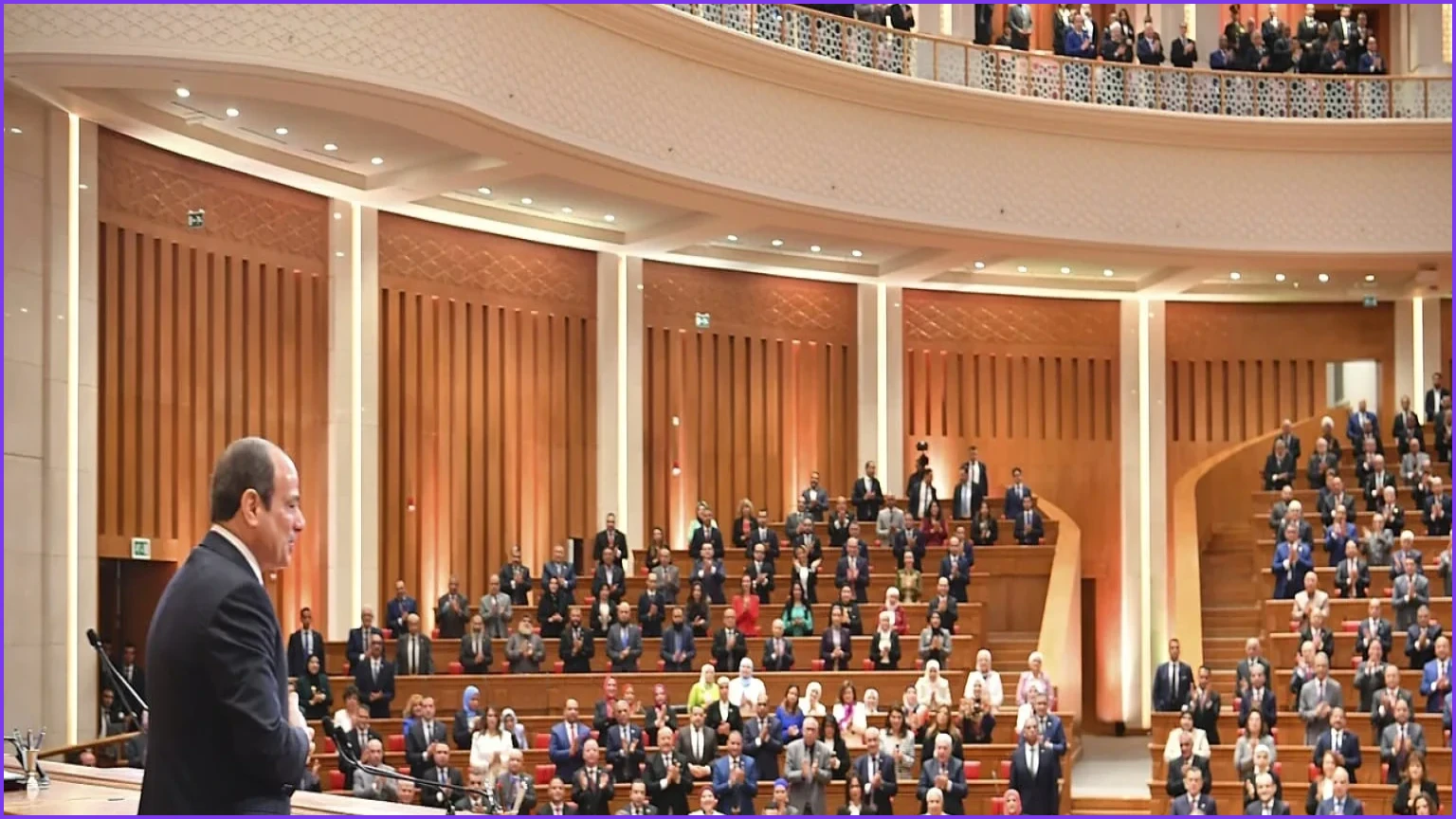
Egypt’s House of Representatives voted on Monday to grant President Abdel Fattah el-Sisi the authority to provide military assistance to Saudi Arabia. The move comes as the kingdom faces a wave of attacks from Yemen’s Iran-backed Houthi militia. The legislative body approved the measure with a two-thirds majority, empowering the president to coordinate with Riyadh on defensive actions intended to protect Saudi territory, sovereignty, and religious sites from external threats.
While the authorization is now in place, the parliamentary statement did not disclose specific operational details or confirm that any troops were currently being deployed. President el-Sisi indicated last week that any Egyptian military involvement would be strictly limited to the defense of Saudi borders, explicitly ruling out any offensive actions against targets in Yemen. The approval follows an endorsement by the National Defence Council on 18 October, which is also chaired by the president.
The parliamentary process involved closed-door sessions on 18 and 19 October, following an initial request from the president on 17 October. Deputy Speaker Assem El-Gazzar noted that nearly 500 lawmakers sought to participate in the discussions. Although most parties expressed support, some legislators raised concerns regarding the scope of a potential mission. The Egyptian Social Democratic Party instructed its members to abstain from the vote, citing a lack of clarity regarding the operational objectives, potential risks, costs, and the duration of any military engagement. The party emphasized the need for diplomatic solutions and expressed concern over an open-ended commitment.
Regional tensions remain high as the Houthis continue to claim attacks against Saudi infrastructure. On Monday, the group alleged it had targeted the East-West oil pipeline and King Khalid International Airport, though there was no immediate confirmation from Saudi authorities. Conversely, the Saudi-led coalition reported intercepting a missile directed at Riyadh and stated it had destroyed Houthi missile storage facilities and launchers in Yemen. These developments threaten maritime traffic through the Bab el-Mandeb Strait, a critical waterway for the Suez Canal.
Diplomatic efforts are ongoing, with Saudi, Turkish, and Pakistani officials meeting with Iranian leadership in Tehran on Monday to discuss de-escalation. The visit included Pakistan’s army chief, Asim Munir, and Turkey’s intelligence chief, Ibrahim Kalin. Meanwhile, the Houthi-controlled parliament in Sanaa, led by speaker Yahya al-Raei, warned Egypt on 17 October that military intervention would jeopardize Egypt’s own security. Egypt, which maintains a close political and financial relationship with Saudi Arabia, has previously participated in the Saudi-led coalition since 2015, primarily through naval operations. Egypt’s main stock index closed 1.7% lower on Monday ahead of the vote, following a 30-minute trading halt on Sunday after the EGX100 index fell 10%.