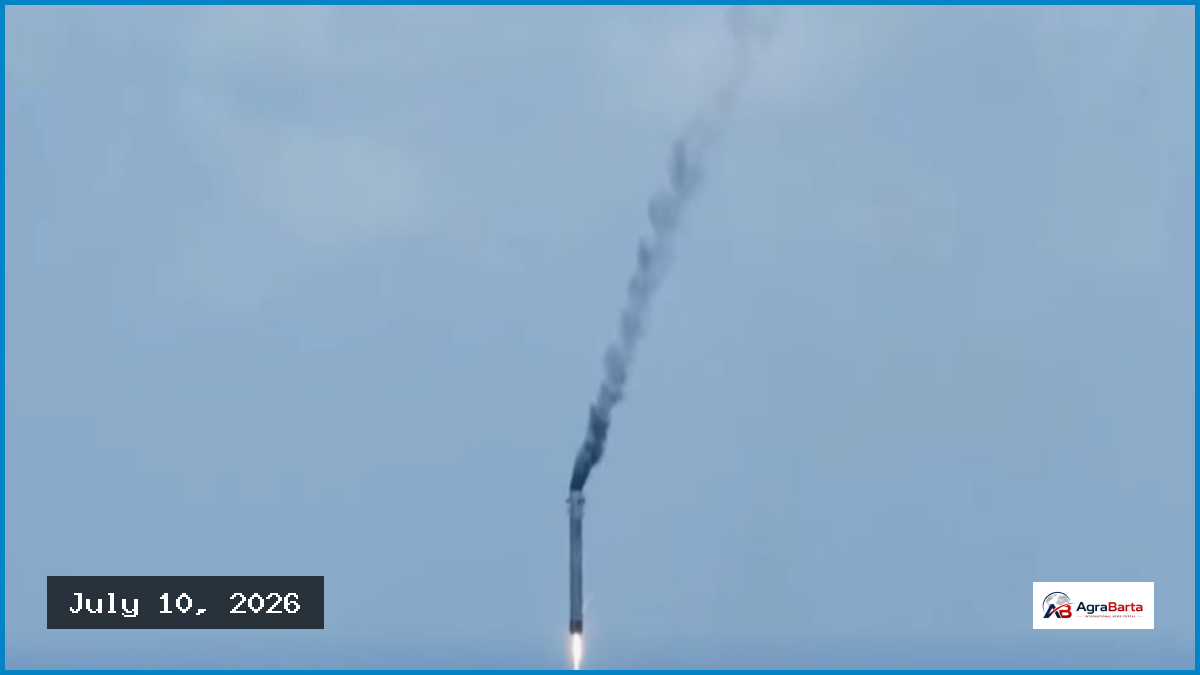
China has reached a major milestone in its national space program by successfully executing the first landing of a reusable rocket, according to state media reports. The China Aerospace Science and Technology Corporation confirmed that the Long March 10B rocket launched from Hainan in southern China at 12:15 local time (04:15 GMT) on Friday. Around six minutes after separating from the rocket’s upper stage, its booster returned to Earth vertically and was recovered on a floating platform.
This achievement signals that China is positioning itself to challenge the dominance of American firms in the reusable rocket sector, currently led by Elon Musk’s SpaceX and Jeff Bezos’s Blue Origin. Traditionally, rockets are considered expendable, with their segments destroyed during ascent, which contributes to the high cost of space missions. By successfully recovering and reusing boosters—often the most valuable component of a launch vehicle—China aims to significantly reduce the costs associated with satellite deployment and broader space exploration.
The industry standard for reusable technology was established by SpaceX, which first landed a Falcon 9 rocket from an orbital flight in December 2015, followed by Blue Origin’s New Glenn in November 2025. Currently, the Falcon 9 is capable of being reused dozens of times and launches approximately 150 times per year. China previously attempted a recovery in February using a Long March 10A, which completed a controlled descent and splashed down near a recovery platform.
The Long March 10B, which is designed to carry a payload of at least 16 metric tons to low-Earth orbit, has drawn comparisons to the Falcon 9. However, the recovery mechanism differs; rather than performing an autonomous landing on a ground pad or drone ship, the Long March 10B utilizes “landing hooks” that catch a net attached to the floating platform. Following the news of the successful mission, shares in Chinese space firms saw a surge, with China Spacesat and China Satellite Communications both rising by 10%, reaching the daily limit permitted by national financial market regulations.