In April 2026, a Murakami-class Japanese Maritime Self-Defense Force (MSDF) destroyer conducted a transit through the Taiwan Strait. While such naval passages have become more frequent since 2025 amid heightened regional tensions, this specific event triggered an unusually intense reaction from China. The backlash was not directed at the transit itself, but rather its timing: April 17, the anniversary of the 1895 Treaty of Shimonoseki. This treaty, which concluded the First Sino-Japanese War, is viewed within Chinese historical narratives as a painful chapter of the “Century of Humiliation.”
While Japanese officials provided no indication that the date held any symbolic significance, Chinese commentators interpreted the timing as a deliberate, provocative signal of imperial victory or strategic intent regarding Taiwan. This incident exemplifies a structural challenge in East Asian security, where states react not only to present behavior but also to the meanings assigned to those actions through the lens of historical memory.
For decades, analysts have relied on traditional geopolitical factors—such as military modernization, alliance politics, and maritime disputes—to explain regional tensions. However, these factors fail to account for why relatively minor events frequently escalate into major political controversies. Historical memory has emerged as a strategic variable that dictates how governments and the public interpret policy. Under conditions of declining trust, this phenomenon creates a “memory security dilemma,” where historical narratives systematically amplify mistrust, leading states to perceive hostile intent where none may exist.
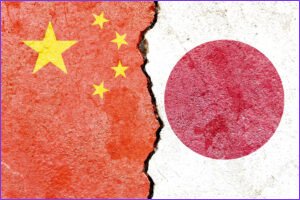
Unlike the traditional security dilemma, which is rooted in uncertainty regarding capabilities and intentions, the memory security dilemma arises from uncertainty about meaning. History serves as a cognitive shortcut, filling interpretive gaps as trust erodes. This dynamic is particularly visible in Sino-Japanese relations because the two nations hold fundamentally different memories of the past. In China, dates such as April 17, 1895 (Treaty of Shimonoseki), September 18, 1931 (Manchurian Incident), and July 7, 1937 (Marco Polo Bridge Incident) are deeply embedded in national identity and education, serving as frameworks that link past vulnerability to modern strategic concerns. Conversely, these dates often lack the same salience in Japanese public consciousness or school education.
A historical example of this perception gap occurred on July 7, 2012, when then-Prime Minister Noda Yoshihiko announced the nationalization of the Diaoyu/Senkaku Islands. According to a retrospective analysis by Kyodo News editorial board member Moriyasu Hiroshi, the policy was finalized on July 6, but the announcement was made on July 7 after The Asahi Shimbun broke the story. Neither the newspaper nor the government appeared to recognize the profound historical significance of that date to China, inadvertently deepening Beijing's suspicions.
The current danger lies in the self-reinforcing nature of these misinterpretations. As Japanese policymakers remain largely unaware of the symbolic weight certain dates carry in China, and Chinese observers continue to interpret routine operations through charged historical narratives, the gap between intended and perceived meaning widens. This cycle of escalating mistrust threatens to turn standard maritime activities into flashpoints, potentially increasing the risk of international involvement in crises that neither party intended to create. Addressing this issue requires strategic empathy—the ability to anticipate how actions will be perceived through the historical experience of another society.
You have reached the limit of 2 free articles this month.