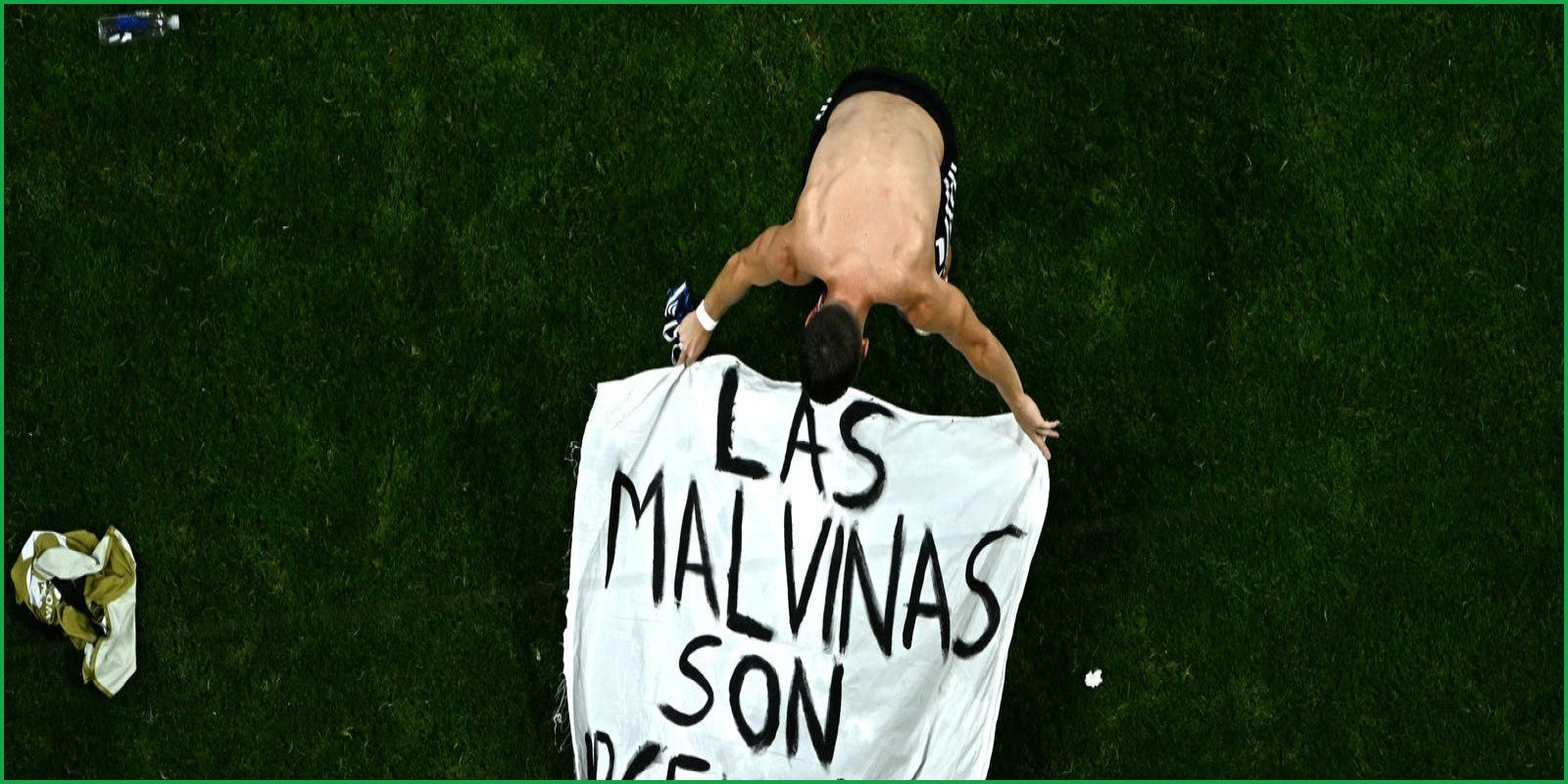
Argentina players Lisandro Martinez and Giovani Lo Celso drew significant controversy following their team's World Cup semifinal victory over England. The players celebrated on the field by holding up a banner that read "Las Malvinas Son Argentinas," a declaration of the country's claim over the islands known as the Falklands, which remain a British Overseas Territory. The archipelago is referred to as the Malvinas by Argentines.
The display violated clear regulations established by FIFA and the International Football Association Board (IFAB), which strictly prohibit political messaging in stadiums. The IFAB rulebook states that equipment must not feature political, religious, or personal slogans or images, noting that any such offense by a player or team will be subject to sanctions by the competition organizer or FIFA. Furthermore, FIFA’s Stadium Code of Conduct explicitly bans flags, banners, and other paraphernalia of a political or discriminatory nature.
Authorities had anticipated potential friction due to the 1982 conflict between the two nations, which involved a 74-day undeclared war resulting in more than 900 deaths. Argentina's security minister, Alejandra Monteoliva, had warned before the match that such items were prohibited, telling local radio that the entry of elements with provocative political or racial content would not be permitted. It remains unclear where the players obtained the banner used in the celebration.
Tensions were further heightened on the eve of the match when Argentina’s Victoria Villarruel posted messages on social media rejecting political correctness regarding the English. She stated that the situation was not merely about football, claiming that the British continue to occupy the islands and usurp resources while the world remains quiet. This incident follows previous controversy involving Argentina’s team, including a live stream after the 2024 Copa America where midfielder Enzo Fernandez and others were seen singing a chant mocking French players of African heritage. That incident led to a legal complaint from the French Football Federation and the firing of Argentina’s undersecretary of sport, Julio Garro, by President Javier Milei after Garro suggested Lionel Messi should apologize for the team's conduct.