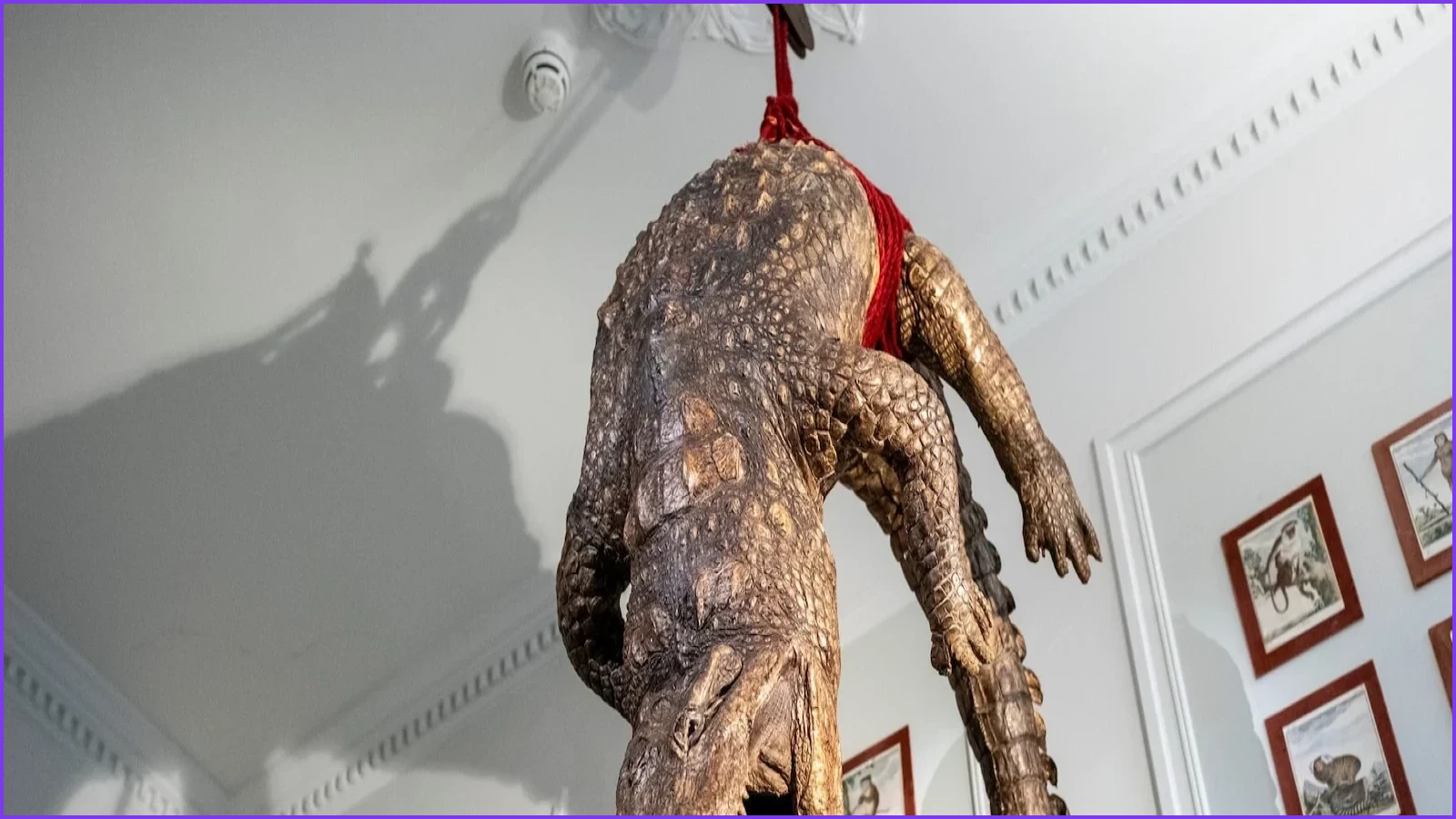
Visitors entering Amsterdam's new Art Zoo are immediately greeted by a 12-foot crocodile suspended from the ceiling with its mouth agape. The museum, located within a 17th-century canal house, features hundreds of preserved creatures, including artfully arranged piles of bones, illuminated tulips inside apothecary jars, and a cabinet filled with grotesque fish. While the atmosphere is dark, the founders insist it is not a Halloween-themed exhibit, though it has drawn comparisons to such displays. Tomáš Vaško, a local resident, described the experience as "a little creepy" after visiting on a gloomy October day.
The museum is the work of Dutch artists Jaap Sinke and Ferry van Tongeren. Their approach is inspired by "wunderkammers," or curiosity cabinets, which were popular among wealthy Europeans during the 16th and 17th centuries. According to van Tongeren, the primary goal is to use the animals for storytelling and drama, noting that they aim to give the creatures an "attitude" rather than simply mimicking their natural states. The exhibition features striking displays, such as a cheetah lounging in an alcove beneath the gaze of a cassowary, and a Japanese giant spider crab with six-foot legs positioned above a doorway, near the leg bones of a mastodon that nearly reach the ceiling.
The artistic duo gained significant recognition in 2015 after artist Damien Hirst purchased their entire exhibition following a London art show. A defining feature of their current museum is the reversal of roles between visitors and the collection; while the animals are free to be viewed, human guests are confined within brooding, black metal cages. Van Tongeren explained that they wanted the entire building to function as a singular piece of artwork by keeping people in cages while the animals appear free.
Sinke emphasized that none of the animals in the collection were sourced from the wild, stating they only use specimens from zoos that died of natural causes. While the paperwork for acquiring these animals can be complex, the pair focuses on sourcing primarily from Europe to ensure the history of each specimen is well-documented. The artists consider naturalist Charles Darwin a third, unseen contributor to their work, even incorporating a series of sideways-facing Darwin busts into the display. They noted an irony in honoring Darwin within a building that formerly served as the Biblical Museum. The collection also includes non-real specimens, such as "Jenny Hanivers," which are ray carcasses that 16th-century sailors modified into grotesque sea monsters to impress collectors.
We add an attitude to the animals, where traditional taxidermists just want to mimic nature.”Behind him, a cheetah slouched in an alcove under the watchful eye of a cassowary.In natural history museums, animals are posed as they could be seen in the wild.
Still, he acknowledged that the paperwork can be challenging.