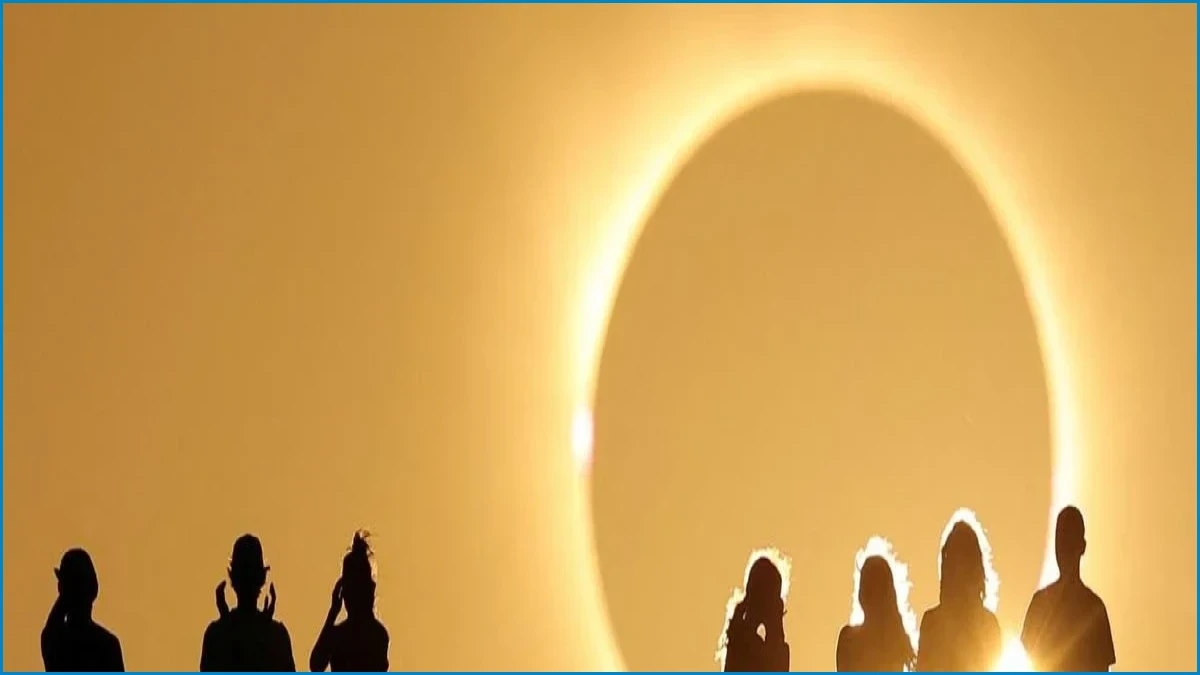
A remarkable astronomical event captivated millions across the UK and Europe, marking the most dramatic solar eclipse the region has seen in nearly 30 years. While observers in the UK experienced a partial eclipse, with the Moon covering more than 90% of the Sun at its peak shortly after 19:00 BST, residents in parts of Iceland, Greenland, and Spain were treated to the full spectacle of a total eclipse.
The path of the total eclipse originated at the northern tip of Siberia in Russia. From there, it traveled across the Arctic Ocean, reaching Iceland in the early evening before moving southward toward the UK. For those in the UK, the partial eclipse began around 18:00 BST in northern Scotland, followed by the south coast of England just before 18:20 BST. While initially subtle, the phenomenon became clear to those with cloud-free skies as the Moon gradually moved across the Sun over the course of an hour.
Many areas in central and southern England, as well as Wales, enjoyed clear conditions that provided an excellent view of the event. Although northern England, Scotland, and Northern Ireland faced cloudier skies, large crowds still gathered at famous landmarks to witness the occasion. Enthusiasts described the event as a powerful reminder of the "amazing" nature of the universe, with many reacting to the sight with cheers and gasps.
The event triggered a high demand for safety equipment, leading to a shortage of solar eclipse glasses. In the days leading up to the eclipse, supplies were exhausted at opticians, hardware stores, and even local bakeries. For those in regions experiencing totality, such as Arcos de las Salinas in Spain, the sky was plunged into darkness, creating a memorable experience for the gathered skywatchers.