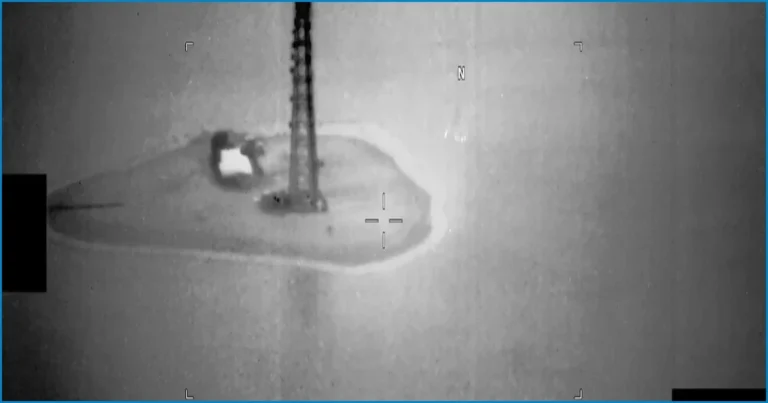
An upcoming scientific voyage scheduled for this October is generating renewed hope of solving one of the 20th century's most enduring mysteries. After a yearlong delay, a 16-person team will travel by sea to the remote Pacific island of Nikumaroro in search of the plane piloted by legendary aviator Amelia Earhart, who disappeared nearly 90 years ago.
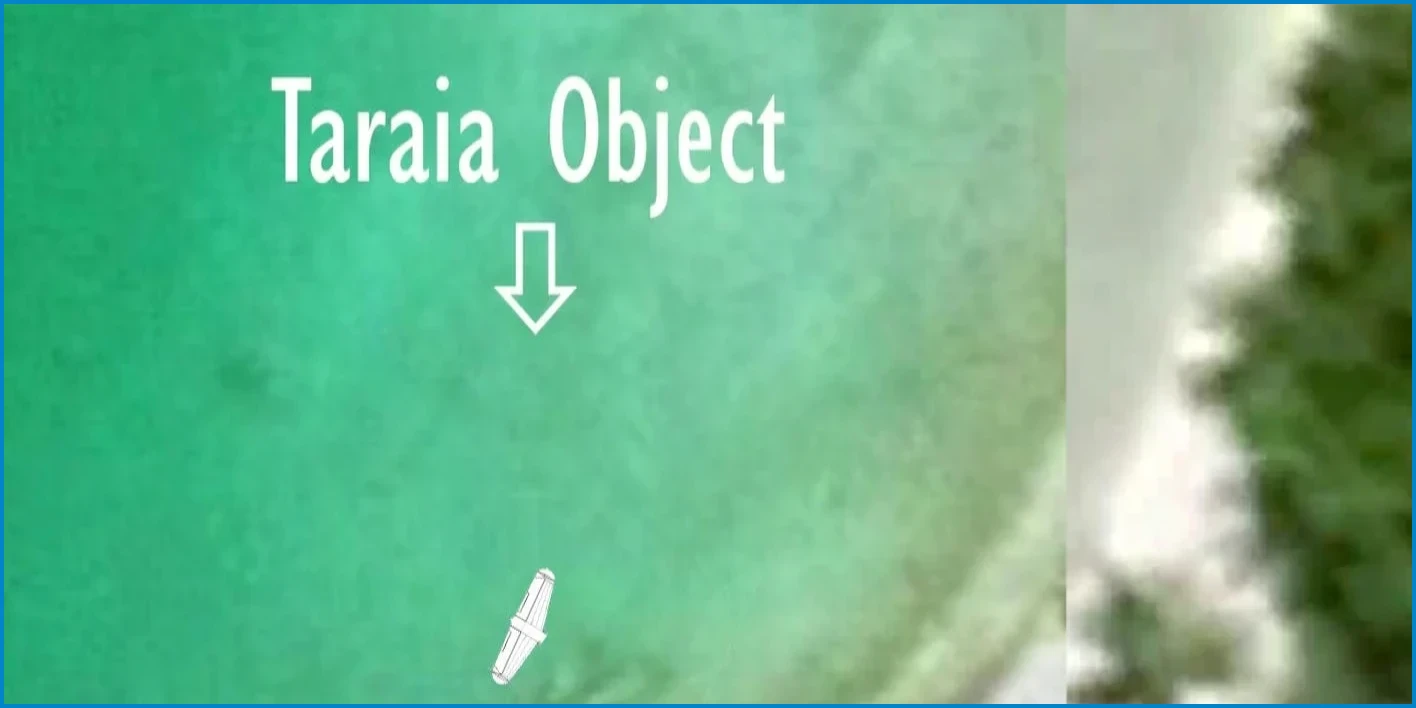
The joint expedition, organized by the Purdue Research Foundation and the Archaeological Legacy Institute, centers on investigating the "Taraia object." This visual anomaly, located at the edge of the island's lagoon, was first identified in 2020 through satellite imagery. Originally planned for October 2025, the mission was pushed back due to weather challenges and the time needed to secure clearances from the cabinet of Kiribati, the island nation that governs Nikumaroro.
Lead archaeologist Richard Pettigrew, 78, expressed immense optimism about the upcoming effort. "I am feeling very confident about this," Pettigrew said, adding, "I'm pumped." The team intends to travel by ship to the island and use a hydraulic dredge to carefully clear away layers of sediment in the lagoon. Their primary goal is to examine the anomaly to see if it is indeed Earhart's Lockheed Electra 10E, focusing on locating large components like the fuselage and wings, as well as searching for distinctive metal rivets unique to the aircraft's design.
Earhart and her navigator, Fred Noonan, vanished on July 2, 1937, during the final stages of their highly publicized flight around the world, which had commenced on May 21, 1937, in Oakland, California. The pair were flying from Lae, Papua New Guinea, toward Howland Island, where the U.S. Coast Guard cutter Itasca was stationed to provide refueling supplies. As their fuel ran dangerously low, Coast Guard personnel received increasingly strong voice transmissions from Earhart. However, because neither Earhart nor Noonan knew Morse code, two-way communication could not be established. Following their disappearance, the U.S. government launched the largest search operation in its history, which was called off after two fruitless weeks. Earhart and Noonan were legally declared dead on January 5, 1939.
Over the decades, numerous theories have emerged to explain the tragedy, ranging from espionage missions and assumed identities to capture by Japanese forces. The most prominent theory remains that the Electra ran out of fuel and crashed into the open ocean near Howland Island. "I do believe that they were close to Howland Island based on the records," said Dorothy Cochrane, a leading Earhart expert and retired general aviation curator at the Smithsonian National Air and Space Museum.
Nevertheless, millions of dollars have been spent on search efforts spanning deep-sea coordinates and remote landmasses. Just last year, in 2024, an ocean exploration firm conducted an underwater search within 100 miles of Howland Island after spotting what they suspected was the plane's wreckage, though it was ultimately identified as a natural rock formation.
The alternative hypothesis—that Earhart and Noonan crash-landed on Nikumaroro and lived as castaways before dying there—has gained significant traction. Proponents point to radio bearings that point toward the island, 1930s-era artifacts recovered there (including a woman's shoe, a medicine vial, and a freckle cream jar), and an analysis of recovered human bones that match Earhart's physical proportions. The Taraia object itself, which first became visible in satellite images in April 2015, resembles an anomaly seen in historical photographs taken shortly after the 1937 disappearance.
Despite the intriguing clues, many experts remain cautious. Rachel Hartigan, an author who has written extensively about Earhart and visited Nikumaroro twice as a reporter, voiced the prevailing skepticism. "It would be amazing if they do find something," Hartigan said. "But there's just been a lot of promising things that haven't come through."
Pettigrew acknowledges the speculative nature of the project. "This is a hypothesis," he noted. "We won’t know until we go down there and identify it." However, if the October mission successfully identifies the aircraft, the team plans to return the following year for a full-scale recovery operation to retrieve the wreckage and transport it back to the United States.
Purdue University has a historic connection to the aviator; Earhart once served as a visiting adviser and career counselor at the institution, and she had intended to donate her plane to Purdue for aeronautical research after her flight. Steve Schultz, senior vice president of Purdue University, confirmed that the university is negotiating an agreement with the Kiribati government to secure custody of any recovered wreckage.
Even if the expedition does not find the plane, organizers believe the effort is worthwhile. "Something is there, and it’s either the Electra or it’s not," Pettigrew said. "Somebody has to make that determination – and that’s going to be us."
Still, Cochrane and other researchers remain skeptical.
Both Schultz and Pettigrew said that while they hope to solve the nearly century-old mystery, it won’t be a failure if they come up empty-handed.