Europe is preparing for a rare celestial event as the continent witnesses its first total solar eclipse since 2006. This phenomenon occurs when the Moon moves directly between the Sun and Earth, casting a shadow across the planet. While ancient cultures often interpreted these events as omens or messages from the gods, NASA explains the occurrence as a cosmic coincidence: the Sun is approximately 400 times larger than the Moon, but it is also roughly 400 times farther away.
This alignment allows the Moon to completely obscure the Sun, revealing the outer atmosphere known as the corona.
On August 12, the path of totality will begin in a remote region of northern Russia. The shadow will then traverse Greenland, Iceland, Spain, and the northeastern tip of Portugal. In Spain, the path is expected to move from the northern city of Oviedo toward the island of Mallorca, passing over regions previously affected by wildfires that experts link to human-driven climate change.
For observers in Spain, the total eclipse will last less than two minutes just before sunset. For instance, the city of Burgos will experience total darkness for exactly one minute and 48 seconds. While the duration is slightly longer in parts of Russia and Greenland, it remains under two-and-a-half minutes. READ ALSO: How to get free glasses to see Spain's total solar eclipse.
Beyond the path of totality, a partial eclipse will be visible across much of Europe, Canada, the northern United States, and northwest Africa. These partial phases, occurring as the Moon begins and finishes its transit, will last about one hour and 45 minutes. During a partial eclipse, observers may notice a decrease in brightness and a drop in temperature, though Alain Doressoundiram, an astrophysicist at the Paris Observatory, noted that even one percent of the Sun remaining unobscured is 4,000 times brighter than the full Moon.
People viewing a partial eclipse can see the brightness of the Sun decrease and feel the temperature drop. But the experience will not be similar to witnessing a total eclipse.
Although one or two solar eclipses occur globally each year, the narrow band of totality means any specific location may wait up to 400 years to see another. Looking ahead, a total solar eclipse will cross southern Spain, northern Africa, and the Arabian Peninsula on August 2, 2027, with a duration of six minutes and 23 seconds. A longer eclipse is not expected until 2114. Additionally, Spain will experience an annular "ring of fire" eclipse on January 26, 2028.
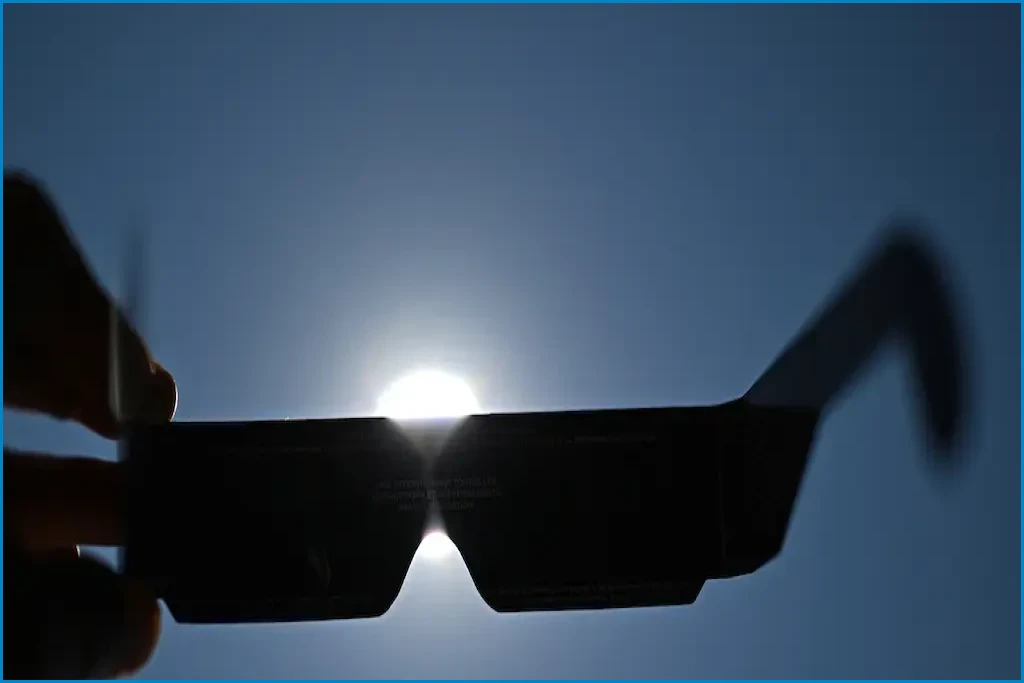
Safety remains a critical concern for observers. Experts emphasize that looking directly at the Sun can cause permanent eye damage, and because eyes lack pain receptors to signal injury, symptoms often appear only after the fact. Following the 2024 total solar eclipse in the United States, research indicated a significant spike in online searches for "my eyes hurt." To prevent injury, observers are urged to use only glasses that meet the ISO 12312-2:2015 safety standard.