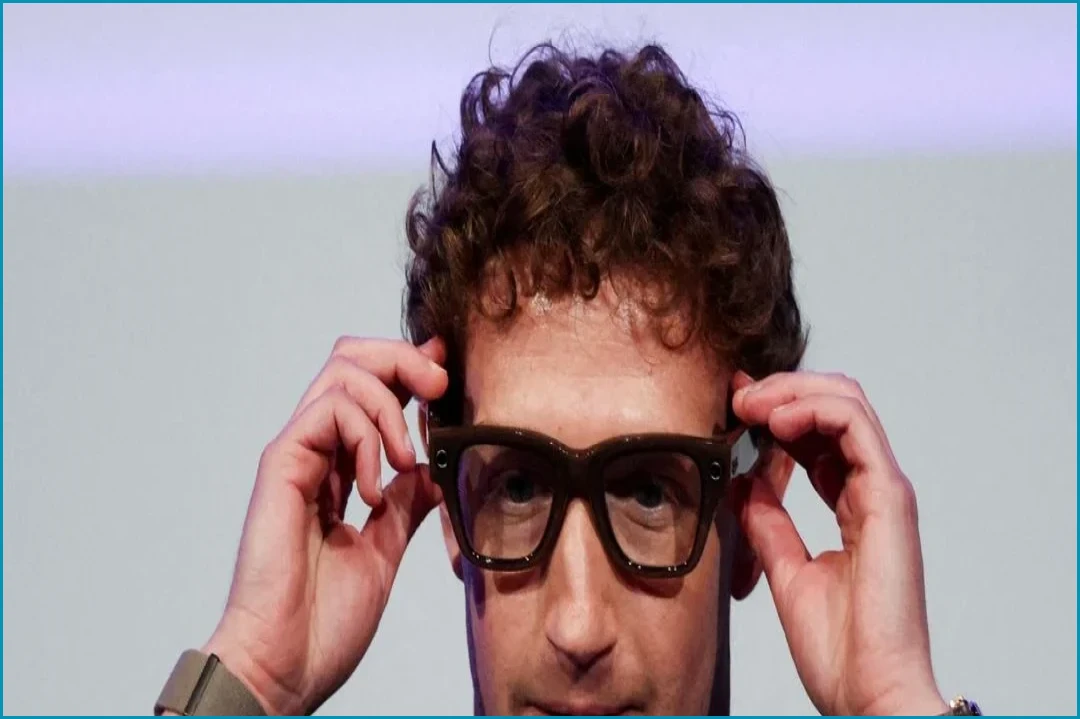
Meta has unveiled Muse Glimmer, a new artificial intelligence model designed to operate on personal computers, as CEO Mark Zuckerberg articulated his comprehensive vision for the development and deployment of superintelligence. In a detailed statement released on Monday, Zuckerberg emphasized that this advanced technology should foster individual empowerment, encourage invention, and ensure a balance of power, rather than concentrating control within a limited number of institutions.
Zuckerberg described the current period as an "incredible moment in history," predicting that within the next few years, individuals will gain access to superintelligence that surpasses human capabilities. He believes this will unlock the potential to create extraordinary new innovations, establish businesses, express diverse ideas, accelerate learning, and significantly improve health and overall quality of life.
A core question, according to Zuckerberg, revolves around who will ultimately control superintelligence and the objectives it will serve. He presented two divergent paths: one where the technology is centralized and restricted to a select few institutions, and another where it becomes a widely accessible tool, empowering a broad spectrum of users. Meta's newly launched Muse Glimmer model is notably smaller than leading AI models from competitors like OpenAI and Anthropic. It is specifically engineered for agentic tasks and can run efficiently on a Mac or PC using just a single graphics card, aiming to meet the demand for AI systems that function directly on personal devices.
Open-weight models, such as Muse Glimmer, are generally more affordable than those from so-called frontier labs and offer publicly accessible core components for easy customization, a contrast to the fully controlled, closed models maintained by many companies. This launch comes as Meta strives to reinforce its position in the competitive AI landscape, following the formation of a costly new superintelligence team last year to re-enter the high-stakes AI race.
Acknowledging the dual nature of transformative technologies, Zuckerberg noted that superintelligence will bring opportunities and challenges on a scale unprecedented in recent lifetimes. He expressed surprise at the widespread "doom" narratives among some AI developers, questioning the rationale behind accelerating towards an outcome where AI supposedly eliminates most jobs and diminishes human relevance. He stated, "The notion that AI is so dangerous that the only safe path is an extreme concentration of power seems inherently problematic. Historically, hoping that an absolute power will benevolently provide for humanity if sufficiently enlightened has not led to safe or positive outcomes."
Drawing parallels to previous technological revolutions, Zuckerberg asserted that historical fears of people being left behind have consistently given way to broader prosperity, improved health, and increased freedom. He voiced confidence that AI will follow a similar trajectory if guided by principles such as liberty, open inquiry, free enterprise, and equal opportunity. He underscored that superintelligence's most significant contribution will be invention, not merely automation. While early AI could answer questions and perform routine tasks, future iterations will increasingly facilitate the discovery of new knowledge, from developing new drugs to enhancing business operations. He argued that while a person's daily questions are limited, the valuable inventions superintelligence can produce to help achieve goals are boundless.
Zuckerberg also highlighted national interest and security considerations, emphasizing the need for competitiveness against nations like China. He stated, "American communities will have greater prosperity and security if America and its allies lead in AI compared to geopolitical rivals. Yet one significant disadvantage that the US has compared to countries like China is that it is more difficult to build infrastructure here."
Instead of allowing a singular superintelligence or a small group of experts to dictate what is best for humanity, Zuckerberg advocated for the widespread distribution of this technology, enabling individuals to direct it according to their unique goals and values. He stressed, "The history of democracy and economics has shown that there is no single objective answer to how people define the best life, and therefore the best approach is letting people decide what matters in their own lives." He likened this approach to the earlier democratization of supercomputers and the internet, affirming that Meta is actively working towards this vision of personal superintelligence.
The Meta boss also addressed various risks, including job displacement, the local impacts of data centers, cybersecurity threats, biological misuse, potential government overreach, and the imperative for democratic nations to maintain leadership while ensuring humanity retains control. Amid increasing public opposition to data center development in the US, Zuckerberg announced that Meta is launching a fund to directly support communities located near its facilities.
He rejected the idea that aligning a single superintelligence could resolve these complex issues, arguing that humanity lacks uniform values, making it impossible for any single system to align with everyone's competing interests. Instead, he proposed framing these challenges through the lens of power balance, similar to the functioning of democratic institutions. A widely distributed superintelligence, he suggested, would enable individuals and institutions to hold each other accountable, leading to fairer and more secure outcomes across areas like legal representation, cybersecurity, and economic competition. He warned, “If superintelligence remains concentrated in a few hands — whether individuals, companies, governments, or AI systems themselves — outcomes will favour those few at the expense of others.”
Zuckerberg concluded that Meta's focus on making personal superintelligence accessible to everyone is intended to shift the balance of power towards individuals, fostering a future that reflects the full spectrum of human values and perspectives. He added, "The arc of human civilization has bent towards putting more power in people’s hands to live and shape the world in the ways we believe are best. Superintelligence holds the promise of giving everyone that power, and building a positive future for everyone."