The global phenomenon of Hallyu, or the Korean wave, has swept across Latin America, but in Chile, a new generation of fans is doing more than just consuming South Korean culture—they are actively reshaping it. By blending the signature elements of K-pop, such as high-energy choreography, vibrant aesthetics, and top-tier video production, local artists are forging a unique musical movement. At the forefront of this shift is a rising wave of homegrown, K-pop-inspired pop stars who are capturing international attention.
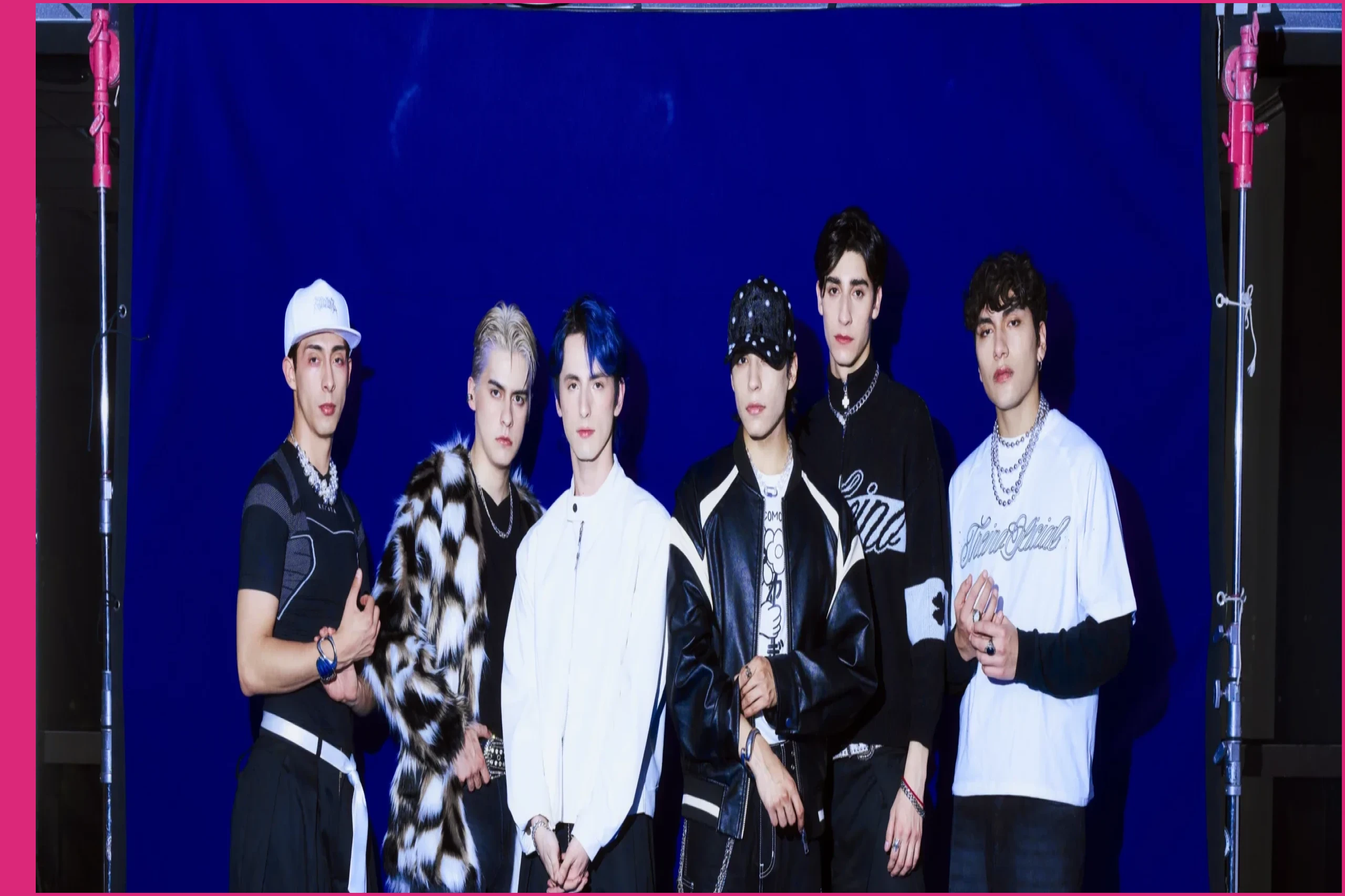
Among the most prominent of these acts is Q_ARE, a six-member Chilean boy band that has built a massive following. The group's music is a fast-paced, energetic fusion of English, Spanish, and local Chilean slang, all set against a distinct K-pop aesthetic. Their music videos are characterized by retro video game themes, rapid and flashing scene transitions, and bold, colorful makeup.
The band's journey began two years ago when the six members—Seba, Jamin, Jota, Bin, Aiden, and Fabi—responded to an online casting call. After surviving a rigorous six-month audition and training process, the final lineup was established. They officially debuted in 2024 with their single "Try Again." Unlike many traditional pop groups, Q_ARE is entirely self-sufficient. The members handle every aspect of their career, including songwriting, choreography, visual aesthetics, and music video design.
Ahead of the launch of their single "FÚ" in May, the band gathered at a dance studio in Santiago to perfect their choreography. Dressed in loose clothing and high-top sneakers, they practiced their steps and spins under intense training. Outside the studio, the sounds of salsa and reggaetón drifted from neighboring rooms, highlighting the diverse musical landscape of Chile.
Seba, a 22-year-old vocalist for Q_ARE, reflected on the band's unique identity. "I entered the artistic world thanks to K-pop," he said. "But despite all the inspiration and influence we have from Korea, we're clearly not K-pop because we're Latinos. We've transformed it into something of our own."
This creative fusion has earned them a dedicated global fanbase known as the "Qniverse." Bin, who raps and dances in the group, noted the international reach of their supporters. "We have fans from Singapore, a fan from Japan who always comments on everything we upload, many fans here in Chile, as well as in Peru, Mexico, the United States and Costa Rica," he explained. The band's Chilean fans even take the time to translate and explain local Chilean slang used in their lyrics to help other Latin American fans understand the songs. Q_ARE has already toured Brazil and performed at numerous venues throughout Chile.
The broader Korean wave has also made a massive impact across Latin America. For instance, major South Korean acts have seen unprecedented demand in the region. On May 6, 2026, Mexican President Claudia Sheinbaum stood alongside BTS members V, RM, Jung Kook, Suga, and Jimin to greet screaming fans from the balcony of the National Palace at Zócalo Square in Mexico City. BTS had just completed three sold-out shows at the Estadio GNP Seguros. The demand for such performances in Mexico was so overwhelming that President Sheinbaum even contacted South Korean officials to explore the possibility of adding more concert dates.
In Chile, the cultural exchange is visible on the streets of Santiago. In Patronato, a neighborhood that historically welcomed the first wave of Korean immigrants during the 20th century, there are now more than 50 Korean restaurants. Many of these establishments are owned by Chileans who are capitalizing on the public's growing fascination with Korean culture, often playing colorful, fast-paced K-pop music videos on loop.
This cultural bridge is also supported by educational institutions. Valeria Vivar, whose own interest in Korean culture began with a childhood love for anime, now coordinates the Rey Sejong Institute in Santiago. The institute is a Korean government-backed cultural organization with branches worldwide. During Santiago's annual Korean cultural week, Vivar observed crowds of visitors sampling Korean food, browsing cosmetics, participating in trivia quizzes, and competing in K-pop dance contests.
The Rey Sejong Institute has experienced rapid growth, now hosting about 200 students studying the Korean language—a fourfold increase since classes began in 2019. The center also partners with Universidad Central to offer a master's program in Korean Studies. According to Vivar, students enroll for various reasons. Some want to learn the language to understand the lyrics of their favorite K-pop artists, while others want to watch K-dramas and films without subtitles. Additionally, there is a growing segment of students interested in Korean literature and society.
As the cultural movement continues to expand, the members of Q_ARE remain optimistic about the future of the Chilean music scene. Fabi, a member of the group, acknowledged the advanced state of Asian pop industries while seeing it as an opportunity. "I personally feel that Asian culture in the arts is far ahead of Chile, but that also benefits us," Fabi said. "We have the chance to create something new — hopefully, in the future, we'll see many more Chilean boy bands, and that's already happening. Many boy bands and girl bands are appearing, and we're super happy because we feel that we have been an example of taking that risk — others are deciding to take that opportunity."