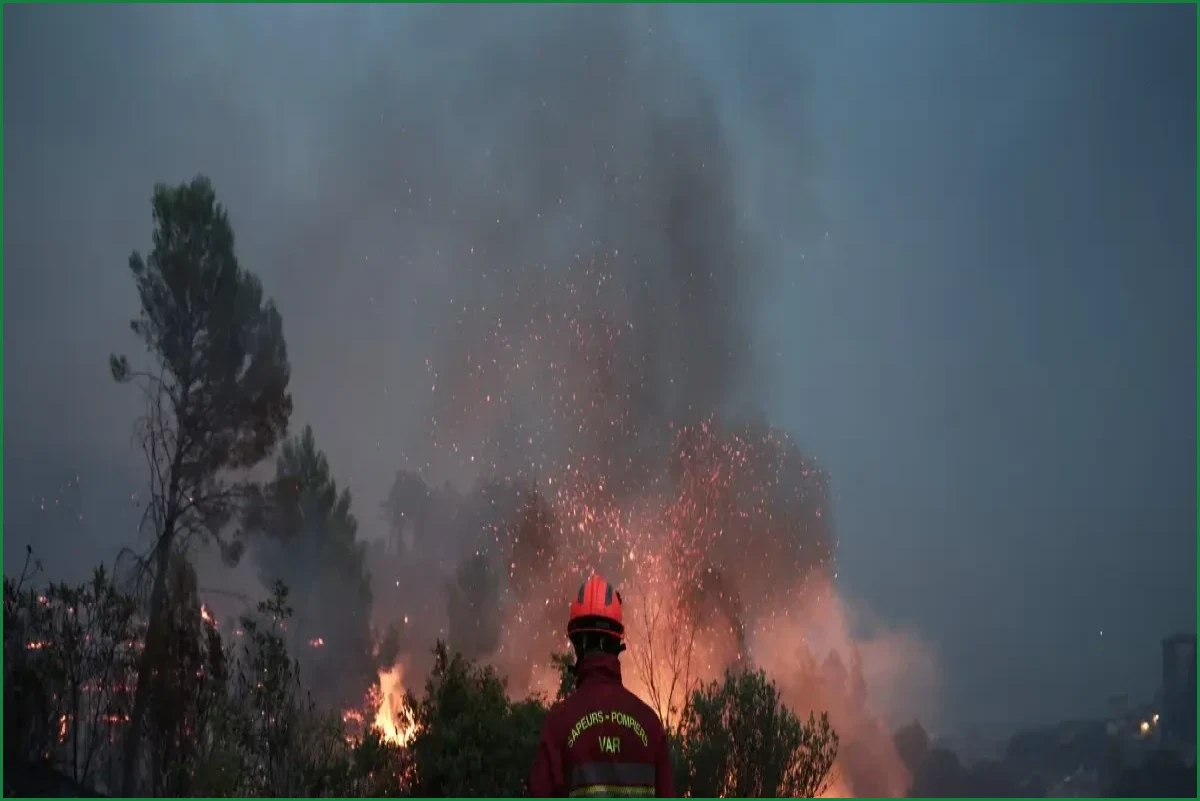
Three wildfires that erupted in Spain and France within days of each other this July have been identified as some of the most significant blazes recorded in the European Union since 2016. According to the European Forest Fire Information System (EFFIS), which utilizes satellite imagery analysis, these incidents rank among the 15 largest fires in the EU over the past decade.
In Spain, a massive wildfire began on July 22 in the province of Avila, west of Madrid. This fire, which remains active, has already scorched approximately 44,000 hectares, or 109,000 acres. This event is now classified as the sixth-largest wildfire in the EU since 2016. Additionally, a separate fire in the Guadalajara province, east of Madrid, has consumed over 33,000 hectares, making it the 14th-largest recorded in the same period.
France has also seen record-breaking activity this month. A blaze near Bordeaux, which started on July 22, has destroyed more than 38,000 hectares, or 94,000 acres. While the fire is now considered stabilized, it is listed as the eighth-largest fire in the EU over the last 10 years and stands as France's largest wildfire since 1949. Between the start of the year and the end of July, France recorded its highest annual burned area since EFFIS began tracking data in 2006, totaling approximately 91,000 hectares.
Scientific analysis suggests that recurring heatwaves, driven by the burning of fossil fuels like coal, oil, and gas, are markers of global warming and are expected to become more frequent and intense. EFFIS notes that its figures may differ from national data due to methodological variations, and estimates are subject to updates as new satellite data is processed.
The largest fire recorded by EFFIS in the EU since 2016 remains the 2023 blaze in Greece's Evros region, which burned over 96,000 hectares, followed by three significant fires in Portugal during 2017 and 2025. Currently, around 15 EU countries, including Italy, Germany, Portugal, and Belgium, have exceeded their long-term average for burned land. Spain, while not yet surpassing its record for cumulative area burned by the end of July, has seen fire-related destruction five times higher than its 20-year average for this time of year.
READ ALSO: Why Europe won't get any new Canadair water bombers any time soon
READ ALSO: Fire-hit France region 'coming up for air' as main blaze calms