Prime Minister Andy Burnham has promised to end decades of government inaction by fixing adult social care in England, and he has not ruled out tax rises to help pay for the necessary reforms. Describing the failure of successive governments to address the crisis as a "major dereliction of public duty," the Prime Minister stated that while there will be "difficult decisions" regarding funding, he is determined to "get it right."
His proposed plans include the establishment of a new national care service, which would feature better pay and improved training for care workers, alongside closer integration with the NHS. To facilitate this, he announced that a review of social care led by veteran Whitehall troubleshooter Baroness Casey will now be published next summer, rather than in 2028. The Prime Minister noted that this review should specifically consider how to fund a national care service and how to create a system that is "highly integrated" with the NHS.
In an emotional speech, Burnham praised the individuals caring for his father, who has Alzheimer's, and expressed his desire to deliver changes that would help "my dad and the millions like him." Speaking to reporters after the address, he emphasized that he first wants to extract more from existing budgets to fund the reforms. "I think we owe it to the public before we talk about tax rises.. you first have to look the public in the eye and say 'Are we doing everything we can do from within what we've got?'" he said. He noted that his announcements regarding improved pay and training for the social care workforce "will be fully funded," but added that fuller reforms "will require difficult decisions" that would be presented to the country at the right time, with the hope of proceeding with public consent.
Burnham stated that in "an ideal world," he would not want anyone to have to sell their home to pay for care, describing the current situation as a "really awful process." He suggested that if everyone contributed a little, following the NHS principle, it would allow people to protect the majority of what they had worked for. To build cross-party backing, the Prime Minister held talks with Liberal Democrat leader Sir Ed Davey and Conservative shadow health secretary Stuart Andrew. Tory leader Kemi Badenoch was unavailable for the meeting.
Stuart Andrew stated that any changes must be "backed by a clear, credible and fully costed plan that delivers better care for the public and value for taxpayers." Meanwhile, Sir Ed Davey, who has a disabled son requiring round-the-clock care, described the discussion as "constructive" and expressed hope for future meetings to find a consensus. He noted that everyone would have to accept things they might not like to work together, which he believes is what the public expects.
The Prime Minister did not invite the leaders of Reform UK or the Green Party of England and Wales to the talks, a decision that led to disappointment from both parties. Reform Treasury spokesman Robert Jenrick criticized the move, stating: "Make no mistake, today Andy Burnham fired the starting gun on his scheme to raid the little money that hundreds of thousands of regular people have struggled to save over their lifetimes. That's why he can't rule out the new universal death tax." Green Party social care spokesperson Ellie Chowns argued that if the Prime Minister is serious about tackling the crisis, he must work collaboratively with the Greens and other parties.
Burnham highlighted the financial impact of care costs on individuals and noted that fixing social care could ease pressure on the NHS and generate savings. He also noted that a fair pay agreement for the workforce is due to come into force from 2028/29, calling it a "massive building block of a national care service." Currently, adult social care is not free at the point of use. In England and Northern Ireland, individuals with savings worth more than £23,250 are not entitled to help with care costs from their council, though different rules apply in Wales and Scotland. Reflecting on the challenge, Burnham noted there have been 22 failed attempts to make progress in almost 30 years, adding: "We're going to have to find common ground here if this is to be a lasting solution."
Burnham to hold social care talks with Tories and Lib Dems
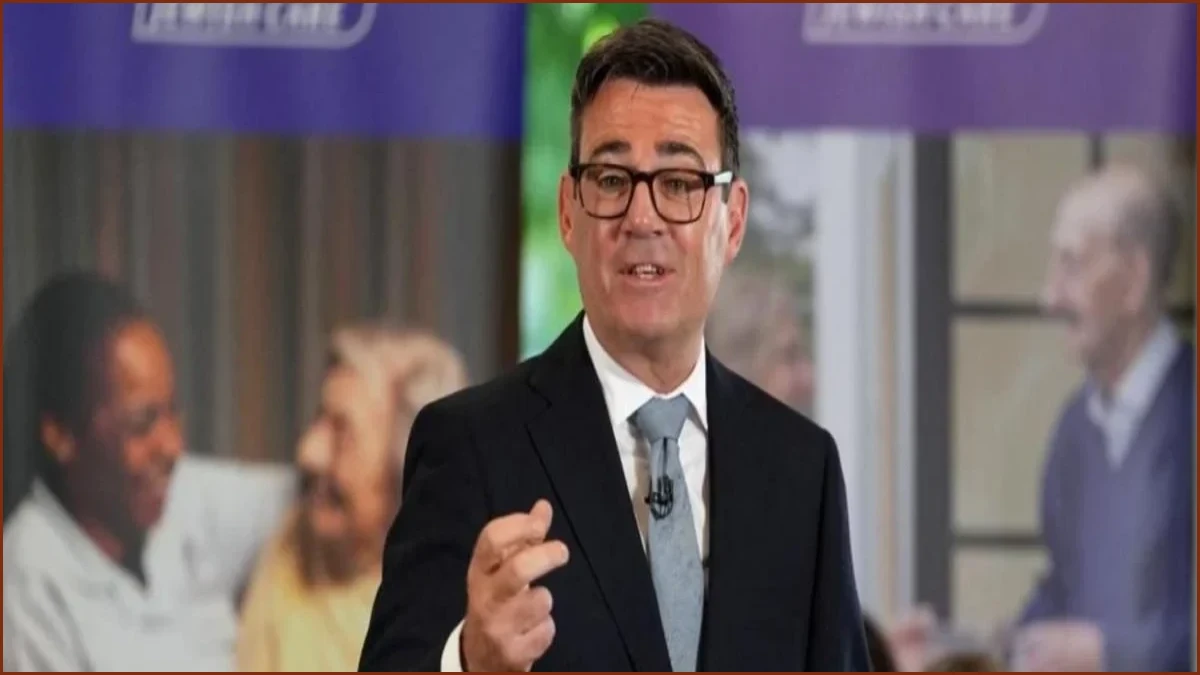
Burnham spoke to residents at a Jewish Care facility in North London before delivering his speech