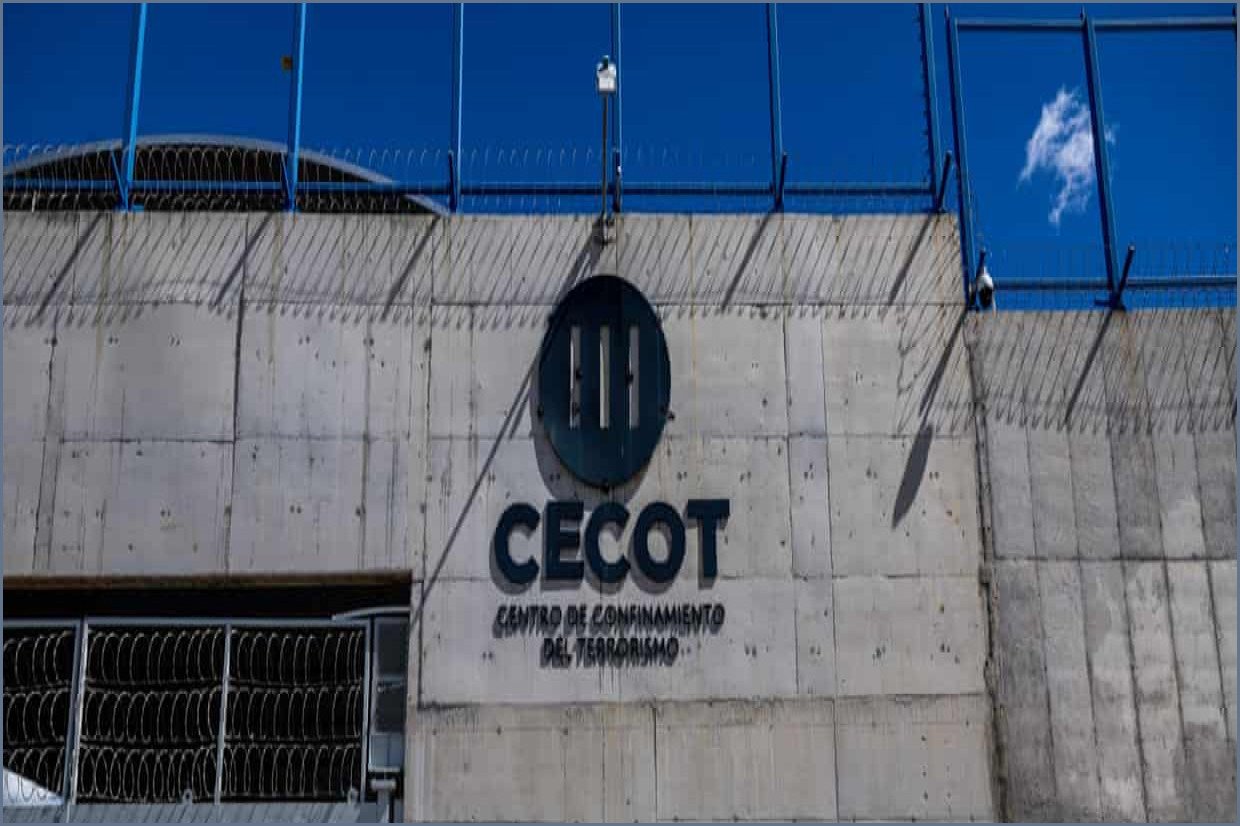
A group of Venezuelan men who were sent to a notorious maximum-security prison in El Salvador last year has launched a federal lawsuit against the US aviation companies responsible for their transportation. The legal action, filed in Washington DC, accuses CSI Aviation and GlobalX of civil rights violations, false imprisonment, negligence, and the intentional infliction of emotional distress. The plaintiffs argue that these companies played a direct role in "rendition flights" conducted in coordination with the Trump administration.
In March of last year, more than 230 Venezuelan men were expelled from US immigration custody and flown to El Salvador, where they were held for four months in the Terrorism Confinement Center, commonly known as Cecot. The lawsuit alleges that CSI and GlobalX knowingly transported the men to this facility despite a federal judge ordering the flights to return to the United States. According to the court filing, the companies were fully aware of the likelihood that the detainees would face torture upon arrival at the facility.
Anthony Enriquez, an attorney with the Kennedy Human Rights Center representing the men, noted that the case highlights the extent to which private companies are involved in human rights abuses linked to government deportation schemes. The lawsuit claims that both CSI and GlobalX profited significantly from their contracts with the Department of Homeland Security (DHS). While CSI served as the intermediary for Immigration and Customs Enforcement (ICE), it sub-contracted the flights to Florida-based GlobalX. Records cited in the filing indicate that CSI, a Texas-based firm, is the largest recipient of ICE contracts, with 2025 revenue from the agency reaching $1.23 billion.
The events in question began on 15 March last year, when then-President Donald Trump invoked the Alien Enemies Act to facilitate the mass expulsion of Venezuelan immigrants, alleging they were affiliated with the Tren de Aragua gang. Despite a federal judge in Washington DC issuing an order for the deportation flights to turn back, the administration and the airlines proceeded with the transport. Upon landing in El Salvador, the men were reportedly met by security forces who beat them before transferring them to Cecot. Subsequent reports from Human Rights Watch have described the conditions inside the prison as involving arbitrary detention, enforced disappearance, and physical and sexual abuse. The HRW report and lawsuit also detail brutal conditions and torture inside Cecot, accusing guards of beating, pepper-spraying, firing rubber bullets and sexually assaulting detainees.
The plaintiffs report suffering from long-term health issues and mental trauma, including insomnia and chronic headaches, as a result of their detention. Neither the DHS nor the aviation firms provided specific responses to the allegations in the lawsuit. Federal judge James Boasberg, who presided over the original deportation case, is tasked with overseeing these proceedings and determining whether the lawsuit can proceed as a class action.