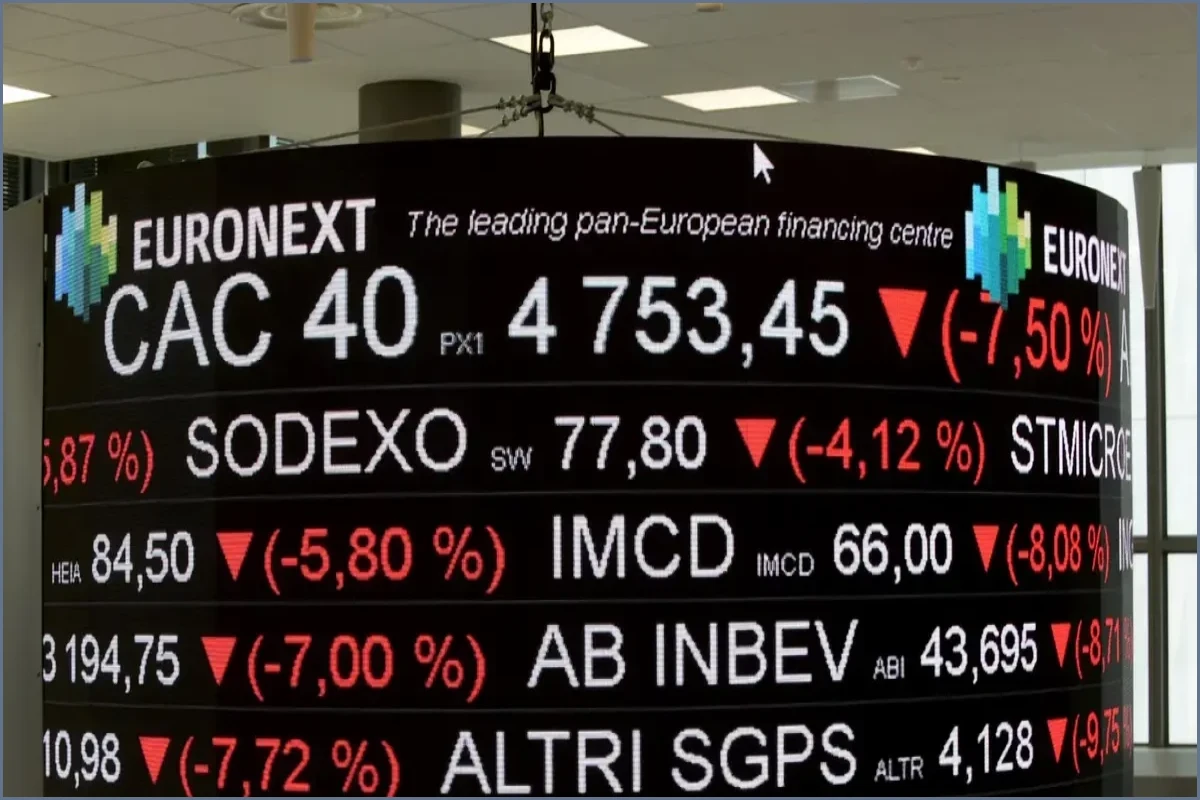
France is facing a critical economic and political crossroads as Prime Minister Sébastien Lecornu’s government prepares to unveil its draft budget for 2027 by the end of this week. The country’s economy barely managed to avoid a recession during the first half of the year, a situation compounded by a scorching summer that severely impacted both the agricultural and tourism sectors. Adding to these domestic challenges, the ongoing Gulf war has driven petrol and diesel prices to unprecedented heights, while the nation's massive €3,000bn debt has come under concerted attack from hedge funds on the bond markets. Consequently, any remaining hopes of reducing the budget deficit, which currently stands at 5.1 percent of GDP, have been abandoned for this year.
The political landscape inside the splintered National Assembly threatens to turn this budget draft into a major crisis. Over the past two years, budget revolts have already led to the collapse of three successive governments. With another budget showdown looming this autumn, the upcoming presidential election next spring is heavily influencing political strategies. For some factions, avoiding a budget disaster is paramount, while others see an opportunity to provoke a crisis to boost their electoral prospects, depending on their confidence in winning the presidency.
Marine Le Pen, the leader of the far-right Rassemblement National (RN) who expects to win the presidency, has stated that she does not want to inherit an emergency budget and a full-blown financial crisis when the next administration takes office in May. Speaking over the weekend, Le Pen indicated she could accept an "imperfect" budget, provided her political "red lines" are not crossed. This signal suggests that the 122 RN deputies, who currently hold the balance of power in the Assembly, might choose to ignore upcoming censure motions brought by the left and hard-left parties.
Conversely, the Socialists, who allowed the previous two budgets to pass belatedly, have declared their intention to censure the government this time. Observers translate this stance as a political maneuver; because the Socialists do not expect to win the presidential election in April and May, they can safely pose as a "tough" and "anti-austerity" opposition. However, the primary challenge for Prime Minister Lecornu is whether Le Pen can be trusted to uphold her conditional cooperation. Two years ago, she made a similar promise to then-Prime Minister Michel Barnier, only to ultimately bring his government down.
Le Pen’s strict budget demands include "no increase in taxes" and "no attack on working people." According to the RN, the term "working people" also encompasses retired citizens. Consequently, Le Pen is expected to reject any government attempt to make pensioners—even those with high incomes—bear any portion of the deficit-reduction efforts. This poses a major mathematical challenge for the government's draft budget, which is widely expected to propose either freezing higher pensions or scrapping a 10 percent tax break for retirees. Such measures could save €6bn, representing one-fifth of the €30bn in total cuts the government needs to secure.
Finding savings elsewhere is exceptionally difficult, as almost all other state sectors have already been cut to the bone. Pension payments currently cost the state €422bn annually, which represents a quarter of all French public spending. Prime Minister Lecornu recently announced that most other state spending, with the sole exception of defence, will be frozen at 2026 levels in the upcoming budget. Le Pen's political calculation relies heavily on securing the support of older voters for the critical two-candidate presidential run-off on May 2nd. While she has historically struggled to win over voters aged 60 and older, a deep-dive poll conducted by Ipsos for Le Monde this week indicates a shift, showing she now commands 30 percent first-round support among 60-to-70-year-olds, though her support remains much lower among those over 70. Older, wealthier French voters, while patriotic, remain highly resistant to any policies that would require them to help reduce the state deficit.
The risk of a fresh parliamentary crisis this autumn could trigger a much broader financial emergency. France is already paying more to service its national debt than Italy or Greece, with ten-year bond yields reaching 4.53 percent this week—a full percentage point higher than Germany's borrowing costs. Furthermore, France's interest payments have surged by 24 percent compared to just three months ago. This vulnerability has attracted the attention of hedge funds, which are increasingly targeting French debt in anticipation of a profitable market collapse.
France’s financial vulnerability is partly attributed to the actions of President Emmanuel Macron and his previous administrations, which were slower than other European nations to phase out emergency Covid-19 funding and spent heavily to cushion the public from inflation following the invasion of Ukraine. This fiscal strain has been exacerbated by the lack of a governing majority in parliament, a problem worsened by Macron's decision to dissolve the National Assembly in 2024, which has repeatedly delayed or blocked corrective fiscal actions. The underlying structural issue is deep-seated, as a French government has not balanced a budget in more than 50 years.
The structural fiscal crisis is unlikely to be resolved swiftly, leaving the bond markets open to speculative disruption. Regardless of who wins the presidential election in May, the victor will face immense difficulty assembling a stable parliamentary majority in the subsequent legislative elections. Le Pen’s proposed economic platform, which combines low taxes with high social spending, suggests a reluctance to directly confront the debt crisis. If elected, her policies could trigger a severe loss of market confidence similar to the crisis experienced by former UK Prime Minister Liz Truss. Similarly, hard-left candidate Jean-Luc Mélenchon has suggested he could repudiate a portion of the national debt without facing market consequences. While a centrist president, such as former Prime Minister Edouard Philippe, would be more favorable to bond markets, they would still require a parliamentary majority to enact meaningful reforms—a prospect that currently remains highly unlikely. Another government collapse and budget rejection this autumn could easily spark a wave of market speculation that would be extremely difficult to control.
Conclusion: another government collapse by the October or November is possible – even likely.
Nor is the problem likely to be resolved soon. Hence the opportunity for profitable mischief on the bond markets.