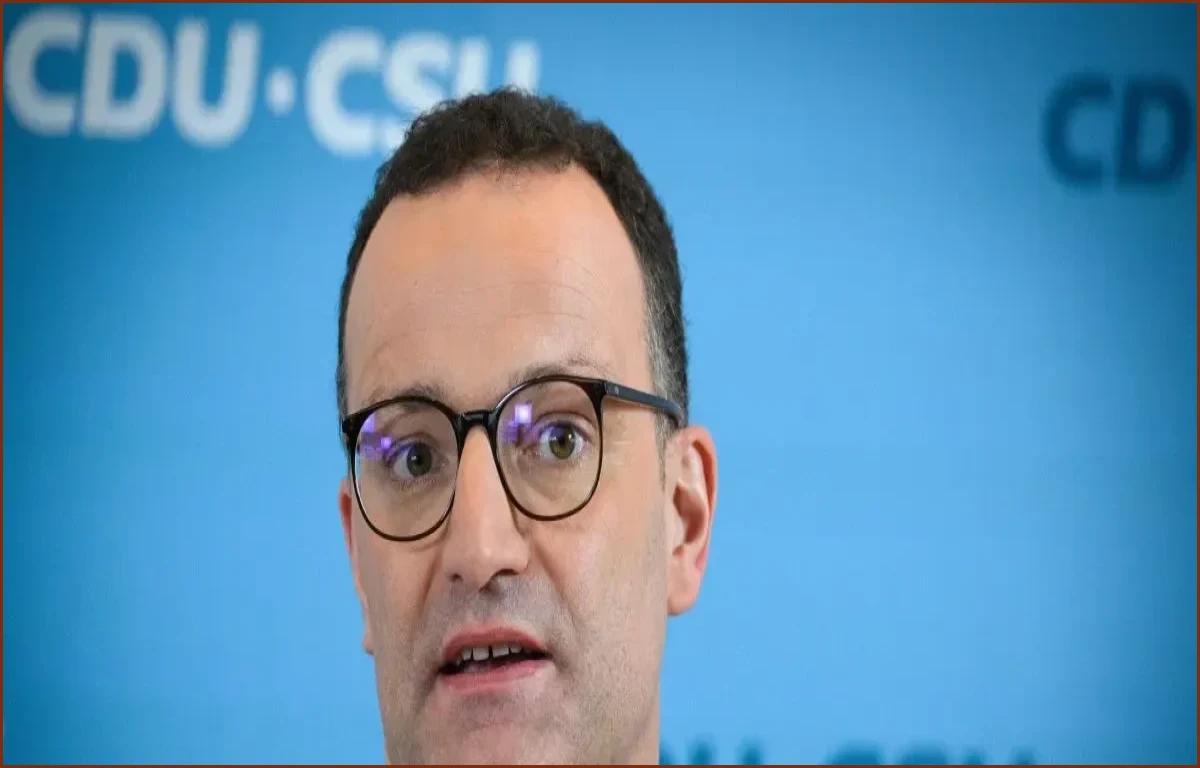
The sudden resignation of German politician Jens Spahn has cast a harsh light on the country's political class, marking a rare instance of an elected official facing immediate consequences for a hypocrisy scandal. Spahn, a prominent member of the conservative Christian Democratic Union (CDU), stepped down within days of the public learning that he and his partner had spent thousands of dollars to secure an American surrogate mother. The revelation stood in stark contrast to his party's official and vocal opposition to surrogacy within Germany.
READ ALSO: What are Germany's rules on having a baby through surrogacy?
The swiftness of Spahn's departure caught many political observers by surprise. Given his history of navigating past controversies, many expected the former minister to try to ride out the scandal over the summer parliamentary recess, hoping the public and media would move on. This strategy of waiting out controversy succeeded last summer when Spahn failed to secure a necessary majority within his own parliamentary party to elect a preferred judge to the country's Constitutional Court.
Ironically, Spahn chose to resign over the happy personal occasion of becoming a father, despite having several far more serious controversies in his political past. Over his decade-long career, Spahn has been associated with multiple scandals. He previously benefited from highly favorable mortgage terms provided by a regional building society, an institution on whose advisory board he sat by virtue of representing that specific constituency as a member of the Bundestag. Observers have noted that his political survival through such events likely fostered a sense of invincibility, leading him to assume that bypassing domestic surrogacy laws would not disrupt his career.
Spahn's silence during recent policy debates has also drawn sharp criticism. As recently as February, the CDU held internal discussions regarding the party's official stance on surrogacy. Spahn remained completely silent during these meetings, failing to advocate for a policy shift or align his political stance with his personal actions. Had he used that opportunity to lay the groundwork for a change in policy, he might have defused the subsequent accusations of rank hypocrisy and advanced a cause in which he personally believed.
The scandal highlights a broader sentiment that Germany's political elite often operates under a double standard. The CDU and its sister party, the CSU, have faced numerous allegations of conflicts of interest and insider trading. During the Covid-19 pandemic, politicians Georg Nüßlein and Alfred Sauter resigned after it was revealed they made millions of euros acting as middlemen for face mask contracts. However, they were legally permitted to keep their substantial commission payments because Germany's high court determined they were entitled to the money earned while serving in the Bundestag.
This lack of accountability extends across the political spectrum. In 2005, former Social Democratic Party (SPD) Chancellor Gerhard Schröder transitioned directly from leading the country to a €500,000-per-year role helping Russian President Vladimir Putin sell natural gas to Germany. Since then, multiple high-ranking SPD politicians have maintained controversial connections to Russia, ranging from accepting luxury hospitality trips to more serious geopolitical maneuvers. Among them is Manuela Schwesig, the Minister President of Mecklenburg-West Pomerania, who helped set up a state-backed foundation designed to bypass United States sanctions during the construction of a gas pipeline from St. Petersburg to the Pomeranian coast. Despite these actions, Schwesig remains in office and is a candidate for re-election this autumn.
Rules imposed on the public during the pandemic were also repeatedly bypassed by top officials without consequence. An ARD television documentary captured Kevin Kühnert, then the SPD's parliamentary chief, discussing how to violate Covid regulations to hold an in-person political meeting. Later, Chancellor Olaf Scholz and Vice Chancellor Robert Habeck were photographed traveling on a plane without masks during the exact same month that mask mandates were tightened for ordinary citizens using public transportation. Neither incident resulted in any formal disciplinary action or political fallout.
I’m not quite sure when we reached US-levels of shoulder-shrugging about corruption and double-standards in public life, but that’s where we are. My hunch is that levels of shamelessness have been so high for so long that we’ve simply become inured to it.
While Germany has not experienced a massive wave of public outrage comparable to the United Kingdom's parliamentary expenses scandal, which forced changes in national law, the persistent double standards have steadily eroded public trust. This growing disillusionment with the political establishment has directly benefited populist movements, such as the Alternative for Germany (AfD). When critics point out the hypocrisy of AfD leaders like Alice Weidel—who campaigns on an anti-immigration platform while living in Switzerland with a partner from Sri Lanka—supporters often dismiss the criticism by pointing to the scandals of established political parties. Spahn's resignation represents a rare departure from this pattern, offering a glimmer of hope for greater accountability in German public life.
Turns out: the German public doesn’t seem to care about rank hypocrisy. I write “seem”, because my hunch is that people do actually care – but that millions have come to the conclusion that those who govern us think it’s one rule for them and another for the rest of us.
Then again, not much is demanded of them, either. I’ve been living in Germany for 20 years now, and every time I’ve expected a swell of public anger – such as that which swept over the UK during the MP’s expenses scandal (which led to changes in the law) – it’s never happened.