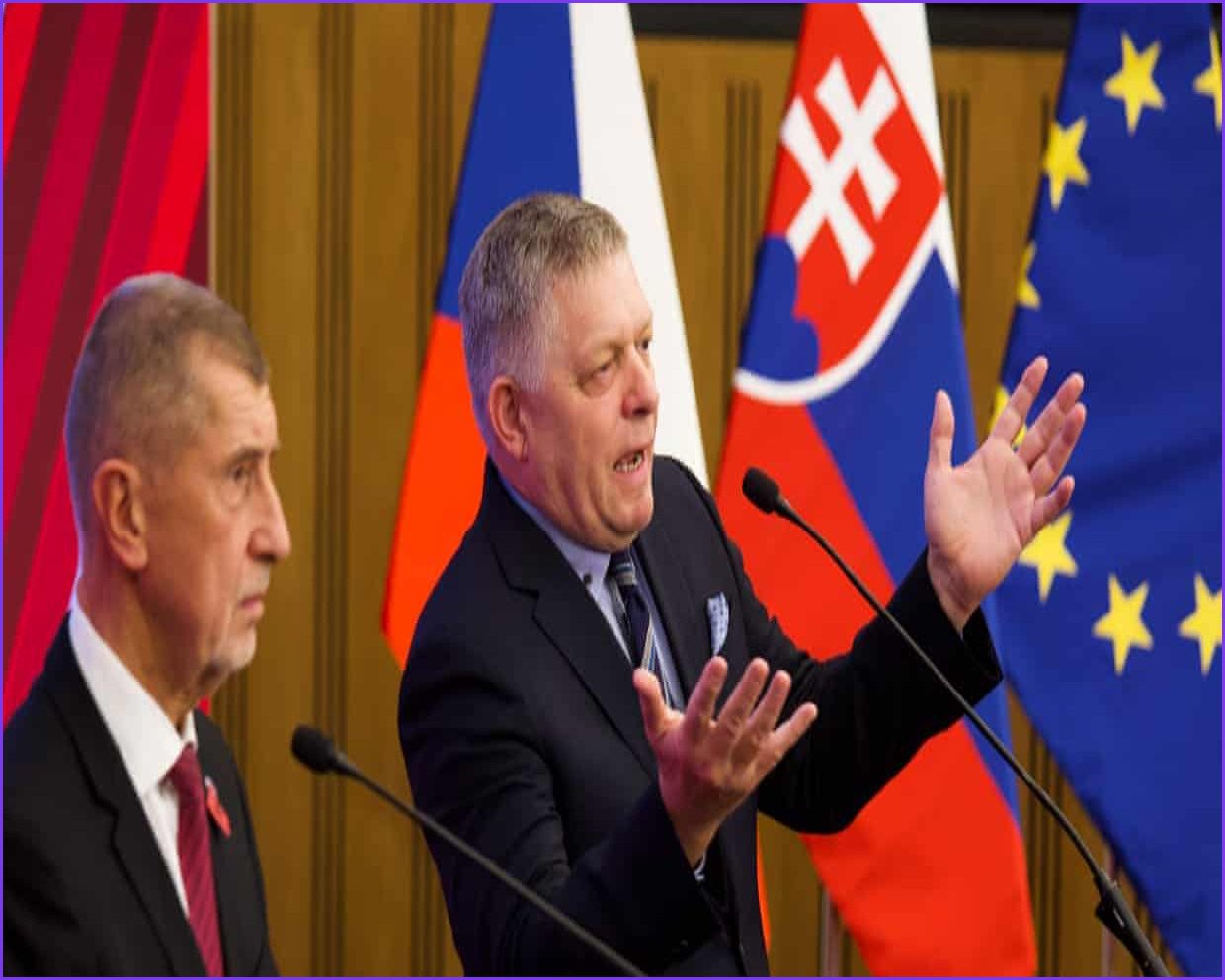
Slovakia's Russia-friendly prime minister, Robert Fico, has publicly accused the German chancellor of engaging in "blackmail" following recent demands that member states contribute to further financial support for Ukraine. Fico’s comments were made in Bratislava while appearing alongside his Czech counterpart, Andrej Babiš, whose populist government also opposes participating in future loan programs for Kyiv.
The dispute stems from a letter written by the German chancellor to European Council president António Costa ahead of an upcoming summit in Dublin. In the correspondence, the chancellor argued that bilateral assistance to Ukraine remains unevenly distributed and urged all member states to commit to a collective financial effort. He emphasized that this commitment is a necessary prerequisite for resolving Ukraine's funding gap and for discussing broader financial matters within the union.
The European Union previously agreed to a €90bn loan to cover military and civilian costs for 2026 and 2027. However, due to ongoing Russian bombardment, President Volodymyr Zelenskyy has requested an additional €70bn to address budget shortfalls. While the EU has pledged to secure €45bn of that amount, with allies like the UK and Canada expected to cover the remainder, several central European nations remain resistant. Hungary, Slovakia, and Czechia, which opted out of the initial loan, have signaled they will not participate in the new round. They have since been joined by Bulgaria, following the election of Prime Minister Rumen Radev last April.
The tension over Ukraine's financing has begun to complicate negotiations for the EU’s 2028-34 budget, known as the multiannual financial framework (MFF). Germany, as the largest net contributor, is calling for budget cuts while simultaneously opposing generous funding for member states that refuse to assist Ukraine. A German official noted that financial support for Ukraine from all members is essential for the successful completion of the MFF. Furthermore, Berlin is pushing to shift the decision-making process for Ukraine’s funding to a qualified-majority vote to prevent individual governments from exercising veto power.
The German chancellor’s position reflects broader frustration among northern EU states regarding the disparity in contributions from southern and central European countries. President Costa’s spokesperson confirmed the receipt of the letter and noted that the topic of Ukraine’s finances will be discussed during the informal European Council meeting in Dublin this week, with a dedicated summit on the EU budget scheduled for 26-27 November.