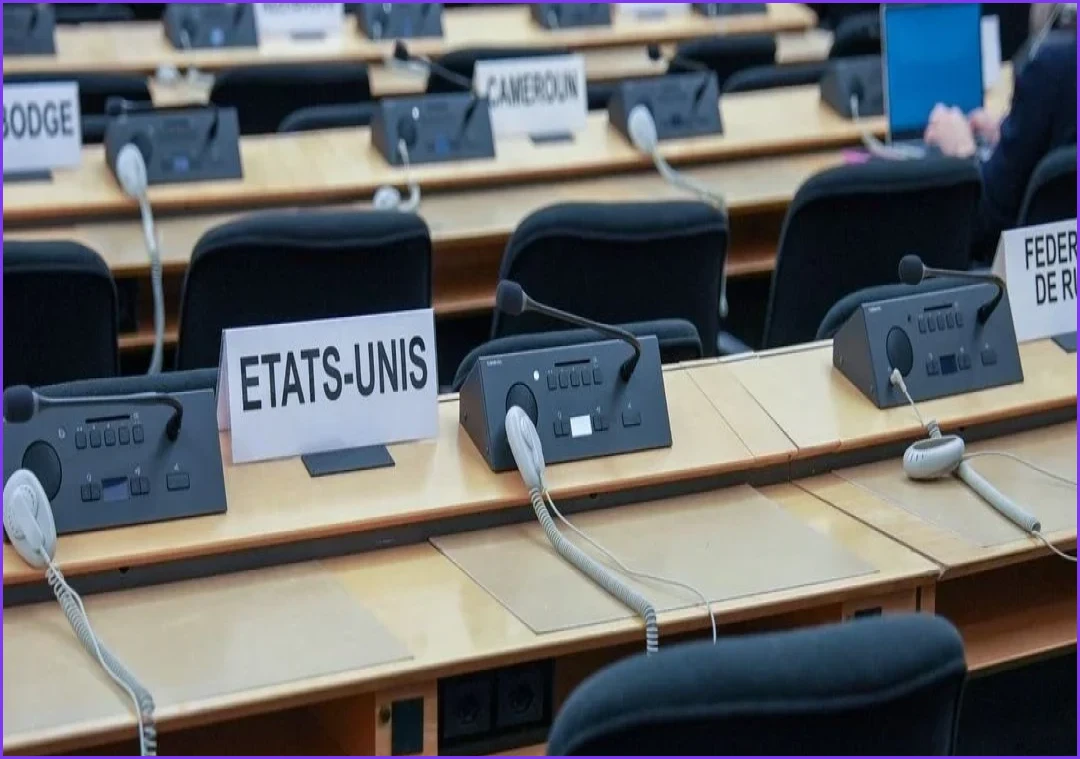
The United States has declined to attend a scheduled meeting of the UN Human Rights Council (UNHRC) where its human rights record was set to be evaluated. By choosing to shun the Universal Periodic Review (UPR) for the second time in a row, the US left its designated seat on the council's stage empty this Tuesday. Following the absence, the council officially decided to postpone the review process until January.
A spokesperson for the US State Department stated that participating in the review would signify an endorsement of the council's operations. The spokesperson characterized the body as an "irredeemable" entity, alleging that it makes a mockery of human rights through consistent failures to uphold its own values while promoting anti-American rhetoric. The department did not provide a response to specific allegations regarding the US human rights record.
Washington had previously disengaged from the Geneva-based council last year, citing concerns over an anti-Israel bias. Although the review was originally scheduled for November 2025, it was pushed back to Tuesday in the hope that the US government might reconsider its stance; however, the government ultimately did not participate. While the 47-member council has refrained from directly criticizing Washington, various appointed experts have raised concerns, particularly regarding migrant deportations. In response, Washington has maintained that all deportations are carried out in accordance with US immigration law.
The UPR process requires all 193 UN member states to submit reports on their rights records for review by other member states, which then issue non-binding recommendations. According to UN documents, other nations had intended to address topics including the death penalty and abortion during the session. Additionally, international and US-based non-governmental organizations submitted nearly 200 reports to the UN covering a range of issues from racial discrimination to migration. During Donald Trump's first term in office, the US did submit a UPR report.
Some activists are continuing to pressure the UN High Commissioner for Human Rights, Volker Turk, to hold a briefing on the situation in the US regardless of Washington's absence. Noor Abdalla, who is married to pro-Palestine student activist Mahmoud Khalil, argued that the lack of accountability allows the world's most powerful government to act without constraint. However, many diplomats remain skeptical that other states will confront Washington, with one diplomat noting that the prevailing strategy is to "leave the door open and hope they come back in two years." Eric Tistounet, a visiting professor at the Geneva Graduate Institute and the council's former first secretary, warned that the US walkout could damage the credibility of the review system, stating that when a global power fails to show up or justify its absence, the council faces significant trouble.