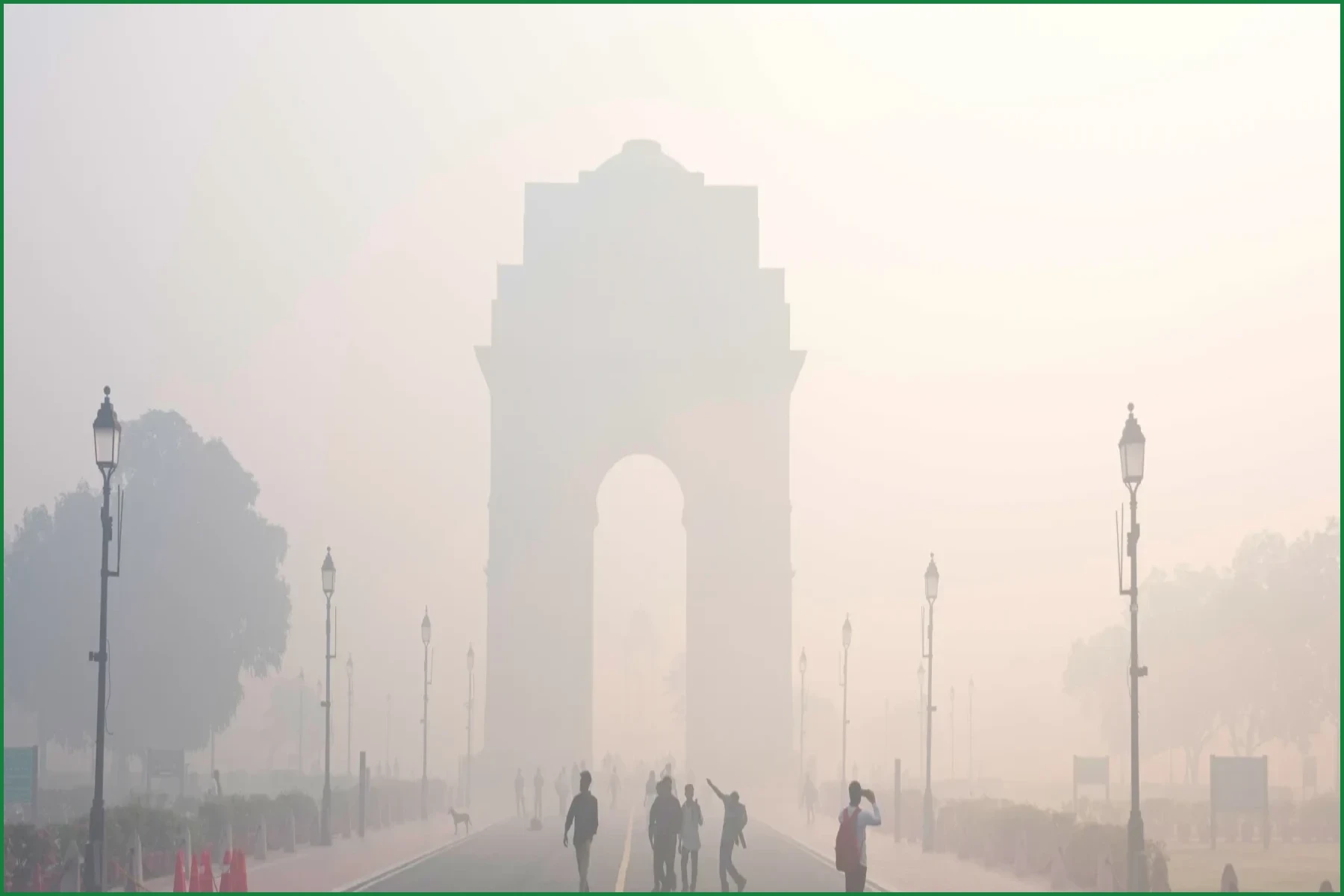
A dense, gray blanket of smog enveloped India's capital on Monday, November 9, 2026, as the city grappled with a severe spike in air pollution following the Diwali festival. Despite legal attempts to mitigate the impact, widespread use of firecrackers on Sunday evening released significant amounts of smoke and particulate matter, exacerbating the seasonal air crisis that consistently affects the region during the winter months.
By Monday morning, air quality index (AQI) levels in several parts of New Delhi had surged past 350, entering the severe category and presenting immediate health hazards to the city's 30 million residents. Monitoring stations across the metropolitan area reported consistently high levels of pollutants, with visibility dropping sharply as the haze obscured streets and high-rise structures.
The Supreme Court of India had attempted to curb the pollution by restricting the use of conventional firecrackers in October. Authorities permitted only approved "green firecrackers"—which produce fewer emissions but are not entirely pollution-free—within designated three-hour windows on Saturday and Sunday. However, these measures failed to prevent the accumulation of hazardous particulate matter.
Local residents are already reporting the physical consequences of the poor air quality. A resident identified only as Isyad noted that the smog has caused noticeable health issues, specifically mentioning "irritation in the throat and itching in the eyes."
The current environmental crisis is compounded by a convergence of factors. Beyond the immediate impact of Diwali fireworks, the city is experiencing cooler temperatures and stagnant atmospheric conditions, which prevent the dispersion of pollutants. Furthermore, the smoke from agricultural crop-residue fires in the neighboring states of Punjab and Haryana continues to drift into the capital. Farmers in these regions frequently burn leftover rice stalks after the harvest to clear fields for the next season, adding to the city's existing pollution from vehicles, industrial activity, and construction dust.
While local authorities have introduced various measures, such as imposing limits on construction and restricting diesel generators, these interventions have not succeeded in preventing the annual recurrence of severe pollution. Shweta Narayan, a public health expert at the Global Climate and Health Alliance, criticized the government's response as "knee-jerk" and "temporary," arguing that interventions are often reactive rather than proactive. Environmentalists maintain that long-term, systemic changes—including stricter controls on vehicle emissions and a shift toward cleaner energy—are essential to resolving the recurring crisis.