King Charles III, accompanied by Queen Camilla and the Prince of Wales, visited the south Wales village of Aberfan to commemorate the 60th anniversary of the 1966 colliery disaster that devastated the local community. During the memorial gathering, King Charles and Prince William laid wreaths at the memorial garden, while Queen Camilla placed a posy and members of the royal family spoke directly with survivors of the tragedy that claimed the lives of 116 children and 28 adults.
Reflecting on six decades of remembrance across the nation, the King praised the resilience of the community. "We have heard stories of heartbreak, but also of heroism," King Charles said. "We have heard of the most agonising grief, but also of the most inspiring grace." Marking the exact timing of the catastrophe 60 years on, organisations throughout Wales were invited to observe a minute’s silence at 9:15 am on Wednesday, commemorating the moment the hillside gave way.
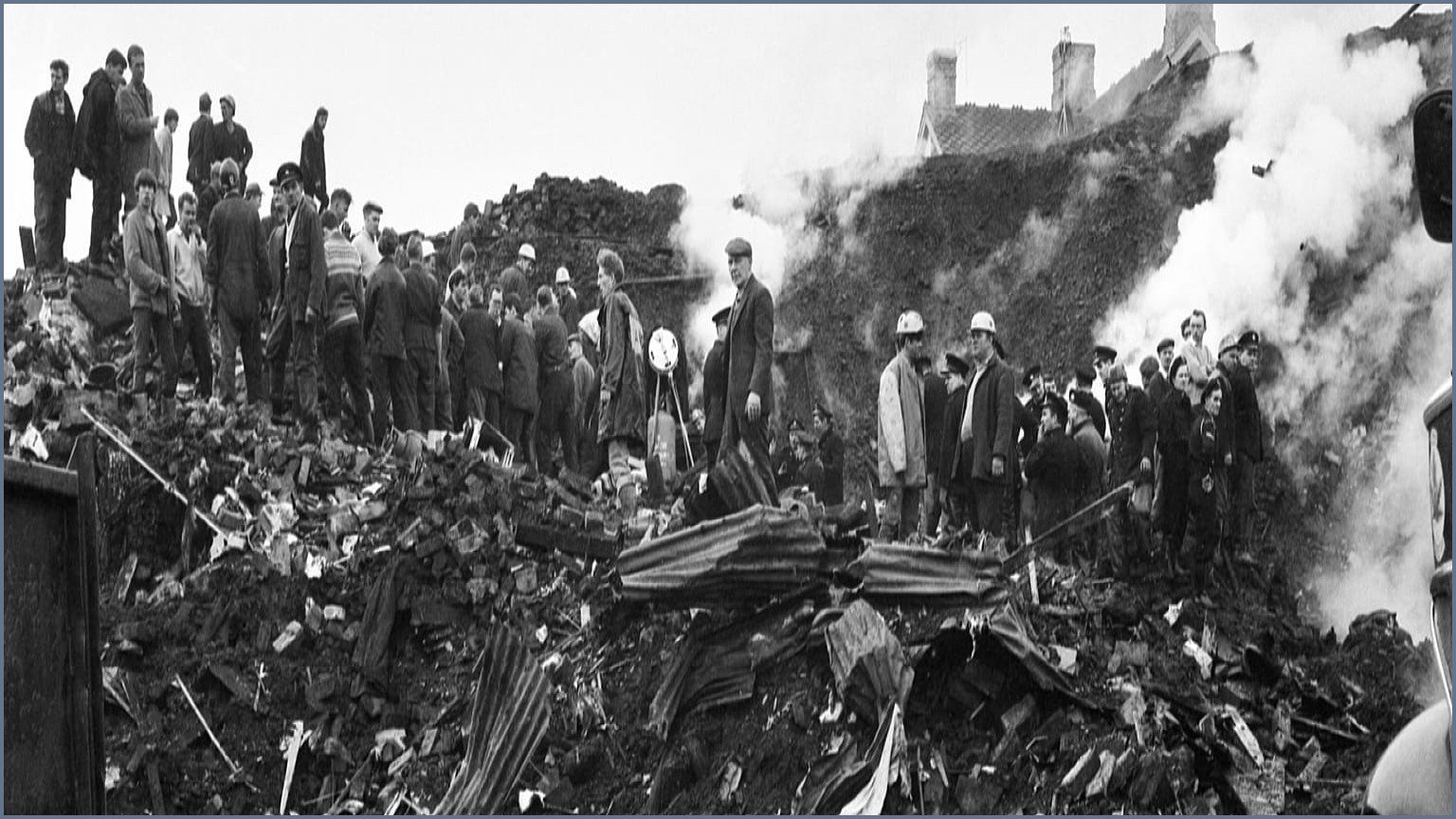
The disaster occurred on the morning of Friday, 21 October 1966, in the small coal-mining valley village in the United Kingdom. For decades, industrial waste from the local colliery had been piled into massive heaps, known as spoil tips, on the hillside overlooking residential homes. Shortly after 9:15 am, as morning lessons were beginning at Pantglas Junior School, one of the tips collapsed. More than 100,000 cubic metres of heavy, sodden coal waste swept down the mountain, completely engulfing the school. Rescue operations began immediately, but the last child pulled alive from the rubble was retrieved by 11:00 am that same morning.
The catastrophe wiped out almost an entire generation of children in Aberfan, resulting in a total death toll of 144 people. Prior to the collapse, coal bosses had received multiple warnings regarding the instability of the heaps. The waste material had already slid twice before—first in 1944 and again in 1963—yet authorities failed to act on the clear warning signs. In spite of these documented failures, no individuals were ever prosecuted or dismissed from their jobs following the disaster.
Within days of the tragedy, the UK Parliament mandated an official inquiry. On 26 October 1966, the government minister for Wales established a formal tribunal chaired by senior judge Lord Justice Edmund Davies. The tribunal conducted hearings in nearby Merthyr Tydfil before moving to the Welsh capital of Cardiff. The inquiry's outcome led to comprehensive data collection across every spoil tip managed by the board for the first time.
Following the catastrophe, global public sympathy led to a public donation drive that raised £1.75 million (€2.08 million) for a disaster relief fund to support grieving families. However, financial controversy soon followed. In 1968, Prime Minister Harold Wilson's government compelled the fund to hand over £150,000 (€178,000) to cover the cost of removing the remaining coal waste heaps above the village, even though those tips were the responsibility of the state-owned National Coal Board. The village was forced to wait nearly 30 years to recover the money, until UK minister for Wales Ron Davies repaid the sum in 1997. The Welsh Government subsequently provided an additional £2 million to Aberfan charities.
A separate dispute arose over how the disaster relief money was distributed to those who lost family members. While the fund intended to disburse equal payments to every bereaved family, the UK Charity Commission attempted to intervene. The commission requested that fund trustees satisfy themselves that each grieving parent had maintained a "close" relationship with their deceased child before issuing funds. Defying the Charity Commission's directive, the trustees refused to enforce the condition and distributed the payments equally to all families.