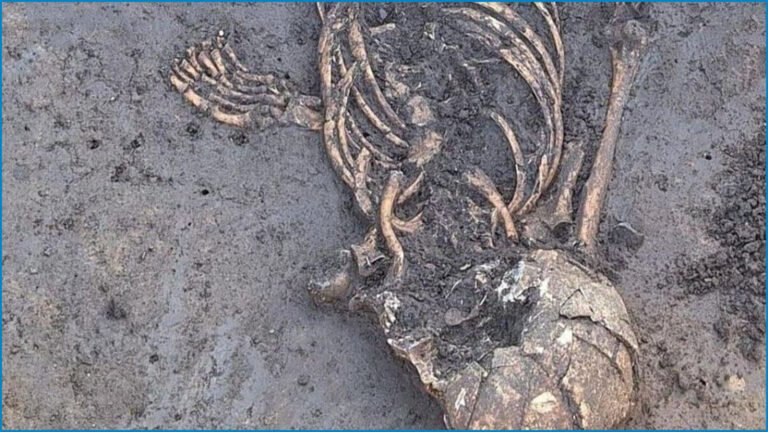
Six ancient bone fragments recovered during earlier excavations in the Abauntz cave have been identified as the first direct fossil evidence of Neanderthals in Navarre. Presented on Monday, October 19, during an official event led by María Chivite, president of the Government of Navarre, scientific analyses confirm the remains belonged to an adult male Neanderthal who inhabited the region approximately 46,000 years ago.
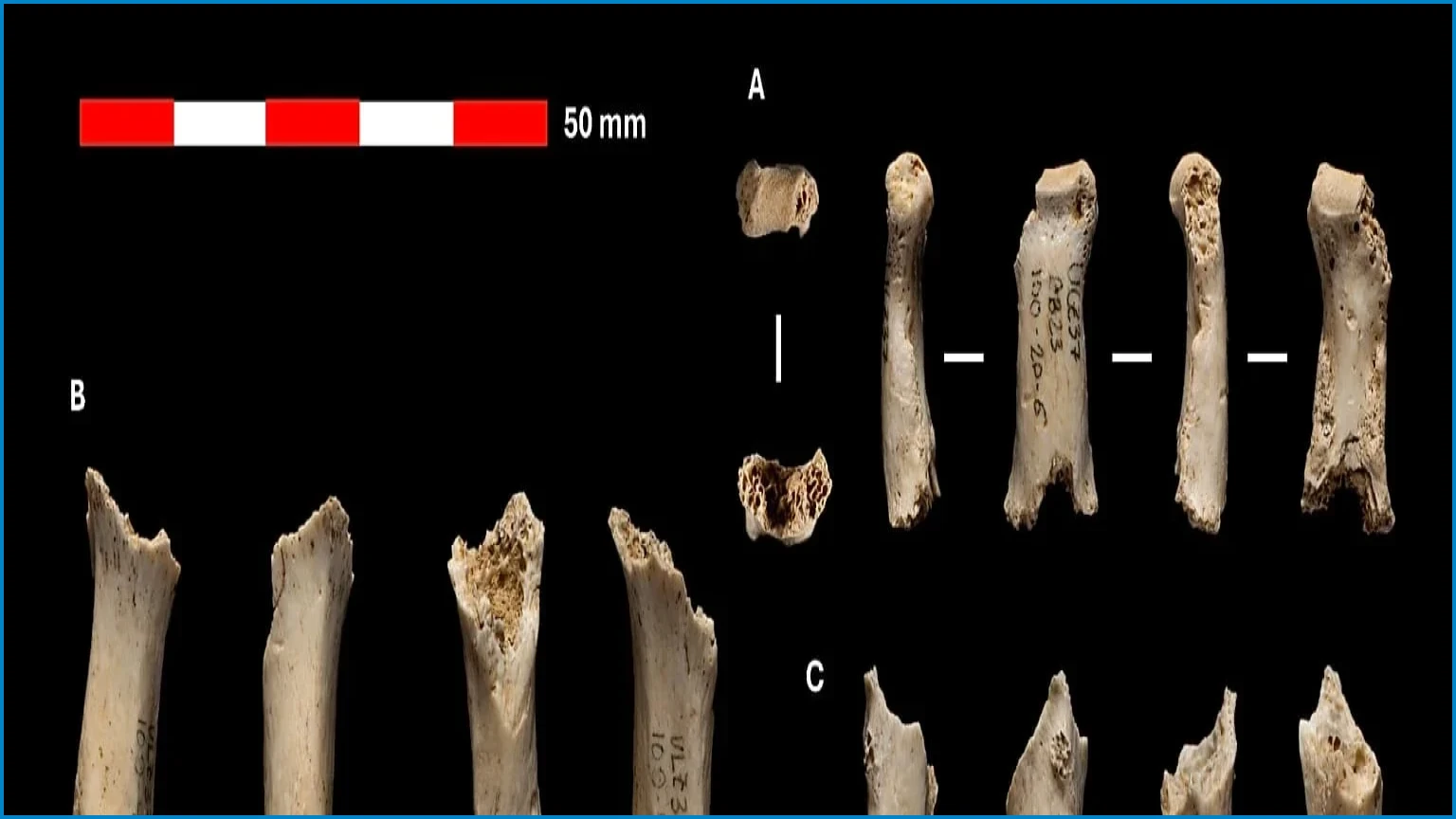
The identified fossils consist of three metacarpal bones and a middle phalanx from the right hand of an adult individual, along with two additional fragments confirmed as human using protein analysis. Genetic testing subsequently established that the individual was male. The bones were excavated within an archaeological context that included stone tools and processed animal remains showing signs of butchery and consumption by the prehistoric group, helping researchers clarify how Neanderthals utilized the cave.
Until this discovery, no fossil evidence existed to confirm directly that Neanderthals lived in or traversed Navarre. Project co-director Andion Arteaga stressed the breakthrough, stating, "For the first time we have human remains that allow us to directly identify the presence of Neanderthals in Navarre." Abauntz cave sits within a key natural corridor connecting the Iberian Peninsula with the rest of Continental Europe, making the site especially valuable for understanding prehistoric human mobility and potential interactions across the Pyrenees.
The chronology of 46,000 years ago places the individual in a key era when Neanderthal populations still inhabited various regions of Europe prior to their disappearance roughly 40,000 years ago—a demise that coincided with the territorial expansion of Homo sapiens. Extracted ancient DNA degrades over tens of thousands of years, making successful recovery rare. Project co-director Mikel Arlegi noted, "Being able to recover ancient DNA and obtain direct dates for the fossils is particularly significant." Ongoing genetic studies are expected to provide deeper insights into the evolutionary history and population dynamics of these ancient hominins.
To classify the fossils, determine the individual's sex, and establish a precise timeline, the research team combined palaeoproteomics, radiocarbon dating, and genetic analyses. The scientific methodology follows work conducted at El Sidrón in Asturias, where genetic research illuminated Neanderthal kinship patterns, social organization, and evolutionary history. The analytical work is conducted alongside specialists from the University of Vienna and the Max Planck Institute for Evolutionary Anthropology in Leipzig.
The research program originated at the Institut Català de Paleoecologia Humana i Evolució Social (Iphes-Cerca) in Tarragona, which continues its involvement through researchers Lucía López-Polín, Andreu Ollé, and Aitor Burguet. Co-director Arteaga is affiliated with Iphes-Cerca and the Centre for New Technologies at the University of Warsaw, while co-director Arlegi is a postdoctoral researcher at the Musée de l'Homme in Paris. The broader interdisciplinary team includes more than 25 specialists from institutions such as the National Centre for Research on Human Evolution (CENIEH) and the Institute of Archaeology of Mérida (IAM, CSIC–Government of Extremadura). The initiative receives backing from the Government of Navarre via the Directorate-General for Culture–Príncipe de Viana Institution, the Council of the Ultzama Valley, the Arraitz-Orkin local council, and the Palarq Foundation. Excavation work remains ongoing at Abauntz cave, and members of the current field campaign attended Monday's presentation.