A major trial in Brussels involving 31 defendants has drawn to a close, shining a light on alleged deep-running links between European criminal factions and Latin American drug cartels responsible for smuggling up to 45 tonnes of cocaine across the Atlantic. The hearings, which concluded on October 9 at the heavily guarded Justitia courtroom on the city's north-eastern outskirts, focused on two primary figures accused of orchestrating a multinational trafficking network.
High-security measures dominated the proceedings at 22 Avenue du Bourget in the Haren district, a modernist complex built hastily in 1967 as NATO's former headquarters. The facility previously hosted trials for the perpetrators and accomplices of the 2015 Paris and 2016 Brussels terrorist attacks in 2022. During the month-long Bressers-Carvalho case, heavily armed officers carrying assault rifles and wearing face masks guarded the corridors and stood alongside the defendants, who sat separated from judges, lawyers, journalists, and spectators by a thick armoured-glass partition.
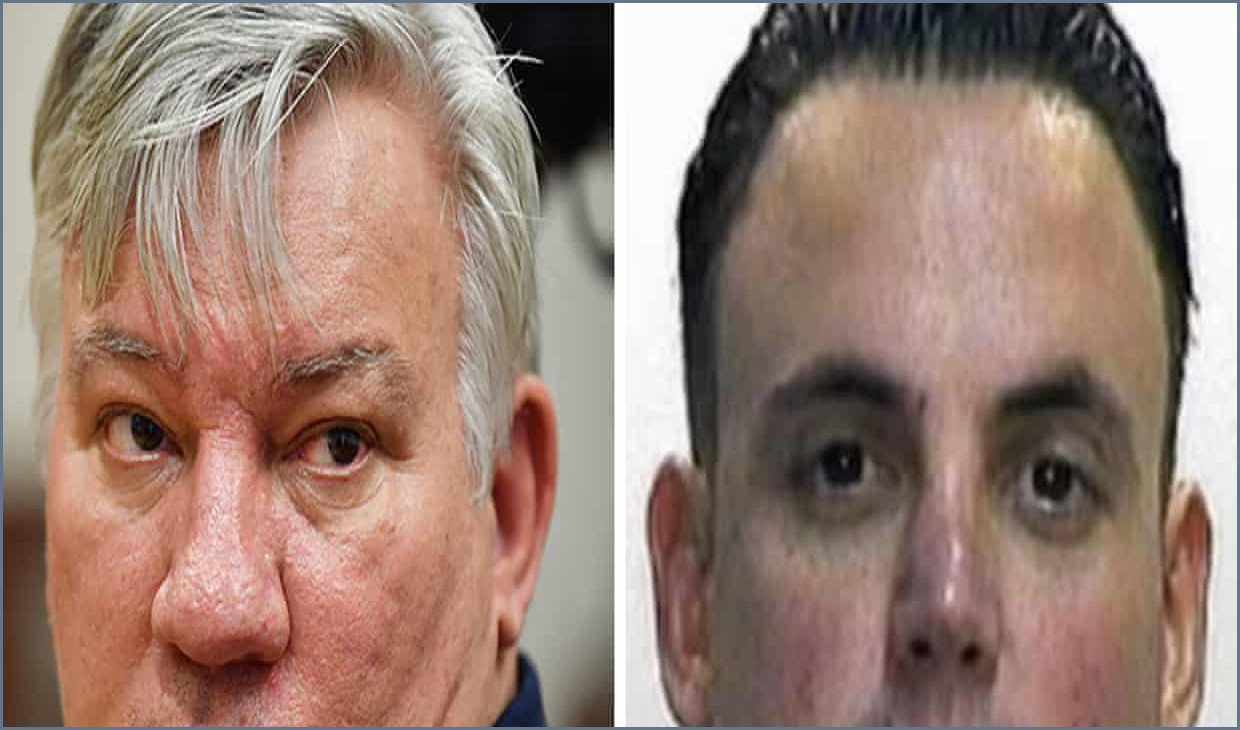
Among the 31 accused, 40-year-old Belgian national Flor Bressers emerged as a central defendant. Born in Lommel, a town of 35,000 residents in Limburg province, Bressers holds a criminology degree from the Free University of Brussels (VUB), earning him the internal moniker "the professor" or "the academic." However, he is far more widely recognized in criminal circles by the alias "the Finger cutter."
Bressers was apprehended in 2022 alongside his wife while attending a wine tasting in a penthouse suite at the luxury Renaissance Zurich Tower Hotel in Switzerland. He faces charges including kidnapping, unlawful detention, extortion using firearms, and leading a criminal organization. Europol had placed Bressers on its most wanted fugitives list in 2021 for similar offenses.
Bressers' infamous nickname stems from a 2010 case involving a violent settling of scores in which a victim's finger was severed with pruning shears, though Bressers was acquitted in 2015 due to a lack of evidence. In 2020, he was convicted in another gang retaliation incident involving the kidnapping, severe beating, death threats, and razor-blade slashing of a Dutch drug dealer blamed for a missing cocaine shipment. Bressers subsequently spent two years on the run as a fugitive. He was also named as a suspect in Guyana regarding the killing of a rice wholesaler whose intercepted consignment contained cocaine—a death suspected of being carried out to protect the smuggling ring—though that matter never went to trial.
Sharing the dock as Bressers' alleged co-leader is 68-year-old Brazilian national Sérgio Roberto de Carvalho. Arrested on June 21, 2022, during a joint operation by Interpol, Europol, the Brazilian federal police, and the US Drug Enforcement Administration (DEA), Carvalho was detained at a high-end Budapest hotel overlooking the Danube while traveling under the false identity of Mexican national Guillermo Díaz Flores.
Carvalho, a former military police officer born in 1958 in Ibiporã, Paraná state, grew up in Mato Grosso do Sul, a Brazilian state bordering Argentina and Paraguay that serves as a continent-wide hub for organized crime. Known in Brazil as "Major" due to his former police rank, he blended law enforcement corruption with organized crime. He received a 15-year sentence for drug trafficking in 1998 but was not formally dismissed from the police force until 2010. In Europe, his persona gained him the moniker "the Brazilian Escobar."
Moving his operations to Europe, Carvalho initially hid in Portugal before relocating to Spain, where he resided in a €2 million mansion in Marbella on the Costa del Sol under the alias Paul Wouter, a wealthy Surinamese citizen. Spanish prosecutors state that between 2017 and 2020, he directed a sprawling syndicate across Spain and Portugal from Marbella. The operation smuggled narcotics through Portuguese ports including Setúbal and Leixões, Lisbon airport, as well as major European maritime hubs in Rotterdam and Antwerp. Portuguese authorities suspected Carvalho maintained connections with Primeiro Comando da Capital (PCC), Brazil's primary criminal cartel.
In November 2020, coordinated raids involving over 1,000 police officers from Portugal, Spain, Belgium, the Netherlands, Romania, the United Arab Emirates, and Europol targeted Carvalho's network. While Carvalho escaped arrest at the time, the operation resulted in 45 arrests and the seizure of more than €13 million (£11 million) in cash, 70 luxury cars, 37 aircraft, and 136 real estate properties. Carvalho used at least 10 false identities prior to his 2022 arrest in Hungary, after which he was extradited to Belgium in June 2023 and placed in a high-security prison.
Prosecutors argue that Bressers and Carvalho directed a lawless international enterprise that moved hundreds of millions of dollars using front entities. One such business, the Antwerp-based water treatment company Kriva Rochem, gave the criminal investigation its alternative name. The network allegedly transported cocaine produced in Peru and Bolivia across illegal overland routes in Brazil before shipping it across the Atlantic Ocean for distribution across Europe and other regions.
The illicit proceeds were allegedly laundered through cryptocurrencies, real estate, and financial markets to fund complex transport logistics. In court, Bressers rejected all allegations, attributing the trial to media bias and state manipulation, stating, "I have a strong feeling that all of this was orchestrated by the authorities." Bressers' legal team, led by solicitor Hans Rieder, argued that media coverage painted a "monstrous picture" of their client and requested the case be dismissed, though Rieder did not provide additional comments when approached.
Carvalho, who missed several court sessions due to health issues, maintained his innocence and claimed he was being persecuted by Brazilian federal authorities. "I have been in prison for five years and nobody is listening to me," Carvalho told the court. "It was a namesake who committed these crimes, not me." His defense attorneys, Frédéric Thiebaut and Renaat Landuyt, as well as the Belgian federal prosecutor handling the case, declined to comment publicly.
With trial proceedings concluded on October 9, the court is expected to deliver its verdict on December 15. If convicted, Bressers faces a potential sentence of up to 20 years in prison, while Carvalho could receive up to 15 years.
Legal and security experts note that the Bressers-Carvalho case reflects a broader shift over the past decade, during which Latin American drug cartels have increasingly established operational cells across Europe. Factions associated with groups such as Brazil's PCC, Venezuela's Tren de Aragua, Mexico's Sinaloa cartel, Colombia's Clan del Golfo, and Ecuador's Los Lobos have been identified by police, Europol, and intelligence agencies in Portugal, Spain, France, Belgium, the Netherlands, Germany, Italy, the Nordic region, Eastern Europe, the Balkans, and North Africa.
Jan Kraag, head of Europol's serious and organized crime center, highlighted the evolving dynamics, noting that Latin American criminals are increasingly active in Europe. Kraag explained that while European criminals historically settled in Latin America, the relationship has evolved into a "two-way street," with Latin American operatives now maintaining a permanent or semi-permanent presence in Europe.
Security sources indicate that these cartels are embedding themselves in both legitimate and digital economies using cryptocurrencies, real estate, financial sectors, and gambling firms. Juan Gabriel Tokatlian, an international relations professor at Universidad Di Tella in Buenos Aires, noted that Colombia's long-standing "war on drugs" forced cartels to become more resilient and adaptable, facilitating their international expansion into Europe where cocaine consumption has surged in recent decades.
Furthermore, Gabriel Feltran, a sociologist at Sciences Po in Paris and research director at the French National Centre for Scientific Research (CNRS), explained that groups like the PCC and Sinaloa cartel now form "joint ventures" with European syndicates, such as Albanian groups and Italy's 'Ndrangheta mafia. Rather than passing drug ownership through multiple regional intermediaries, these alliances buy directly from Latin American producers and manage end-to-end logistics. Feltran described this corporate-style efficiency as a "platformisation" of drug trafficking, where local carriers and transport operators are hired as unwitting service providers while top-tier cartels consolidate full operational control.
“Europe has become, in recent years, a place where drug consumption has increased in particular. If you look at the UN reports, it is an important market – in the 1980s, particularly as regards cocaine, it was not relevant,” he says.
It means that everything from communications, payments, precursors (chemicals needed to manufacture drugs) and laboratories to logistics is concentrated at the top, with carriers and local operators often unwittingly hired as paid service providers, such as Uber drivers.