Russia's Federal Security Service (FSB) announced on October 13 the detention of Imai Yuki, a correspondent for Japan’s Hokkaido Shimbun, in the Far Eastern Sakhalin region on espionage allegations. The apprehension of the journalist, identified by Russian Foreign Ministry spokesperson Maria Zakharova, occurred a day before his scheduled departure from Russia. He was subsequently transferred to Moscow, where a court ordered his detention until December 12. Espionage convictions in Russia can carry prison terms of up to 20 years.
The FSB alleged that Imai Yuki collected information concerning Russia’s defense capabilities under instructions from Japanese intelligence. Russian state media further reported that the information allegedly pertained to residents of the Russia-controlled Kuril Islands, including islands claimed by Japan, who had been mobilized or volunteered to fight in Ukraine.
These allegations have not been independently substantiated. Imai Yuki held valid press accreditation issued by Russia’s Foreign Ministry, and reporting on military recruitment and the human consequences of war is widely considered a legitimate journalistic activity. Following the detention, Russian state television broadcast footage showing masked officers handcuffing a man and his subsequent appearance in a Moscow courtroom. The Hokkaido Shimbun stated it was working to establish the facts while prioritizing its correspondent’s safety.
In response, Japan’s Foreign Minister Motegi Toshimitsu stated on October 14 that Japanese diplomatic missions had requested information, humanitarian consideration, and fair and impartial treatment for Imai Yuki. Chief Cabinet Secretary Kihara Minoru acknowledged that Japanese officials had not yet been able to contact the detained journalist. Japan’s Foreign Ministry also summoned Russian Ambassador Nikolay Nozdrev to protest the detention and Moscow’s unilateral announcement without prior explanation to Tokyo, reiterating requests for prompt information and swift access to the journalist.
Conversely, Russian Foreign Ministry spokesperson Maria Zakharova accused Japan of using accredited journalists for intelligence gathering. She linked the case to Tokyo’s sanctions against Moscow and its defense buildup, claiming that this was not an isolated incident.
Just eight days before his detention was announced, on October 5, Imai Yuki had published an article on the Hokkaido Shimbun’s website titled “A Glimpse of North Korea in Sakhalin.” In the piece, he described an encounter with two North Korean men in Yuzhno-Sakhalinsk and noted that North Korean workers appeared more numerous than when he had arrived two years prior. Imai also cited an acquaintance who indicated North Koreans were assisting major construction projects in the city.
For the Hokkaido Shimbun, Sakhalin and the disputed islands are considered neighboring communities with longstanding historical and economic ties to Japan. The arrest of Imai Yuki is expected to have a chilling effect on Japanese journalism in Russia’s Far East, potentially leading Japanese news organizations to reconsider assignments and making local sources reluctant to speak. A reduction in independent reporting would make an already opaque relationship even harder to understand, increasing the risk of misperceptions.
This is not the first instance of Russia accusing a Japanese journalist of espionage. In 2019, a Kyodo News correspondent was detained in Vladivostok over suspected collection of military information. However, that journalist was instructed to leave Russia within 72 hours and departed the following day. Imai Yuki, in contrast, faces a criminal investigation and potentially years in prison, underscoring the severity of his situation and raising the specter of hostage diplomacy, which could complicate Tokyo’s efforts to secure his release.
The 2023 arrest of Wall Street Journal reporter Evan Gershkovich, who received a 16-year prison sentence before being released in a multinational prisoner exchange in August 2024, provides a troubling precedent. Imai Yuki’s case could become entangled in broader diplomatic negotiations, although there is no evidence that Moscow detained him for that specific purpose.
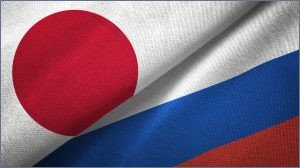
The detention of a Japanese journalist will further impede any eventual diplomatic thaw between Japan and Russia. Relations have been strained since Japan imposed sanctions following Russia’s full-scale invasion of Ukraine in February 2022. Moscow subsequently designated Japan an “unfriendly country” and suspended peace treaty negotiations. The two countries remain divided over four Russian-administered islands that Japan claims as its Northern Territories. Tensions intensified when President Vladimir Putin visited one of those islands, known in Russia as Iturup and as Etorofu in Japan, in August 2026. A subsequent visit by a Chinese provincial delegation to the same area drew another Japanese protest, highlighting growing coordination between Moscow and Beijing.
Security tensions now largely dominate Japan-Russia relations, with meaningful strategic dialogue having largely disappeared. Imai Yuki’s continued detention could make even limited efforts to restore contacts, including humanitarian visits by former island residents, more difficult. Yet, geography makes complete disengagement unrealistic, as Japan maintains interests in regional security, fisheries, and Russian energy supplies, including liquefied natural gas from Sakhalin.
Tokyo is thus faced with the challenge of protecting its citizen and defending press freedom while simultaneously preserving the diplomatic channels necessary to secure Imai Yuki’s release. How Moscow handles this case will serve as a test of whether the two governments can maintain the basic communication needed to protect citizens and manage disputes, even as their wider relationship remains frozen.