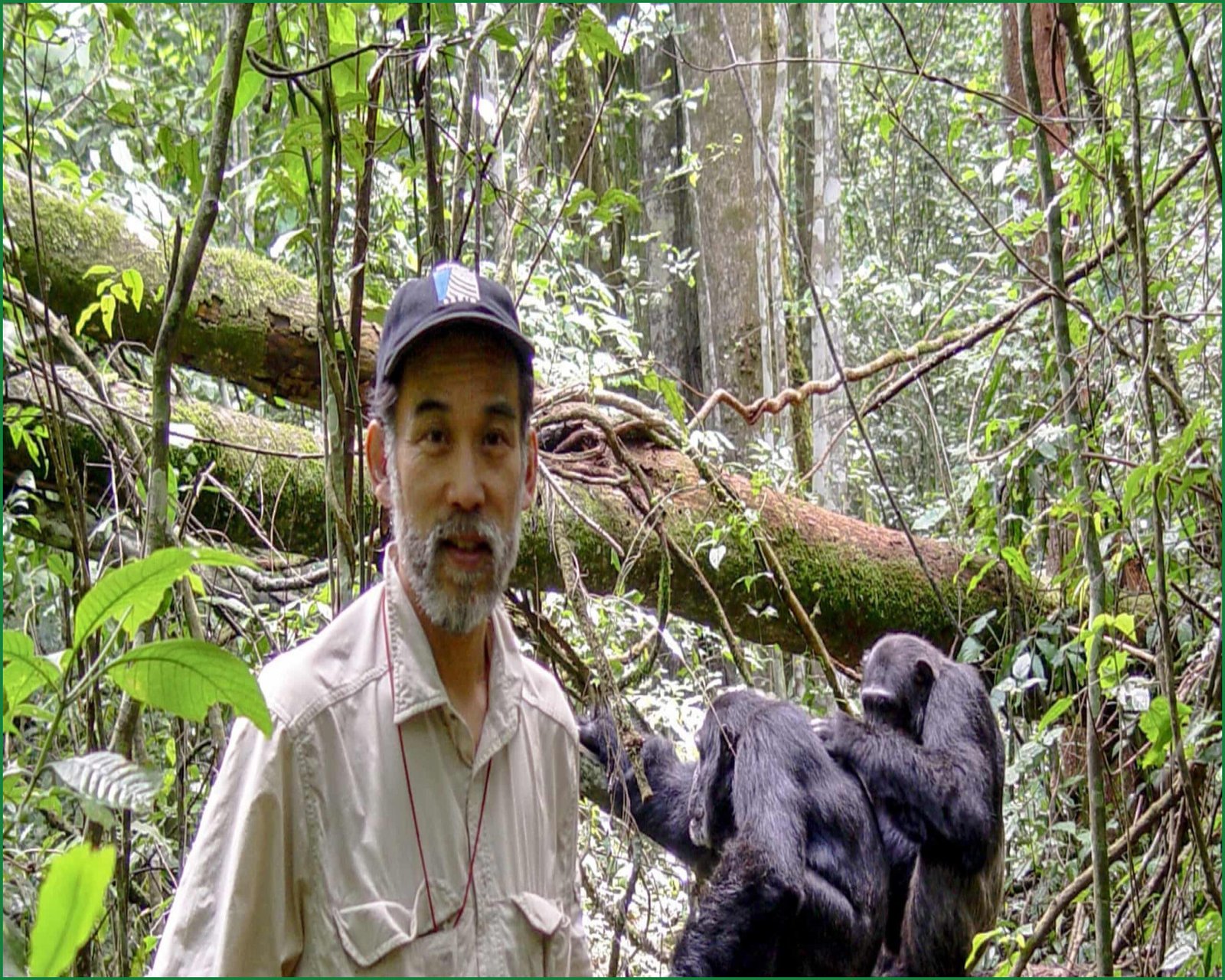
Primatologist John Mitani, now 72, has documented what he describes as potentially the first “civil war” among wild chimpanzees, a years-long bloody conflict observed within a once close-knit community in Uganda’s Kibale National Park. The findings, detailed in a study published this April in the journal Science, chronicle a disturbing turn in a research project that has otherwise yielded groundbreaking insights into chimp behavior.
Mitani, a professor at the University of Michigan, first arrived in Kibale’s Ngogo research area in the summer of 1995, having previously worked with chimpanzees in Tanzania’s Mahale mountains. He was drawn by rumors of an unusually large ape population in Ngogo, a section of the old-growth East African rainforest accessible after a 12-hour drive from Kampala. Within days, he realized the rumors were true, observing nearly 200 chimpanzees living peacefully together—a troop size then unheard of in primatology.
Later that year, Mitani co-founded the Ngogo Chimpanzee Project with Yale University primatologist David Watts, securing a $500,000 (£380,000) award from the US National Science Foundation. Three decades on, the project remains one of only 12 long-term studies of chimpanzees in their natural environment globally, profoundly transforming scientific understanding of one of humanity's closest relatives.
Building trust with the wild chimpanzees took years, as they were unaccustomed to human presence and initially fled researchers. Mitani recalls spending days chasing them across hills and valleys, describing the experience as “fun, exciting and exhilarating. It was also a challenge.” A 25-year-old male named Hare, identifiable by a cleft palate, was the first to break the ice during Mitani’s second year. Hare permitted Mitani to follow him, a moment the primatologist described in his 2022 anthology, Chimpanzee Memoirs, as tremendously gratifying, almost bringing him to tears.
Mitani estimates he has spent approximately seven years, or 85 months, hiking the forests of Ngogo. The research camp, which began with basic structures and tents, has grown to house nearly 90 researchers over its three-decade span. Early findings from Ngogo stunned the scientific world, much like Jane Goodall’s discoveries at Gombe. Researchers documented the lowest mortality rates for a wild chimp population, suggesting that optimal habitat conditions could extend their life expectancy to nearly that of human hunter-gatherers. They also found that unrelated male chimpanzees could form strong alliances and cooperate, challenging the previous paradigm that cooperation was limited to close kin. Hunting and meat-eating, particularly of red colobus monkeys, were identified as crucial for male social bonding, not just nutrition.
However, the most unsettling discovery began on a June day in 2015. Mitani and his team observed a cluster of chimps displaying nervous behavior and scattering at the sounds of approaching group members. “All of a sudden, the individuals I was following just ran down the hill for no apparent reason,” Mitani said, adding, “Chaos erupted. They started to run around and chase each other.” This incident marked the beginning of a years-long bloody conflict, later chronicled in the 2023 Netflix series “Chimp Empire.” By 2018, the once-unified group had fractured into two distinct factions. The conflict resulted in the deaths of nine males and 19 infants.
Remarkably, scientists later found that this lethal aggression had an unexpected outcome: female fertility doubled, and offspring survival substantially increased at Ngogo. Despite the scientific significance, witnessing the split was deeply personal for Mitani. He admitted to being “in denial,” holding onto the belief that the large group was thriving. “It’s been hard to watch,” he stated, noting that visits became increasingly difficult as the killings continued. The emotional toll was such that it took him over a decade to write the paper on these dark events, explaining, “I think I was dragging my heels because maybe I didn’t really want to write about this.”
Mitani cautions against overstating behavioral similarities between chimps and humans, stating, “If there is one thing I’ve learned from studying chimps all these years, it is that they are not us.” While the Ngogo chimps now face a threat from within their own species, Mitani emphasizes that the long-term presence of researchers has contributed to their conservation. Researchers collaborate with wildlife authorities to remove snares, which are set for other wild game but occasionally trap a chimp.
Living between Michigan and Arizona, Mitani expresses concern for the future of the Ngogo research project. Its primary funding source, the US National Science Foundation’s behavioral and cognitive sciences division, is slated for elimination under the Trump administration’s proposed 2027 budget. “The chimps there have many more important stories to tell us,” Mitani warned, linking his concern to broader issues, “This is one of the reasons I am so concerned about the war on science and truth in this country.” He plans to return to Ngogo this month and for as long as he is able, hoping his life’s work will impart knowledge that fosters a greater appreciation for chimpanzees and inspires efforts to ensure their continued existence on the planet.