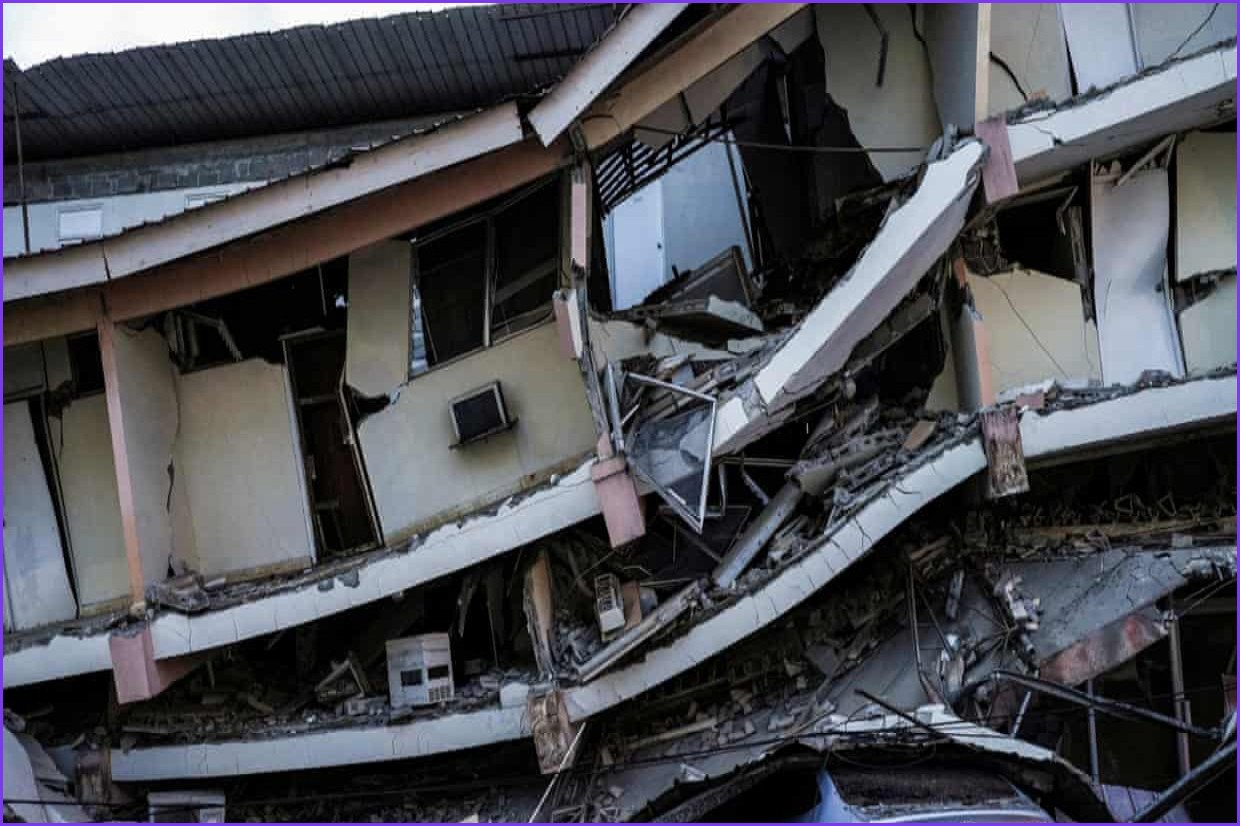
The government of Panama declared a state of emergency on Saturday following two powerful earthquakes that shook the nation for hours. While officials confirmed that no deaths have been attributed to the 7.7- and 6.6-magnitude tremors that struck on Friday, the seismic activity caused extensive damage across all 10 of the country’s provinces and two Indigenous territories.
Seismologists have recorded more than 100 aftershocks since the initial events, with some reaching magnitudes of 5.8, 5.5, and 5.2. The first earthquake, which was also felt in neighboring Colombia, originated 10km (6 miles) south-west of the remote community of Pitaloza Arriba in the central province of Herrera at a depth of 10km (6 miles), according to the US Geological Survey.
During a news conference in Panama City, presidential minister Juan Carlos Orillac announced the emergency measure, noting that infrastructure including homes, schools, healthcare facilities, roads, and hotels sustained damage. Deputy director of the National Civil Protection System, Malitzie Rivera, reported that 27 people suffered injuries ranging from minor to moderate. The most significant destruction was concentrated in the central provinces of Veraguas, Herrera, Cocle, and Los Santos.
According to the Civil Protection agency, the earthquakes damaged approximately 420 homes and an equal number of public schools. Additionally, nine bridges, 13 churches, and seven hotels were impacted. In La Villa de Los Santos, located about 64km (40 miles) north-east of the epicenter, a historical Catholic church and several homes collapsed. Resident Tony Jiménez, who has lived in the area for 90 years, described the experience as intensely terrifying while sheltering with his family under a tent.
Although no missing persons were reported as of Saturday, some communities remain isolated due to road damage and landslides. Carlos Valdés, head of the seismology department at the National Autonomous University of Mexico, suggested that Panama’s strict building codes likely prevented higher casualties. The US Department of State has mobilized a disaster response team and pledged $5m in humanitarian aid. Furthermore, the US military’s southern command, in coordination with the state department’s drug-control bureau, has utilized two helicopters to deliver 2,000 pounds (907kg) of food to affected populations.