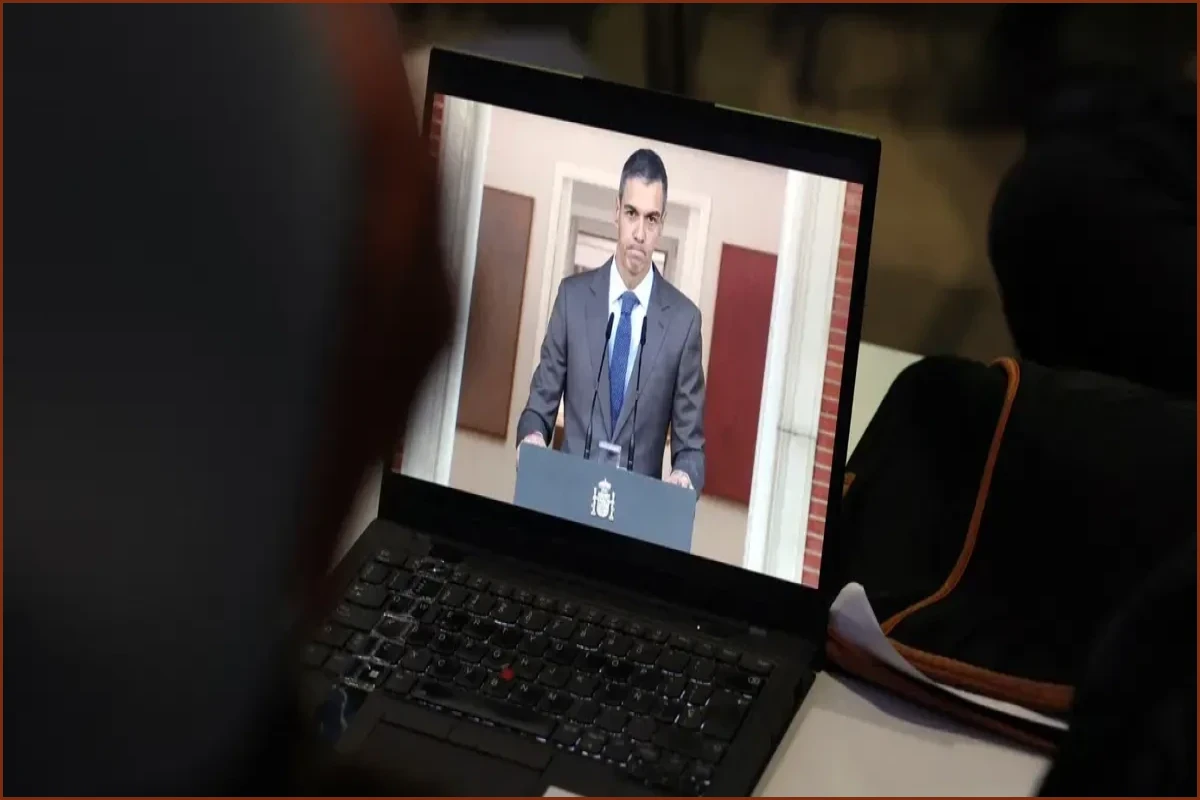
Spanish Prime Minister Pedro Sánchez has officially called an early general election for Sunday, November 29, cutting his third mandate short by approximately nine months. Speaking from the La Moncloa palace during a televised address at 9:00 a.m. on Monday, October 5th, Sánchez confirmed the snap vote, which had been widely anticipated by the Spanish press. The decision to head to the polls early, rather than waiting for the scheduled date in August 2027, comes amid intense political pressure and widespread public anger over Spain's escalating housing crisis.
The political landscape shifted rapidly following the highly publicized eviction of Maricarmen, an 87-year-old Madrid resident who was forced out of her lifelong apartment after a vulture fund quintupled her rent. The incident served as the final straw for millions of Spanish tenants facing exorbitant rental prices and deteriorating living conditions. In response, nationwide protests erupted, with demonstrators forming encampments in major city squares to demand immediate government intervention. The public's frustration soon turned toward the political class for failing to implement effective legislation to alleviate these housing struggles.
In an attempt to address the crisis, Sánchez and his governing team rushed to draft and propose legislation aimed at improving rental prices and conditions for Spain's nine million renters. However, the measures were defeated in parliament on Friday, October 2nd. The conservative People's Party (PP) and the far-right Vox voted against the bill, while the Catalan separatist party Junts also rejected the measures. Junts, which holds seven decisive seats in parliament and previously acted as a kingmaker to help Sánchez form his government after the hung parliament of the 2023 general election, effectively tipped the balance to defeat the housing proposals.
This legislative failure is the latest in a series of challenges for the ruling PSOE-Sumar coalition, which has struggled to govern with a weak parliamentary minority. Sánchez's administration has been unable to pass a state budget for three years, with PP and Vox consistently blocking proposed laws. Junts has also frequently exerted what critics describe as political blackmail, using its crucial seven seats to vote against government initiatives. Beyond the legislative gridlock, Sánchez's government has faced mounting pressure from a migrant crisis in Ceuta, a controversial Catalan amnesty law, and allegations of corruption against the prime minister's wife, Begoña Gómez, which led Sánchez to contemplate resigning in April 2024 before deciding to remain in office.
Political commentators in Spain suggest that Sánchez's decision to call a snap election is a calculated strategy to turn public frustration over the rejected housing bill against the opposition parties. By heading to the ballot box immediately, the Socialists hope to mobilize disgruntled voters and expand their parliamentary presence. During his Monday morning address, Sánchez explained his reasoning, stating, "To do more, we need to renew and broaden the support of the people," and added that his goal is "to secure a much broader, progressive majority in parliament."
Sánchez is also seeking to frame the upcoming election as an ideological battle, warning voters of the potential rise of a right-wing coalition. "You Spaniards have to decide what role you want to play: whether you want this far-right wave that keeps regressing or whether you want to continue moving forward," the Prime Minister argued. Meanwhile, PP and Vox have dismissed the snap election as a desperate defensive tactic by a cornered administration trying to limit its parliamentary losses and shield itself from future scandals. Sánchez, known as a resilient political survivor, previously defied expectations in the last general election when polls predicted Alberto Núñez Feijóo of the PP would become Spain's next prime minister.
READ ALSO: How Spain's foreigners could be affected by a PP-Vox government
The focus so far appears to be on portraying a PP-Vox government as a threat to Spanish society, more so ideologically than in terms of the housing crisis.