Russian aerial attacks have forced the partial or full closure of three road bridges over the Dnipro River in Kyiv, triggering widespread traffic logjams in an apparent new tactic aimed at disrupting daily life in the Ukrainian capital. The targeted strikes hit three of the city’s six road bridges, marking an escalation from previous Russian bombardments that primarily focused on residential buildings, supermarkets, gas stations, and data centers.
The impact on local commuters was immediate and severe. Kyiv resident Oleksandr Pihalo described the roads as "jammed solid," noting that it took him 45 minutes to travel just 4 kilometers (2.5 miles). Kyiv Mayor Vitalii Klitschko confirmed that one of the damaged bridges was struck again on Friday afternoon, compounding the transit crisis.
The escalating infrastructure damage comes as Ukraine’s Foreign Minister Andrii Sybiha revealed that Kyiv has received separate proposals for a partial truce from the United States, India, Turkey, and Egypt. The diplomatic initiatives aim to halt strikes on energy infrastructure—which have caused widespread power outages in Ukraine and fuel shortages in Russia—as well as cargo shipping in the Black Sea, which is critical for transporting vital grain exports to global markets.
Sybiha emphasized that Ukraine is willing to agree to a ceasefire only if both conditions are met simultaneously. "We are ready for an energy and Black Sea ceasefire, but only in that combination," Sybiha told reporters in comments embargoed until Friday. He also noted that this is the first time India has proposed a mediating role. India is currently navigating its relationship with Russia alongside its expanding ties with the United States and Western allies, especially as a pending U.S. sanctions package threatens to impose up to 100% tariffs on New Delhi due to its imports of Russian oil.
To defend against continuous Russian aerial bombardments, Ukraine is requesting approximately 300 Patriot air defense missiles from its international partners. Ukrainian intelligence estimates that Russia has 600 ballistic missiles in reserve and maintains the capacity to manufacture up to 140 more each month. While U.S.-made Patriot systems are highly effective at intercepting fast-moving ballistic missiles, global supplies of these interceptors are currently limited due to the war in Iran.
In addition to air defense systems, Ukraine is seeking urgent foreign funding to secure future drone production contracts and prevent supply shortages early next year. Kyiv is grappling with a projected budget deficit of roughly $27 billion this year, though the European Union has pledged financial assistance. Russia is also experiencing its own economic strain and mounting debt driven by high military expenditures.
The worsening humanitarian situation drew strong condemnation from the United Nations. Speaking in Geneva, U.N. High Commissioner for Human Rights Volker Türk stated that civilians are "bearing the brunt of this war." Türk described the conflict as an intensifying "human rights catastrophe" that is causing "unfathomable pain," leaving people across Ukraine living in "constant dread."
While the air war has intensified, the ground war along the 1,250-kilometer front line remains largely deadlocked more than four and a half years after Russia's full-scale invasion. However, the Washington-based Institute for the Study of War reported that Ukrainian forces have made some progress, with Russian forces losing control of nearly 300 square kilometers (116 square miles) of territory between March and September. The think tank also reported that the Russian military suffered more than 46,000 casualties in September alone, marking its highest monthly casualty rate this year. The report did not disclose Ukrainian casualty figures.
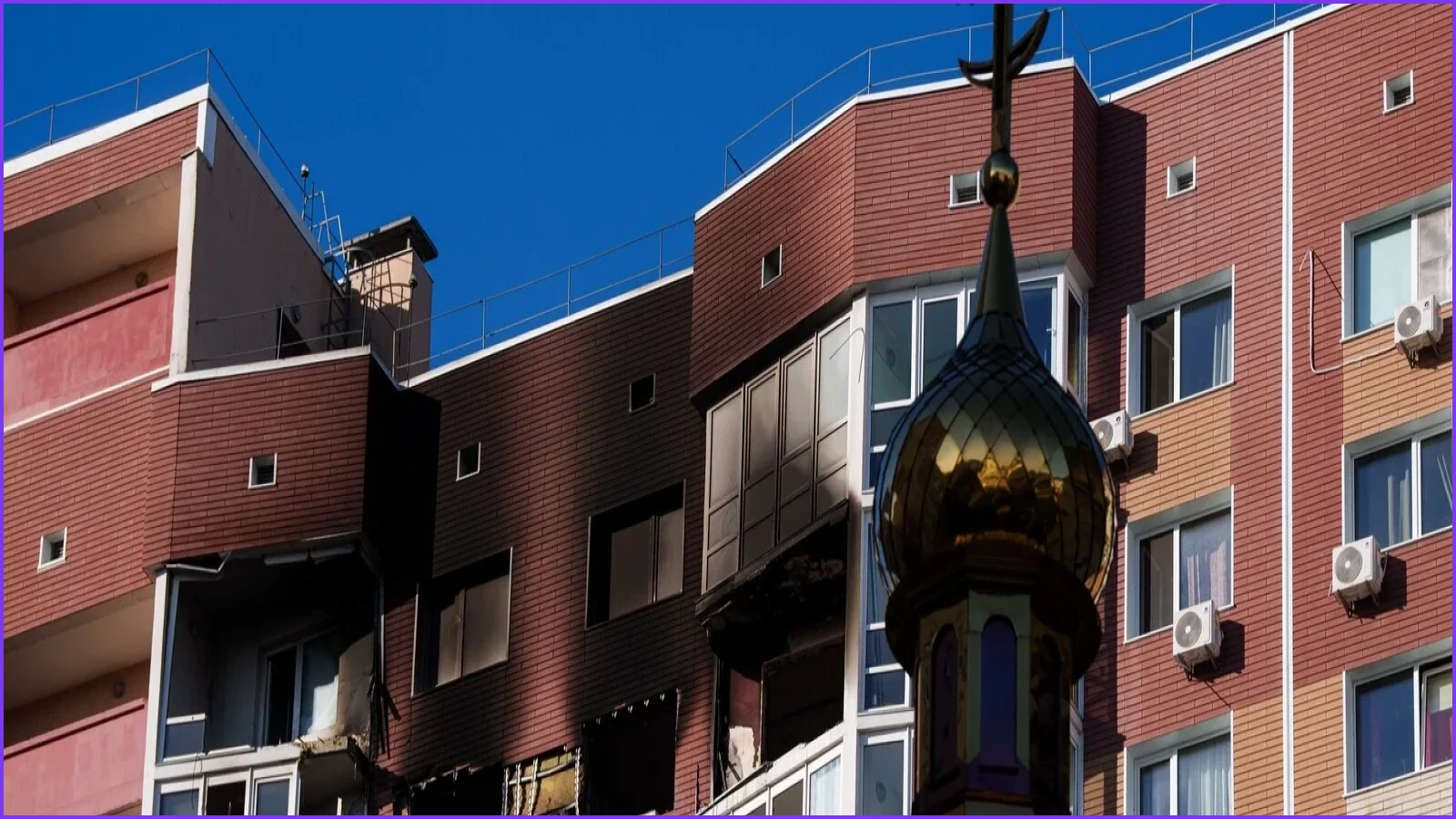
The latest wave of aerial violence included an overnight barrage of more than 100 Russian drones launched at Kyiv and eight other regions. Ukrainian President Volodymyr Zelenskyy reported that nearly half of the incoming drones were jet-powered models, which are exceptionally difficult to intercept. One drone struck a high-rise residential building in Kyiv, killing one person, while at least four other individuals were wounded in separate locations.
Zelenskyy used the attack to reiterate his call for international allies to close loopholes in sanctions against Moscow and place stricter curbs on Russian trade. He pointed out on social media that Russian drones and missiles are "critically dependent" on imported foreign components, writing on X that "every Russian drone can actually be stopped right at the production line."
Simultaneously, Ukraine has continued its own campaign of long-range drone and missile strikes targeting Russian oil refineries and military factories. The Russian Defense Ministry claimed its air defenses intercepted 646 Ukrainian drones overnight over various Russian regions, occupied Crimea, the Black Sea, and the Sea of Azov. In Russia's southwestern Volgograd region, Governor Andrei Bocharov reported that one person was injured in a strike that targeted "industrial infrastructure."
Meanwhile, Russian Deputy Prime Minister Alexander Novak stated that while Ukrainian forces targeted four Russian oil refineries overnight, air defenses successfully repelled the attacks without any damage to critical equipment. Novak highlighted ongoing government efforts to bolster refinery security, referencing an August decree by Russian President Vladimir Putin that allows the state to temporarily take control of private critical infrastructure if owners fail to protect or rebuild it after attacks. Independent verification of the military claims made by both sides was not immediately possible.