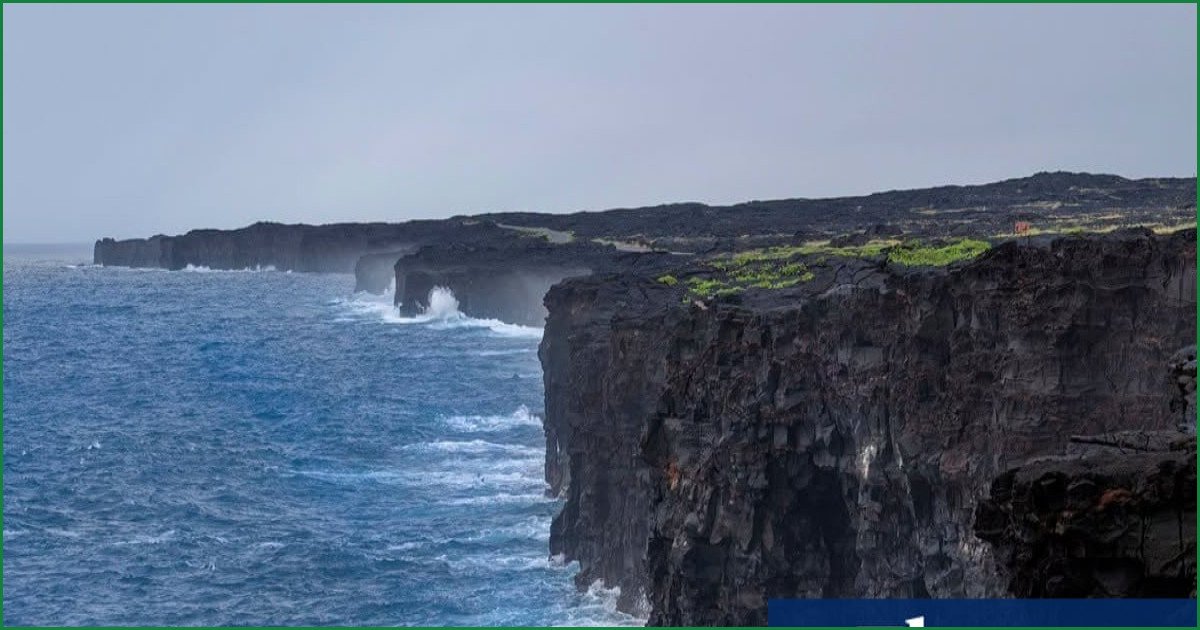
The Hōlei sea arch, a 90ft-tall landmark that stood for over half a millennium on the southern coast of Hawaii's Big Island, has collapsed into the Pacific Ocean. The National Park Service confirmed the loss of the formation on Friday, noting that the event followed a period of rough weather and intense storm activity in the region.
While the exact moment of the collapse remains unverified, officials report that the arch was still standing on Wednesday, September 23, during a temporary closure of Volcanoes National Park due to Tropical Storm Nolo. By the night of Sunday, September 27, the structure had fallen.
Formed approximately 550 years ago, the arch was the result of differential erosion where ocean waves carved away weaker rock and cracks in ancient lava flows. The US Geological Survey had long predicted the formation's eventual demise, noting in 2014 that the constant crashing of ocean waves against the pillar meant it would not remain indefinitely.
The collapse followed years of documented instability in the surrounding cliffs, exacerbated by seismic activity during the 2018 Kīlauea eruption. In January 2020, the National Park Service was forced to relocate a viewing area further from the cliff edge due to emerging cracks. Later that year, high surf from Tropical Storm Darby caused a portion of the arch to break away.
This year has seen a surge in severe weather across the Hawaiian islands, with storm activity exceeding historical averages during the peak hurricane season. Experts attribute this pattern to a "supercharged" El Niño, which is being intensified by global temperature increases linked to fossil fuel combustion. Tropical Storm Nolo, which intensified into a hurricane on September 24, was the third major system to impact the area in recent months, following hurricanes Lala in August and Lowell in early September. These storms collectively caused significant flooding, power outages, and damage across the islands.
“The arch formed in ancient lava flows by removing rock along cracks and weaker rocks,” the US Geological Survey said in a description of the arch in 2014. “It will not be here for ever. Every day the ocean crashes against the pillar of the arch, eroding it a little more. One day, it will be gone.”
Indeed, the cliffs on either side of the sea arch had shown signs of instability for years amid tropical systems and volcanic activity, the NPS said, meaning the arch’s collapse had long been expected.