The quiet village of Whelford, situated directly next to the US Air Force base at RAF Fairford, became the center of a major international security drama on Sunday morning. Before the sun had risen, residents were awakened and instructed to evacuate their homes as a significant police operation commenced. A local villager captured a striking image of five men, all in their 20s from London, sitting on the ground in the dark, handcuffed and under armed guard, stripped to the waist.
Initially, the men were arrested for offences under the Explosives Act, leading to widespread reports of a suspected bomb plot. However, the investigation has since taken a different turn. Counter-terrorism detectives confirmed that when military remote-controlled robots searched the three vans associated with the suspects, they discovered no explosives.
Instead, the only substance found was petrol, which investigators identified as an accelerant. This discovery fundamentally altered the trajectory of the case, leaving police with five men found in suspicious circumstances in the middle of the night, but lacking concrete evidence of a planned attack.
The incident drew sharp commentary from high-level international figures. US President Donald Trump claimed the men had been attempting to cause "big damage" to the base, stating, "We had them under view for a long time, and we got them." US Secretary of State Marco Rubio also characterized the event as a "very serious situation" that "clearly involved the hands of a foreign actor."
In a veiled criticism of these remarks, the head of Counter Terrorism Policing in the UK, Laurence Taylor, stated that public anxiety had been "heightened by the international commentary." Taylor defended the decision to grant the suspects police bail with "very strict conditions," a move that had been criticized by President Trump.
Taylor described the release as an "investigative decision and one which is grounded in experience and strategy," suggesting that the move might be intended to encourage cooperation from the suspects.
The legal framework of the detention also played a significant role in the outcome. The men were held under the Police and Criminal Evidence Act (PACE) rather than the Terrorism Act (TACT). This distinction meant that detectives did not have the power to hold the suspects for the 14-day period permitted under TACT, and it would have been difficult to justify further detention to a magistrate without more definitive evidence. Consequently, the police opted for bail with strict conditions.
Questions remain regarding whether the suspects were already under surveillance when they were spotted by villagers, or if the local reports were the first alert. Taylor noted that the response was "due to a range of information that we received," implying that police had access to other intelligence.
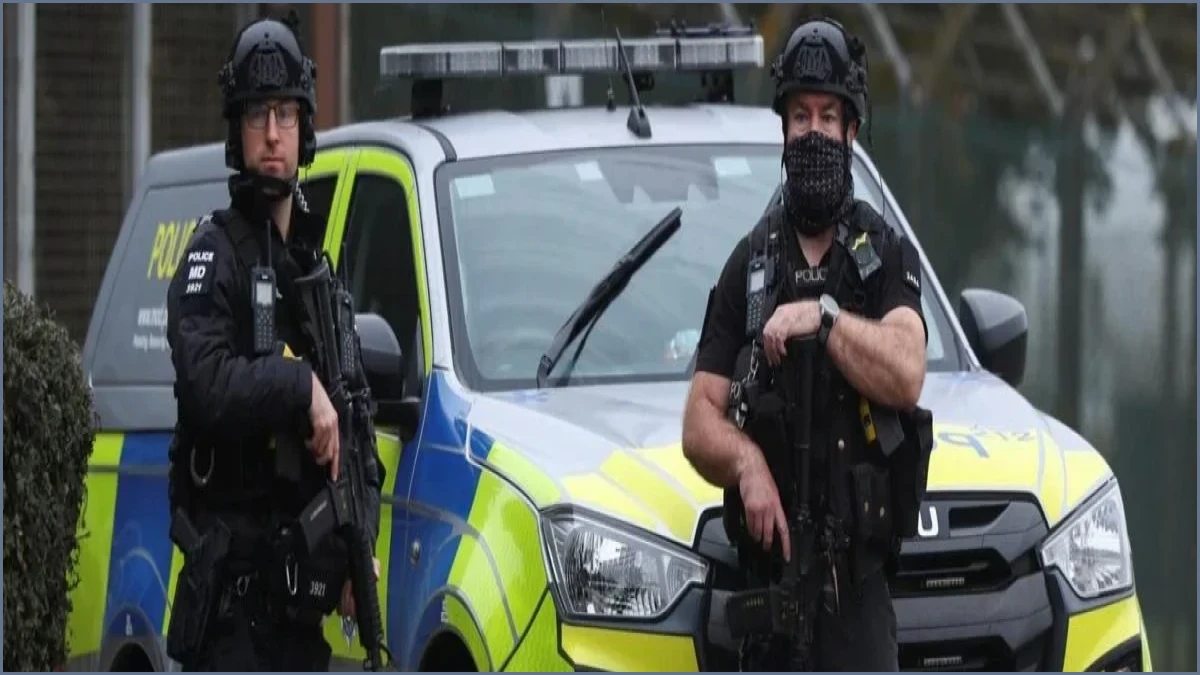
Security at the base had been visibly increased in the days prior, indicating that authorities were already aware of a potential threat. Elite firearms officers responded rapidly to the 999 calls made by villagers.
Counter-terrorism and military sources suggest the investigation is still in its early stages. Detectives are currently working to identify if there is a "controlling hand" behind the presence of the men and the petrol. Three primary possibilities remain: the men could be innocent and have a legitimate explanation for their presence; they could have been tricked or paid to transport the vehicles without knowing the true intent; or they could have been part of a plot that was interrupted before it could escalate.
The next phase of the investigation is critical, involving the analysis of mobile phones, computers, vehicle tracking, and address searches, supported by the covert capabilities of MI5, GCHQ, and US intelligence. The findings from this work will determine whether further arrests are made or if the five men will face formal charges.