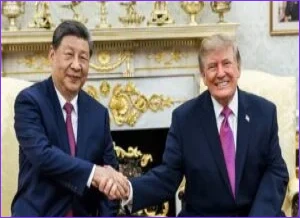
The high-stakes state visit between President Donald Trump and Chinese President Xi Jinping in Washington, D.C., concluded with a heavy emphasis on pageantry, personal chemistry, and a temporary trade extension, even as deep-seated economic and geopolitical conflicts remained unresolved. This marked Xi's first state visit to the United States since 2015, occurring at a crucial political juncture for both leaders. For Trump, the summit took place just six weeks before the upcoming U.S. midterm elections. For Xi, it preceded a pivotal Communist Party meeting scheduled for next month, which is expected to lay the groundwork for an announcement next fall confirming his next five-year term of rule.
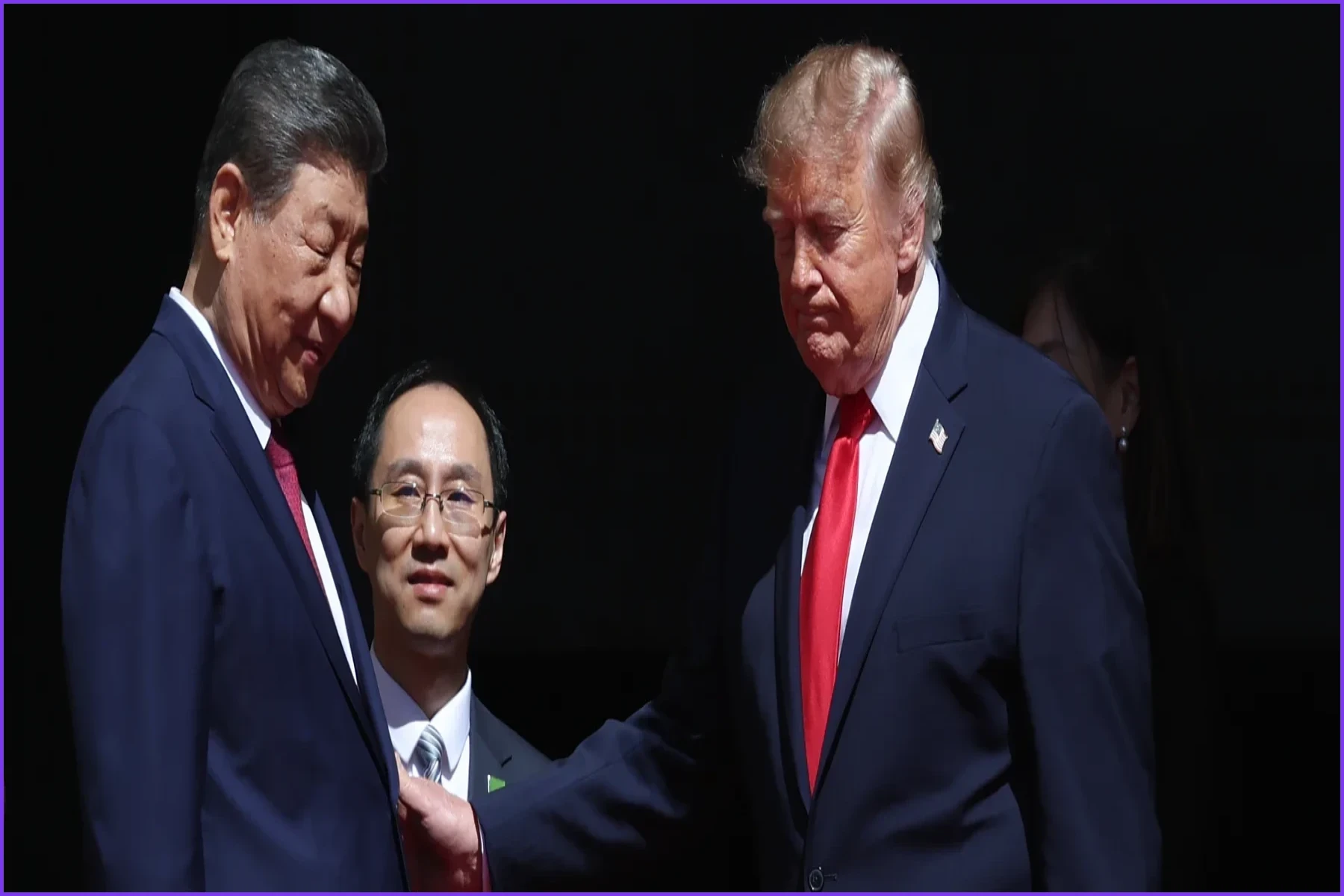
On September 25, the final day of the visit, the two leaders were seen speaking via an interpreter as they departed following a tour of the National Archives Museum in Washington. Although the meetings yielded some concrete outcomes, they fell short of resolving major structural disputes. The primary policy announcement was a two-month extension of a trade truce. Under this agreement, the U.S. will maintain access to Chinese rare earth elements, while China will continue to access certain advanced American semiconductor chips. However, the delegations failed to provide crucial details regarding two unformed boards of trade and investment, Boeing purchases, and pending Chinese agricultural acquisitions.
Instead of addressing these hard economic grievances, the leaders relied on cordial interactions. During a state dinner attended by approximately 145 guests, Xi toasted Trump's health and spoke of a "new chapter" in bilateral relations. Trump, meanwhile, emphasized the long history of commercial ties between the two global powers and recalled the shared history of U.S. Marines and Chinese Communist fighters during World War II, remarking, "Look at the greatness that we had together fighting in World War II."
The leaders and their delegations spent about three hours in meetings at the White House on Thursday. Much of that time, however, was dedicated to a personal tour. Trump guided Xi across the South Lawn, showcasing a newly constructed helipad and inviting the Chinese leader inside the new Marine One helicopter. This focus on personal rapport contrasted with Xi's broader geopolitical framing. The Chinese President invoked the "Thucydides trap"—an academic concept describing the potential for conflict when a rising power threatens a declining one—during his opening remarks on Thursday.
Despite the underlying tensions, Beijing signaled that it viewed the visit as a success. A Chinese government read-out of the Thursday meetings highlighted positive "aspirations for the future" and praised the diplomatic efforts as "a significant step toward finding the right way for the two nations to coexist." Additionally, future diplomatic engagements were locked in: Trump announced plans to attend the Asia-Pacific Economic Cooperation (APEC) summit in southern China this November, while Xi is scheduled to attend the G20 Leaders' Summit in Miami this December.
However, friction points quickly emerged. Before the meetings concluded on Thursday, China’s state news agency released a statement urging the U.S. to oppose Taiwan's formal independence. The U.S. maintains no formal diplomatic relations with Taiwan, adhering to a long-standing policy of "strategic ambiguity" regarding whether it would militarily defend the self-ruled island from a Chinese invasion. On artificial intelligence, Xi urged cooperation to establish guardrails against the "misuse and abuse" of the technology. Trump, conversely, has strongly opposed regulating frontier AI. Prior to the meeting, Trump wrote on Truth Social that he wanted to leave AI "exactly where it is," adding, "That is China's position also. Our guardrail is the DOJ!"
Lucy Hornby, author of the upcoming biography on Xi titled The Last Man, noted that the Chinese leader utilized "many of the usual feel-good tropes of Chinese diplomacy," including panda diplomacy. Hornby observed that Xi strategically frames the U.S. and China as equals capable of solving global problems during bilateral meetings, whereas in discussions with other nations—particularly Russia and developing countries—he emphasizes solidarity against "hegemonic" U.S. power.
Samm Sacks, a senior fellow at the New America think tank, argued that neither leader is currently in a domestic position to resolve the core complexities of the bilateral conflict. Sacks pointed out that the pageantry, while criticized by some, serves a practical purpose. "I don't want to understate the importance of pageantry at this moment. Because things have been so toxic," Sacks said, adding that it "creates a kind of breathing space that is stabilizing." She noted that while the bar is low, the two sides "have set up a mechanism to keep talking," which is crucial because "China hardliners who want decoupling" are waiting in the wings, making it likely that future U.S. presidents will be less willing to work with Xi.
The lavish, red-carpet reception of the leader of America's primary global rival drew sharp criticism from seasoned diplomatic figures. Nicholas Burns, the former U.S. ambassador to China, expressed deep skepticism during an interview with Leila Fadel on Morning Edition. Burns called the U.S.-China relationship "our most difficult relationship in the world" and criticized Trump's "over-the-top flattery." Burns argued, "American people want their president to be polite and civil to a foreign leader, but the over-the-top flattery by President Trump of President Xi, the red carpets, the pomp and circumstance, the marching bands, President Xi is not going to be swayed by that." He added that Xi is "highly intelligent," "not sentimental," "very cynical about the United States," and that his government's ultimate objective is "to overtake us in power."