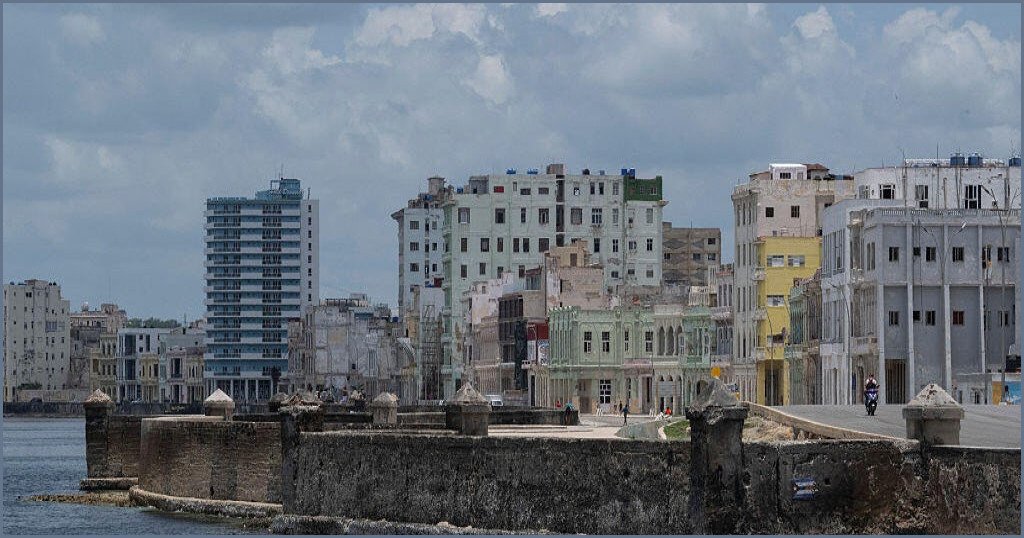
The United States military has begun laying the groundwork for potential operations near Cuba, with the U.S. Army Reserve actively evaluating its capacity to supply critical support units to the military’s Southern Command within the next few months. According to an internal Army message, the Army Reserve is examining whether it can provide police forces, medical personnel, and other support units within a 90-to-120-day timeframe.
Although the internal document does not explicitly name Cuba, multiple U.S. officials speaking on the condition of anonymity confirmed that the request is part of ongoing military planning targeted at the island nation. While the planning is active, there is currently no indication in the document that any of the units have received formal deployment orders. The preparation comes amid intense economic pressure from the Trump administration, which has been pushing Cuba to implement political reforms.
The reviewed message does not specify the exact number of troops required, where they would be deployed, or the specific operations they would support within the Southern Command’s region, which encompasses Central America, South America, and the Caribbean. Instead, the Army Reserve headquarters is gathering feedback from subordinate commands regarding the availability of six specific military formations. Subordinate commands were directed to submit their feedback by Sept. 25.
The requested formations include a combat sustainment support battalion, which specializes in managing logistics such as transportation, maintenance, fuel, and supply needs, as well as an engineer battalion. The military is also seeking an expeditionary sustainment command to oversee logistics across an entire theater of operations. To support personnel on the ground, the document requests a medical brigade to coordinate healthcare units and a forward resuscitative and surgical detachment capable of delivering emergency surgery and trauma care close to active forces. Finally, the plan calls for a military police brigade, which typically handles security, detention, and law enforcement missions.
When contacted regarding the internal message, the Army Reserve did not respond before publication. A spokesperson for U.S. Southern Command declined to discuss specific timelines or movements, stating, "Due to operational security concerns, we do not disclose details or comment on U.S. operational movements or potential deployment timelines associated with current or future operations, contingencies, or planning." The spokesperson added that Southern Command "continuously coordinates with the Joint Force to assess a range of potential requirements across its area of responsibility in support of assigned missions."
The planning is part of a broader, multi-phase military assessment. Earlier this year, U.S. forces conducted reconnaissance operations on the seafloor and maritime approaches surrounding Cuba. Additionally, U.S. airpower components were placed on heightened readiness, with personnel pre-staged for potential deployment, though those specific plans were not executed. Some details regarding these operations are being withheld to avoid putting U.S. service members at risk.
U.S. intelligence officials have also been analyzing how Havana might respond to potential American military action. This assessment comes as the Trump administration accuses Cuba of strengthening its relationships with Russia, China, and Iran. However, the intelligence community's 2026 annual threat assessment largely characterizes Cuba as an enabling environment for foreign adversaries rather than an independent strategic threat. In July, military planners also reviewed several high-level options, including an Army-led air assault involving thousands of soldiers from the 101st Airborne Division, which is the only unit trained for such operations. Officials emphasized at the time that these briefings did not indicate a final decision by the president or the Pentagon to launch an operation.
These developments align with President Trump’s more assertive foreign policy in the Western Hemisphere, which officials have termed the "Donroe Doctrine"—a modern corollary to the Monroe Doctrine aimed at curbing the influence of foreign adversaries in the region. This doctrine has already seen active military involvement elsewhere. In April, American and Ecuadorian forces launched a joint mission against a narco-terrorist criminal hub. Recently, U.S. troops and Drug Enforcement Administration agents assisted Ecuadorian authorities in arresting more than 30 individuals linked to Mexico's Jalisco New Generation Cartel.
Furthermore, the U.S. military has adopted a highly lethal approach in the region, killing more than 230 people in 70 strikes across the Caribbean Sea and eastern Pacific Ocean since September. These operations represent a sharp departure from traditional maritime drug interdiction and arrest efforts. Some legal experts have raised concerns, stating the strikes could amount to illegal extrajudicial killings, as U.S. forces are generally barred from intentionally targeting civilians or criminal suspects unless they meet strict international legal standards for military force.
On the diplomatic front, the Trump administration has intensified economic sanctions, targeting Cuban military research and development enterprises linked to the country's nickel industry just before the U.N. General Assembly. Speaking at the assembly in New York, President Trump declared his administration is pushing for "fundamental change" on the island, predicting that Cuba's communist government "will fall" and promising that "freedom will be coming to Cuba." The Cuban delegation walked out of the hall during his address. Trump also noted that Secretary of State Marco Rubio is "deep into negotiations" with Havana, reiterating that the U.S. will not tolerate foreign adversaries establishing a foothold close to home.
These remarks follow months of direct statements from Trump regarding the island. In mid-March, Trump told reporters in the Oval Office that he believed he would have "the honor of taking Cuba," adding, "Taking Cuba in some form, yeah. Taking Cuba. I mean, whether I free it, take it — I think I could do anything I want with it, if you want to know the truth." Later that month, he stated, "Cuba's going to be next." In response, Cuban President Miguel Díaz-Canel has accused the U.S. of "aggression" and "economic warfare" by blocking fuel imports, vowing that Cuba will defend itself against any American attack.