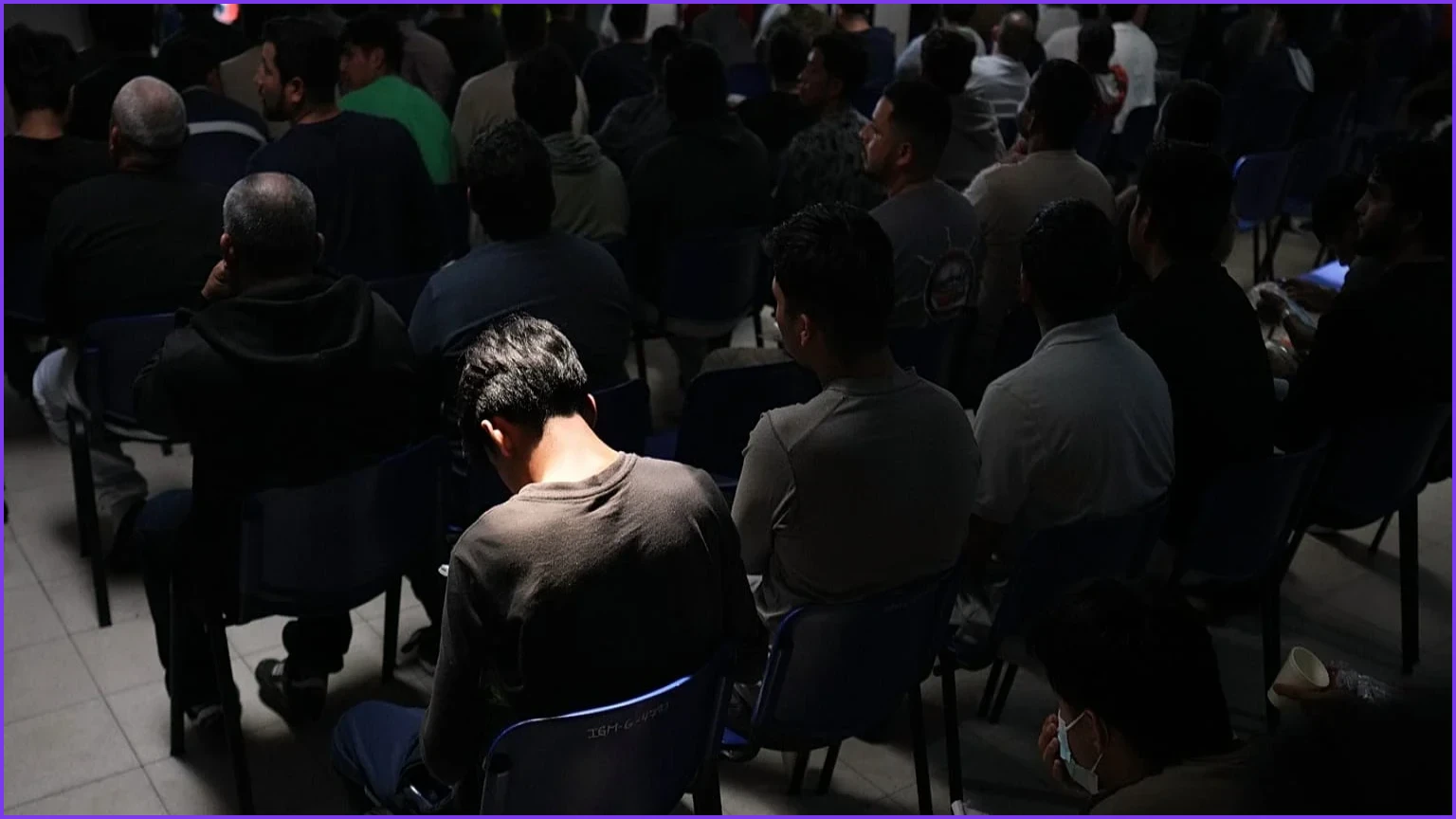
The United States government has deported more than 25,000 people to third countries with which they have no personal connections, operating under secretive bilateral agreements supported by hundreds of millions of dollars in funding. According to an investigation published on Monday by Forbidden Stories and a consortium of international journalists, at least 25,447 individuals had been deported under these arrangements as of August 31, 2026.
To facilitate these returns, the U.S. administration has allocated approximately $410 million (€357 million). This funding is directed either to the receiving nations or to United Nations agencies. Internal U.S. State Department records reveal that $81 million (€70 million) was designated specifically for the signatory governments. The remaining funds were earmarked for international aid organizations, including more than $178 million (€155 million) for the UN's International Organisation for Migration (IOM) and $123 million (€107 million) for the UN Refugee Agency (UNHCR).
Most of the deportations—around 20,000 people—were directed to Mexico. The remaining deportees were sent to 27 other countries spanning Latin America, Africa, and the Pacific region. The U.S. has finalized agreements with 35 countries in total, including seven where deportations have not yet begun.
A specialized division within the State Department, known as the Office of Remigration, has orchestrated the majority of these negotiations and financial transfers. Established in May 2025, the office is led by Christian Jove Ehrhardt, a 41-year-old diplomat with a background as a security officer.
The investigation highlighted several specific bilateral arrangements. In December, the U.S. signed a memorandum of understanding with Cameroon. Just one week later, Cameroon signed a five-year health assistance program valued at nearly $400 million (€348 million). The following month, the State Department announced an additional $30 million (€26 million) for the UNHCR in Cameroon to support the voluntary return of refugees and counter illegal immigration. The first flight carrying deportees landed in Cameroon on January 14.
Other countries received direct payments. Palau, a Pacific island nation with a population under 18,000, agreed in December 2025 to accept up to 75 third-country nationals in exchange for $7.5 million (€6.5 million), though only three people have been transferred so far. Eswatini signed a deal worth over $5 million (€4 million) to accept up to 160 people, and has received 32 deportees since July 2025, including individuals with criminal records.
The U.S. has reportedly used aggressive diplomatic leverage to secure these agreements. An earlier investigation by the AFP news agency revealed that Washington has deployed visa bans and restrictions against African nations to compel them into accepting deportees. Forbidden Stories reported that U.S. officials approached 49 of Africa's 54 countries regarding the third-country deportation scheme.
Lawyers interviewed by AFP warned that these deportees are cast into a "legal black hole," where they are often detained without charge in countries where they possess no ties and virtually no legal rights.
The involvement of international organizations has drawn criticism, though both the UNHCR and IOM defended their participation. The UNHCR stated it was not a party to the bilateral agreements and emphasized that U.S. funds are used to strengthen local asylum systems in accordance with its mandate. An IOM spokesperson stated that the agency's participation is guided solely by whether its engagement will improve the lives of the affected migrants, adding, "In these instances, we believe strongly it does."