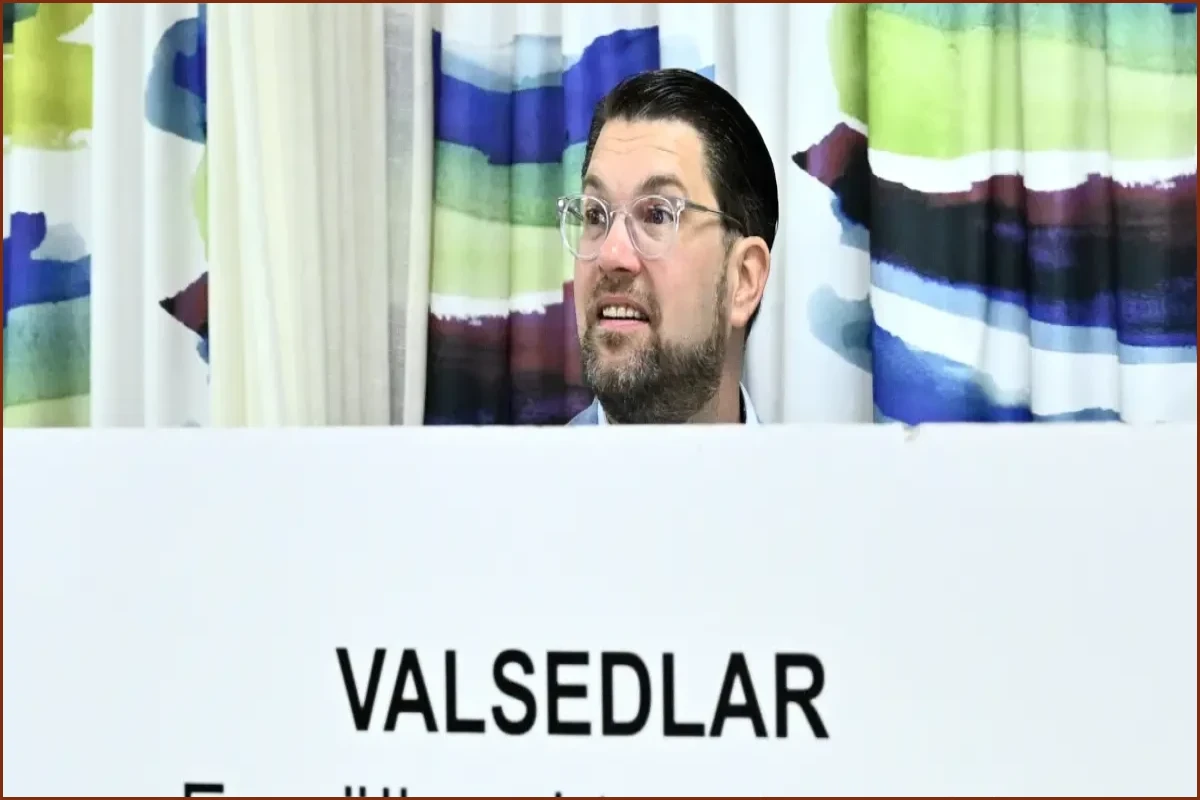
The Sweden Democrats have emerged as the primary losers in the general election, with the party losing ground in 285 of Sweden's 290 municipalities. Political scientist Andreas Johansson Heinö, who is a publisher at the free market think tank Timbro, described the result as a surprisingly sharp decline. While the party was widely expected to maintain its position as Sweden's second-largest party, it slipped by three percentage points on election night and lost voters in all but five municipalities.
The outcome is particularly noteworthy because the three government parties managed to make gains while the Sweden Democrats lost ground, a trend Johansson Heinö noted few people expected. He suggested the results send a clear signal from the electorate that more voters appreciated the approach and policies of the three centre-right government parties on key issues. On election night, party leader Jimmie Åkesson argued that the Sweden Democrats had fought hard for the governing Tidö coalition, causing voters to support the coalition as a whole rather than a single party, with some ultimately turning to the Liberals on election day. Johansson Heinö characterized this analysis as an attempt by Åkesson to put a positive spin on the outcome, stating that voters know what they are doing regardless of their choice.
Support for the party also appears to be waning among young people. In Sweden's mock school elections, where the Moderate Party emerged as the largest, the Sweden Democrats suffered the steepest drop, falling by seven percentage points. Johansson Heinö noted that while a right-wing wave remains among young voters, the Moderates have managed to outcompete the Sweden Democrats to some extent.
Regional data highlights specific areas of decline, such as Hällefors in the Örebro region, where the Sweden Democrats suffered their biggest losses. A plausible explanation is that the upstart Örebro Party, led by far-right demagogue Marcus Allard, poached votes from the Sweden Democrats. Although far-right challenger parties like the Örebro Party, Alternative for Sweden, and Medborgerlig Samling remain small, their impact can be significant in tight races. Johansson Heinö observed that while the Left Party successfully neutralized the threat of the Nyans party, the Sweden Democrats have not managed to curb competition on their own flank. He noted that those who believe the party should have been more radical will argue that these alternative parties would not have had room to grow if the Sweden Democrats had maintained a harder edge. Conversely, others point to radical rhetoric—such as high-profile MP Richard Jomshof's controversial remarks about treason and Muslims—as a factor that repels voters, with Johansson Heinö suggesting a good number of voters feel the party went too far.
Despite the three-point drop, the Sweden Democrats remain a major political force that has grown rapidly from an outcast fringe party into a mainstay of government offices. Johansson Heinö emphasized that this is not a total collapse, but rather a normal development for a party that has expanded and now faces a more fickle voter base, a situation the Sweden Democrats have not experienced before.