Democrats swept crucial US midterm races, capturing control of Congress by flipping long-held Republican seats as voters delivered a strong political rebuke to Donald Trump's administration. The wide-ranging performance saw Democrats gain a majority in the Senate, capture the House of Representatives, flip seven Senate seats overall, gain more than two dozen House seats, and increase their number of state governors.
The shift in power unfolded rapidly on election night. Shortly after polls closed, Democratic candidates established early winning streaks in high-stakes Senate contests. Before midnight, the Associated Press declared that Democrats had secured the Senate majority. Less than two hours later, the network confirmed that Democrats had also won control of the House of Representatives. By taking both legislative chambers, Democrats gain substantial legislative authority to obstruct and counter Trump's presidential agenda.
The electoral losses hit Republicans across traditional strongholds. In districts and states that supported Trump two years prior, voters turned away from the president's allies, leaving Republican incumbents even in deeply conservative regions like Florida locked in tight contests. Among the significant outcomes was Michigan, where Democratic candidate Abdul El-Sayed secured a victory despite facing a campaign heavily marked by Islamophobia.
Democratic candidates breached long-standing Republican strongholds in several key Senate races. In Kansas, Democratic candidate Adam Hamilton defeated incumbent Republican Roger Marshall, marking the first time in 94 years that a Democrat was elected to the US Senate from the state. Prior to the vote, polls had indicated a narrow lead for Hamilton over Marshall, though Washington Post pollsters cautioned that the projection could be skewed due to higher Democratic response rates.
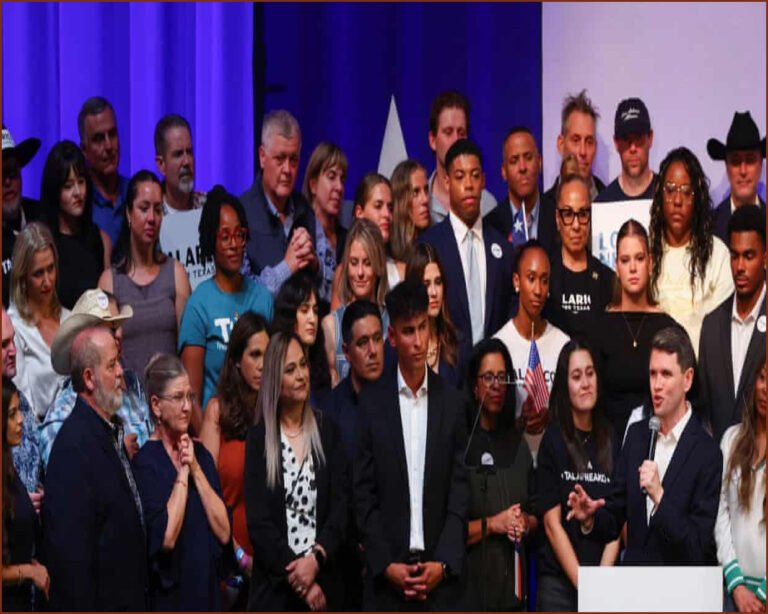
In South Carolina, Republicans lost a Senate seat for the first time in almost 30 years when Dr. Annie Andrews defeated Darline Graham. Graham, a close political ally of Trump, is the sister of the late senator Lindsey Graham. In Texas, progressive Democratic newcomer James Talarico defeated conservative Attorney General Ken Paxton, ending a 38-year Republican dominance in Texas Senate contests. Additionally, Democrats flipped Senate seats in Iowa and North Carolina, two states that had not chosen a Democratic US senator since 2008.
The midterm outcomes highlighted significant setbacks for candidates directly backed by Trump. While candidates endorsed by the former president historically dominate primary and general elections, his favored picks struggled to persuade voters. In addition to Paxton's loss in Texas and Graham's failure in South Carolina—where Trump had elevated her candidacy and actively campaigned on her behalf—Trump's chosen candidate in North Carolina, Michael Whatley, failed to defeat Democrat Roy Cooper.
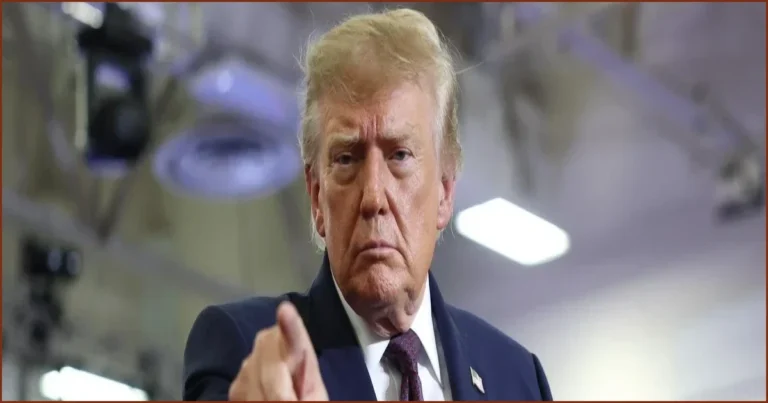
Following the sweeping losses, Trump attempted to distance the election results from his presidency. Despite spending weeks instructing supporters to cast votes as if he were directly on the ballot to drive Republican turnout, Trump reversed his position on Tuesday night. Taking to social media, Trump wrote, “I wasn’t on the Ballot and if I was, we would have won IN A LANDSLIDE! Thank you for your attention to this matter.”
Trump reiterated this viewpoint during an interview with the New York Times, claiming, “I wasn’t on the ticket, and because I wasn’t on the ticket, we couldn’t get enough people out to vote.” Despite his historical record of advancing false claims regarding election fraud, Trump told the newspaper that he was “absolutely willing” to accept the final results of the midterm elections.
But pre-election polls were more reserved about Democratic candidates’ prospects, in part due to the failed predictions over the 2024 presidential election.