Moroccan media outlets have launched a wave of criticism against a leaked Spanish police report that accused Morocco's security forces of failures during a massive migrant crossing into the Spanish territory of Ceuta.
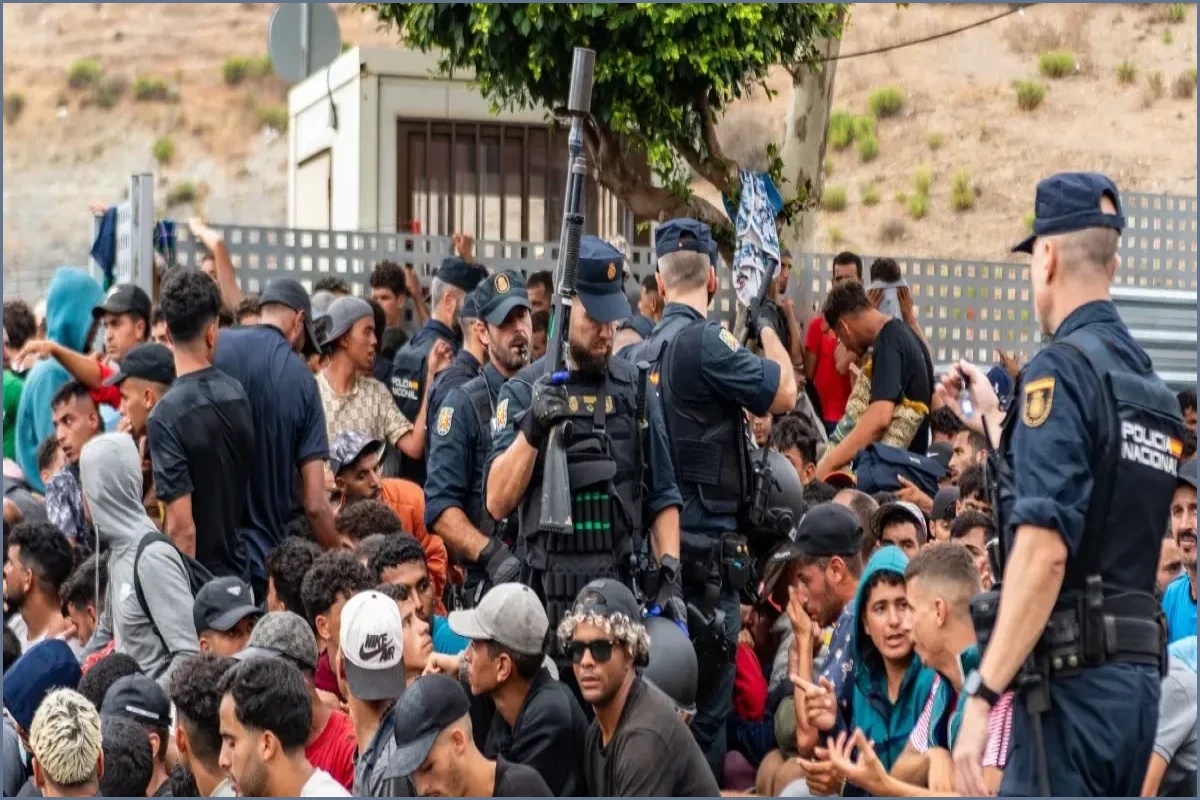
The dispute stems from an unprecedented and chaotic surge on July 30 and 31, when more than 70,000 migrants entered Ceuta from Morocco. The border breach left scores of people dead and sparked intense infighting within the European Union over migration policies.
According to the Spanish police report, which was seen by news agency AFP, Moroccan authorities exhibited "total permissiveness" that actively facilitated the rush. The document claimed that some Moroccan officers directed migrants toward the water, that police numbers near the border post were "clearly smaller than usual," and that officers made "no serious attempt" to stem the influx.
Despite the report's findings, Spanish Prime Minister Pedro Sánchez has consistently avoided placing blame on Rabat, stating there is no "solid proof" that the North African nation orchestrated the migrant rush. Sánchez's leftist government has spent years trying to improve historically delicate relations between the two countries, particularly concerning the status of Ceuta and Melilla, Spain's other North African territory.
While official Moroccan authorities have yet to comment publicly on the leaked document, a senior Moroccan official told AFP last month on the condition of anonymity that there were no security failures on Morocco's part. Several Moroccan media outlets have now stepped in to challenge the Spanish allegations directly.
The Moroccan news site Hespress called the police report "particularly weak," arguing that it lacked material evidence and contained "glaring contradictions." Hespress asserted that the report was a political attempt to make Morocco "the scapegoat" in Spain's internal political and judicial disputes.
Another news outlet, Le Desk, described the report as "botched" and pointed out major factual errors, including a reference to the date of June 30 instead of July 30.
Meanwhile, TelQuel reported that claims in some media accusing Morocco of directly "planning and executing" the influx were false, noting that the document's allegations did not name any specific Moroccan official as responsible.
Additionally, the news site Medias24 challenged the accusation of "permissiveness," arguing that the claim was built entirely on a single satellite image that was "obviously just a snapshot."