A deadly legacy from the past is emerging from the smoke and ash of Europe’s summer wildfires. As flames sweep across the continent, they are exposing and occasionally detonating rusty bombs, mines, and other unexploded ordnance left behind from the intense fighting of World War I and World War II.
These dangerous discoveries have been reported in France, Belgium, Germany, and the Netherlands. In Limburg province, a bomb-disposal team was recently deployed to investigate a forest threatened by fire near a location that saw heavy combat in 1944. Experts suggest that the continent's long-standing "climatic luck," where steady temperatures and predictable rainfall kept these munitions dormant, is fading. Sarah Njeri, a peace and conflict scholar at London’s School of Oriental and African Studies, noted that climate change is effectively unburying and reactivating previously stable hazards. The fires not only ignite old munitions but also clear away the brush and scrub that once concealed them.
The current wildfire season was intensified by heavy January rains, which promoted vegetation growth that acted as kindling during the summer heat. According to a study by the World Weather Attribution group, this growth combined with drought, low humidity, and high winds to create an ideal environment for wildfires. In the French city of Bordeaux, a large fire burned through a forest and uncovered a cache of ammunition believed to date back to World War II.
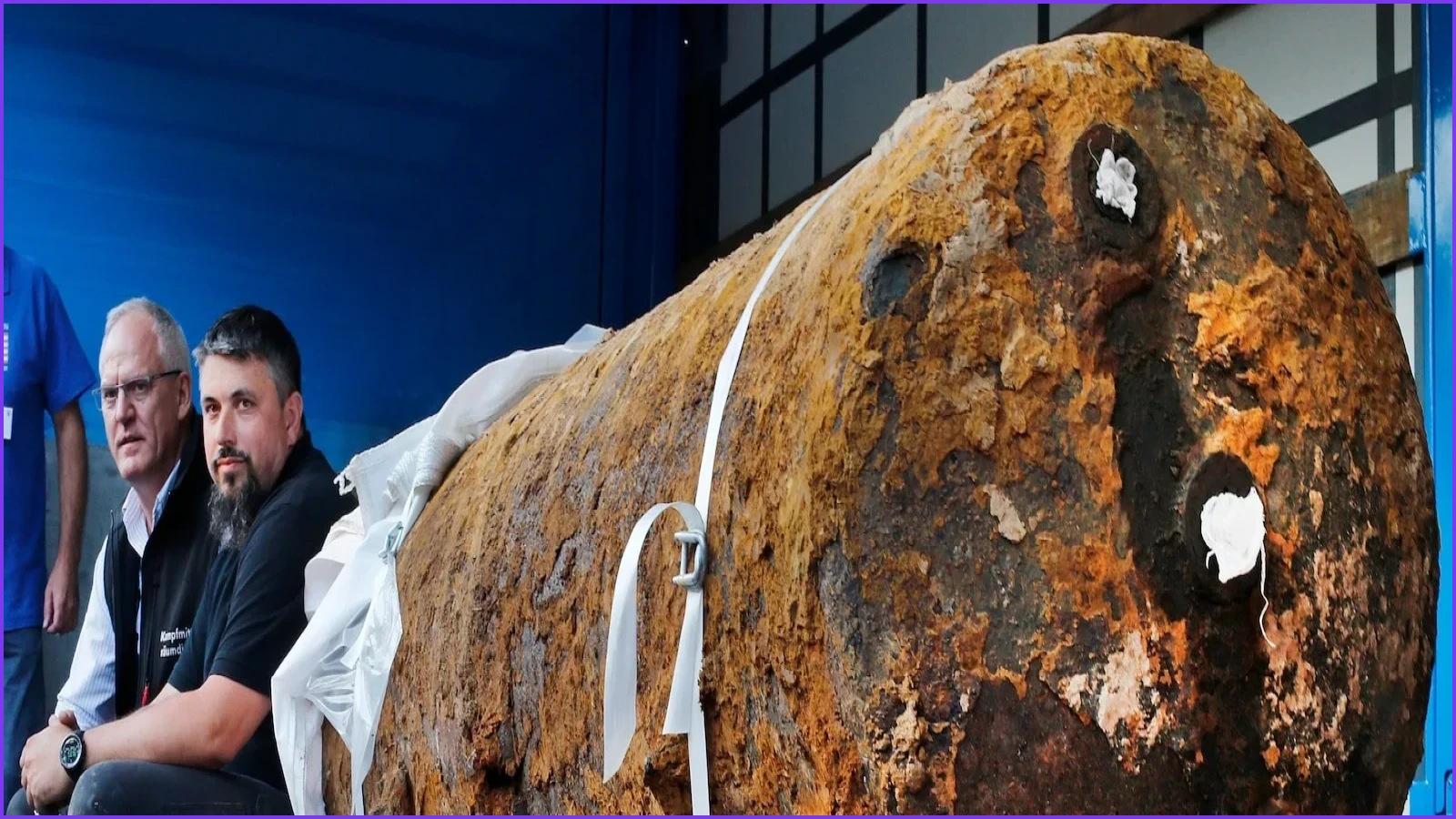
In Belgium, the situation is particularly concerning in the eastern province of Liege. Gov. Hervé Jamar reported that "a few sporadic detonations" were heard, forcing emergency services to adjust their tactics to account for the risk of buried explosives. While no fire crews have been harmed, local media reports highlighted the danger by featuring images of a firefighter handling a rusted bomb. Local historian Bernard Collard, who manages the Truschbaum Museum, explained that the province’s dense peat-bog forests, known as the High Fens, were littered with booby traps and mines during the war. Collard noted that in the years following 1945, these munitions claimed the lives of six civilians in the area.
The current fires in the High Fens are burning over historic battlefields, including areas where the Battle of the Bulge took place, as well as sites of intense skirmishes along Elsenborn Ridge and in the Hurtgen Forest. These battles resulted in the deaths of approximately 33,000 American and 28,000 German troops. Collard, who is authorized to scan these former battlefields with a metal detector, has uncovered everything from mortar shells and machine guns to human remains. He warned that the risk remains constant, stating, "You never know what you might come across, and you shouldn’t take it lightly."
Jonas Tepe, a spokesperson for the German state of North Rhine-Westphalia, confirmed that wildfires increase the danger because high heat can trigger the explosives. While the Belgian Ministry of Defense receives weekly requests to assist in disarming munitions, it does not officially classify the area as a "hot spot" compared to regions like Ypres, where farmers refer to the annual tilling of soil as the "iron harvest" due to the high volume of war remnants. Each year, Belgium’s Explosive Ordnance Disposal and Destruction Service responds to over 3,000 calls and disposes of between 200 and 250 tons of munitions.
In addition to wildfires, receding water levels in rivers and lakes have also exposed remnants of the past. In Slovakia, the Danube River dropped low enough to reveal two naval mines, while in Hungary, authorities closed the Margaret Bridge in Budapest after a World War II bomb was found at its base. Similarly, a bomb was discovered in the Rhine as it dried up. Researcher Christina Greene of the University of Arizona observed that as climate change alters the landscape, the "legacy of war keeps creeping up."