GÁRDONY, Hungary — Stepping off his boat in a small harbor on Lake Velence, 58-year-old fisherman Selmeci trudged up a dock plank that had grown remarkably steep. The dramatic incline was a direct consequence of the water receding to historic lows, offering a stark visual representation of a worsening water crisis gripping Hungary.
"I've lived on Lake Velence since I was a child, and I've never seen the water so low," Selmeci said, reflecting on the environmental decay. "It's terrible. My heart aches every single moment."
The drastic decline of Lake Velence is part of a much larger environmental emergency. As climate change-driven heat waves and prolonged droughts pummel Europe, Hungary is facing severe consequences. This summer, while wildfires scorched landscapes from the United Kingdom to Greece, Hungary suffered damaged crop yields, widespread drinking water shortages, and threats to its primary energy infrastructure. According to the national meteorological service, approximately 99% of Hungary’s land is currently experiencing severe or extreme drought conditions, and the process of desertification now threatens vast stretches of the Great Hungarian Plain.
While a lack of rainfall linked to human-driven climate change is a significant factor, experts point out that Hungary's own historical land management is heavily to blame. For generations, the country has systematically channeled water away from its landscapes and drained its natural wetlands, leaving the region highly vulnerable to frequent and intense droughts. Though more than a quarter of Hungary consists of low-lying land designed to naturally retain water, a 2023 study published in the journal Nature estimated that the country has lost more than 80% of its historical wetlands.
Zsuzsanna Ujj, a biodiversity policy specialist and project coordinator with the environmental group Friends of the Earth Hungary, noted that the country "has not been a good steward of its waters in the last 200 years." A primary driver of this ecological shift is Hungary's extensive network of drainage canals, which spans more than 40,000 kilometers (25,000 miles)—a distance exceeding the circumference of the Earth. These canals were constructed to quickly drain precipitation from fields, wetlands, and soil to clear space for agricultural development and other businesses.
By prioritizing rapid drainage over natural flooding cycles, the country has caused a continuous drop in its water table, drying out both wetlands and topsoil. This lack of surface water reduces evaporation, which in turn dries out the local air and decreases the likelihood of localized rainfall. The Organization for Economic Cooperation and Development ranks Hungary as one of the most drought-exposed nations in Europe, and 16th globally. Ujj emphasized that Hungary "needs to realign its water management practices, shifting from a drainage-based approach to one focused on water retention."
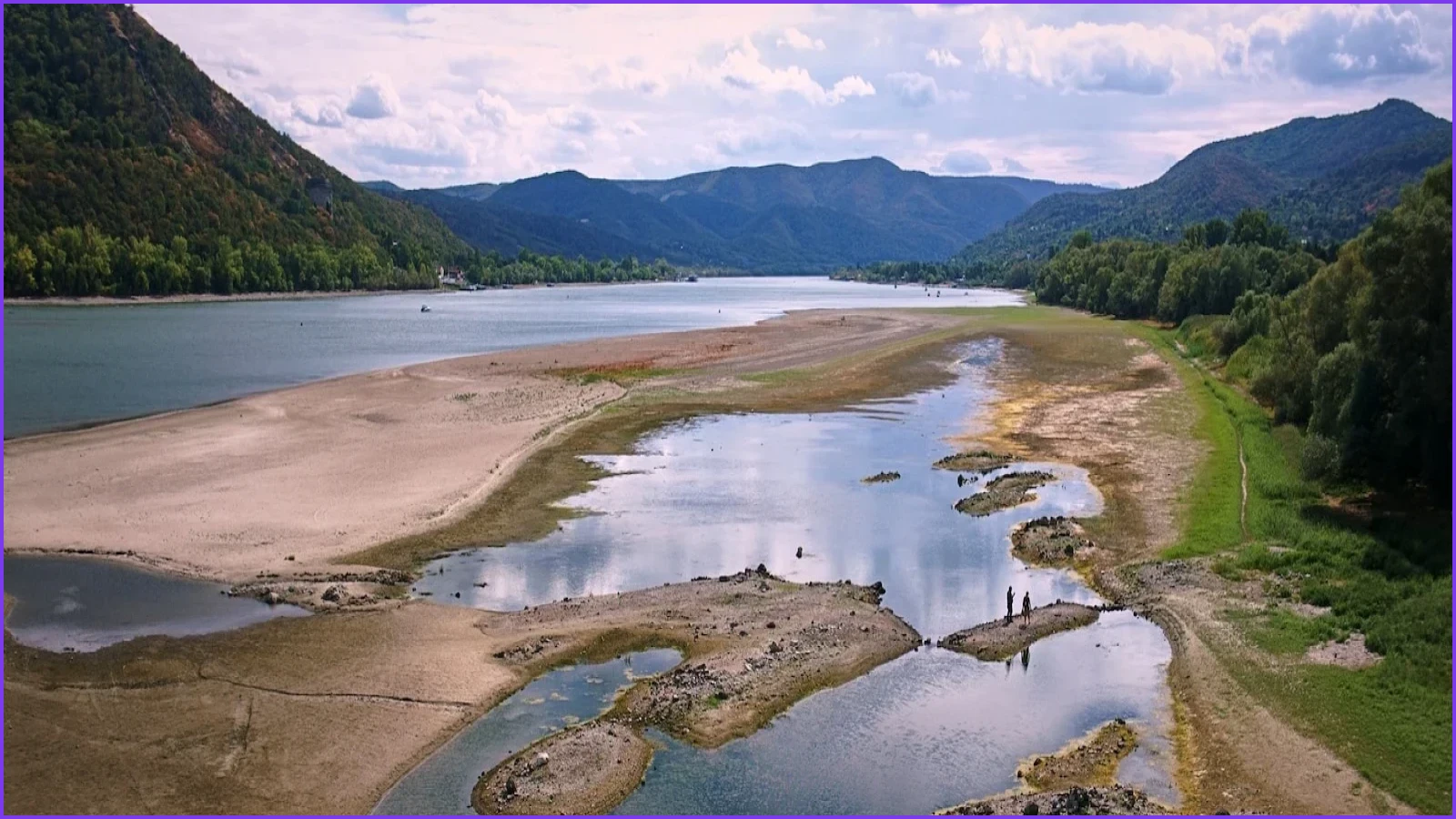
The consequences of the old approach are fully visible at Lake Velence. Present since the Middle Ages, the lake has shrunk so severely that all recreational activities have been banned. Much of the former lake bed is now exposed, cracked, and dry. The remaining water is so shallow and warm that fish and other wildlife have vanished, and officials predict the lake may dry up completely by the end of the summer.
Zoltán Mettner, who operates the Glass Tiger bar on the lake's shores, has watched the situation deteriorate year after year. "It’s sad enough that we’ve let things get this far, and that we couldn’t have taken gradual steps to prevent this lake from being completely destroyed," Mettner said, describing the view as "terrible, there’s no other way to put it."
In response to the growing crisis, Hungary's new government has pledged to implement major policy shifts. In late June, on a day when the country set a record high temperature of 42 degrees Celsius (107.6 degrees Fahrenheit), Prime Minister Péter Magyar addressed lawmakers, promising to put water management policies "on new footing" through a comprehensive conservation program. "Many have said year after year that water shortage will be one of Hungary’s problems and one of the most important strategic issues to be solved. They were right," Magyar said.
Magyar also highlighted the poor state of the nation's water infrastructure, revealing that aging utility systems allow 20% to 25% of drinking water to leak out of damaged pipes. This leakage costs the country approximately 17 billion forints ($54.4 million) annually. "For years, even the existence of the problem was denied and relativized," Magyar stated, declaring that "water retention will be the basic principle of Hungarian water management" moving forward.
However, reversing centuries of drainage practices will be a costly and slow process, and the ongoing crisis poses immediate risks to Hungary's energy security. The Danube River, the European Union's longest waterway, has hit consecutive record-low levels this summer. This decline has threatened to force the shutdown of the Paks nuclear power plant, Hungary's sole nuclear facility, for the first time in its 44-year history. The plant relies on water from the Danube to cool its reactors.
To keep the Paks plant operational, the government has launched emergency interventions to raise local water levels, including sinking two 80-meter (262-foot) barges just upriver and starting construction on a riverbed sill to redirect more water toward the facility's cooling pumps. Ujj noted that under normal conditions, wetlands along rivers like the Danube serve as natural reservoirs that retain water during dry spells. She explained that while climate change will continue to cause extreme precipitation patterns and drier summers, restoring these natural habitats and wetlands could help mitigate the impacts and even boost summer rainfall through increased evaporation.