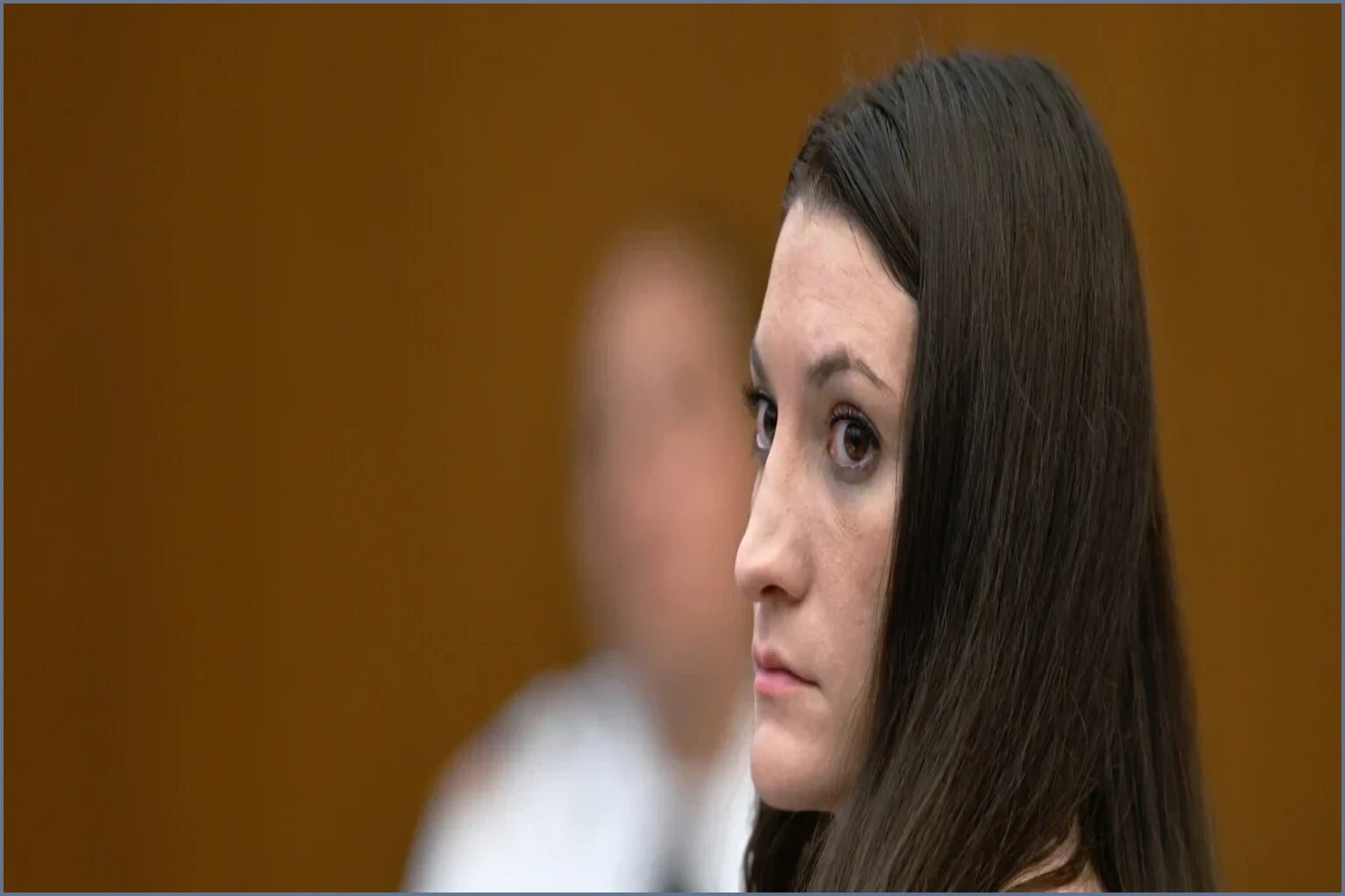
The mother and sister of Lindsay Clancy took the witness stand on Monday, offering emotional testimony about how the Massachusetts mother became increasingly anxious, paranoid, and suicidal in the months leading up to the deaths of her three children.
Testifying during the fourth week of Clancy’s murder trial in Plymouth, Massachusetts, her mother, Paula Musgrove, described her daughter as a dedicated, loving parent whose mental health began to deteriorate rapidly in October 2022. This decline occurred roughly three months before Clancy strangled her children and attempted to take her own life on January 24, 2023.
During her testimony, the jury was shown a text message Clancy sent to her mother pleading for help: "Mom, will you please come up and stay with me for a bit? I’m really sick. Something is wrong. I had horrible insomnia all night, and I just don’t know how I am going to get through the day. … It’s just really scary, and I don’t want to be alone."
Musgrove, who lived in Connecticut but frequently stayed with her daughter in Massachusetts from October through December 2022, recalled a highly alarming conversation in December. Standing in the kitchen with Clancy and Clancy's husband, Patrick, Musgrove noted that her daughter appeared visibly nervous. "She told us she had thoughts of harming the children," Musgrove testified.
According to Musgrove, Clancy was terrified of sleeping alone, suffered from growing paranoia, and expressed deep concern that her prescribed psychiatric medications "were destroying her mind." Clancy's sister, Allison Ozga, corroborated this severe decline, testifying that Clancy confessed to her at the end of December that she had experienced suicidal thoughts every day for an entire month.
The testimonies came shortly after the prosecution rested its case. Prosecutors argue that Clancy, a former labor and delivery nurse, premeditated the killings. They allege she deliberately sent her husband out of the house to pick up takeout food and run an errand at a pharmacy to ensure she would be alone with the children. To support their claims of normalcy, prosecutors presented texts and photos showing Clancy playing in the snow with her children and taking them to a doctor's appointment on the day of the tragedy. They have also questioned the severity of her subsequent suicide attempt and noted that her treating doctors testified they never observed signs of mania or psychosis, despite her repeated admissions of feeling suicidal.
Defense attorney Kevin Reddington does not dispute that Clancy killed her children. However, he contends she should not be held criminally responsible due to postpartum psychosis, a rare mental illness linked to the intense hormonal shifts, sleep deprivation, and stress that follow childbirth. Reddington also stated that Clancy suffered from bipolar disorder and that her condition was severely exacerbated by prescribed antidepressants. The defense has argued that Clancy's medical care was disjointed, pointing out that she was once discharged from a psychiatric facility after only a single day and was denied admission to another program because she could not demonstrate a specific, active suicide plan.
Jurors also heard from Margaret Hamp, a former colleague who worked night shifts with Clancy at Massachusetts General Hospital. Hamp described Clancy as a "really good" nurse who was "compassionate, kind and a patient advocate," adding, "She was the type of nurse that you wanted taking care of you or your loved one when you walked onto our unit." Hamp recalled that Clancy frequently sought parenting advice from co-workers on typical topics ranging from sleep schedules and daycare options to monogrammed lunch boxes.
Hamp also recounted a poignant conversation from Clancy's first year on the unit, which occurred after a pregnant patient was admitted with plans to self-harm. Hamp recalled asking Clancy if she had ever heard of Andrea Yates, the Texas mother who drowned her five children in 2001. "I explained that to her, and she cried," Hamp testified. "She said, ‘How could a mother hurt her children?’"
While Clancy has not testified in her own defense, she has wept openly in the courtroom at various points, including when prosecutors displayed autopsy photographs of her children. Earlier in the trial, the jury heard a harrowing, non-public seven-minute 911 call made by Patrick Clancy when he returned home to find his wife injured in the backyard and his children in the basement. His screams and howls filled the courtroom as he told the dispatcher, "She killed the kids!"